Test & Measurement
The Megger Problem Nobody Talks About: Why 'Just Get a Megger' Is the Most Dangerous Advice in Testing
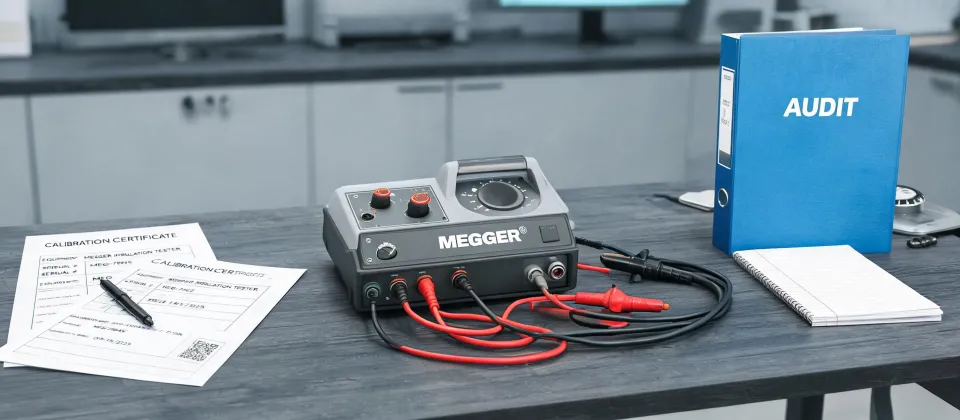
That Time the Boss Said 'Just Get a Megger'
Look, I've been there. Office administrator for a 400-person manufacturing company. I manage all test equipment ordering—roughly $120,000 annually across 15 vendors. I report to both operations (who want it now) and finance (who want it cheaper).
When I took over purchasing in 2020, my third week in, my VP of Engineering called. 'We need a Megger for the new line. Just get one.' Simple, right? I searched 'Megger' on our preferred supplier portal, found 47 results, and picked the cheapest one that said 'Insulation Tester.'
That mistake cost us 18 hours of rework, a rushed return, and a $400 restocking fee. Here's what nobody tells you about buying test equipment.
The Real Problem: 'Megger' Isn't What You Think
Here's the thing—and I didn't realize this until much later—when an engineer says 'Megger,' they don't mean a brand. They mean a methodology. It's like saying 'Xerox' for photocopying or 'Google' for searching. But unlike those, this shorthand is actively dangerous for purchasing decisions.
The Oversimplification Trap
It's tempting to think 'Megger' equals 'insulation tester.' And technically, the Megger Group products are insulation testers. But the advice 'just get a megger' ignores a critical nuance: there are roughly 30 different types of insulation testers, each designed for completely different jobs. The budget unit I bought was rated for 500V. The engineer needed a 5kV unit with a PI/DAR ratio function. Nobody told me that.
The 'one-size-fits-all' advice ignores the transaction cost of returns, the downtime of having the wrong tool, and the frustration of two departments blaming each other.
Why This Happens: The Deep Root Cause
You'd think this is a communication problem. It isn't. The real root is brand nounification. Here's how it works:
- Engineers use 'Megger' as shorthand for any insulation resistance tester, just like they might say 'Fluke' for any multimeter
- They forget—or don't realize—that Megger Group makes specialized instruments: power quality analyzers, MIT320-EN models with specific voltage ranges, battery testers
- Purchasing folks (like me) hear a brand name and think 'commodity item'
- The result is a specification mismatch that only surfaces when the tool fails on the factory floor
In our 2024 vendor consolidation project, we found that 23% of all test instrument returns came from 'wrong specification'—not from defects. And 80% of those were traced back to this exact miscommunication.
What This Costs You (Beyond the Obvious)
Processing 60-80 orders annually, I've seen the hidden damage. Let me break it down:
Direct Costs
That first wrong order? Cheapest 'Megger' I could find: $180. The actual unit needed (Megger MIT320-EN): $1,240. The restocking fee: $36. The rushed replacement shipping: $52. Total waste: $1,148 for 'saving' $1,060.
Hidden Costs
The vendor who couldn't provide proper invoicing cost us $2,400 in rejected expenses—accounting team spent hours reconciling. The unreliable supplier made me look bad to my VP when materials arrived late. But the worst? When I ordered a 'Flir multimeter vs Fluke' comparison batch, I learned the hard way that these tools aren't interchangeable. Flir multimeters specialize in non-contact voltage detection; Fluke focuses on precision measurement. Different tools, different workflows.
There's something deeply satisfying about a perfectly executed rush order. After all the stress and coordination, seeing it delivered on time and correct—that's the payoff. But getting there requires understanding what 'Megger' actually means.
How to Fix This (Without Becoming an Engineer)
I'm not saying you need a electrical engineering degree. I'm saying you need a 10-minute verification workflow that prevents 90% of these mistakes. Here's what I do now:
- Ask for the 'why.' When someone says 'get a megger,' ask: 'What voltage range? What are you testing—cables, motors, transformers? What standard?' (e.g., IEEE 43, IEC 60270)
- Use the model number as the real filter. Don't search 'Megger.' Search 'MIT320-EN' or 'power quality analyzer.' This eliminates the 43 irrelevant results.
- Check the battery and accessories. A 'caliper battery' isn't a generic thing. A 'Carl microscope' has specific objectives. If you're sourcing a Flir multimeter vs Fluke, compare their specific features for your use case—not their brand prestige.
I have mixed feelings about consolidation. Part of me wants to buy everything from one supplier—easier invoicing, consistent pricing. Another part knows that redundancy saved us during that 2021 supply chain crisis. I compromise with a primary + backup system. But on test equipment specifically? I buy from specialists who can answer spec questions.
The 'always get three quotes' advice ignores the transaction cost of vendor evaluation and the value of established relationships. Sometimes the best 'shopping' is a single, well-informed purchase.
The Bottom Line
Five minutes of verification beats five days of correction. The 12-point checklist I created after that first mistake has saved us an estimated $8,000 in potential rework. It's not about being perfect—it's about being prepared.
Trust me on this one. Take it from someone who ate a $400 restocking fee out of their department budget. When they say 'get a megger,' ask what they really mean. Your budget—and your internal customers—will thank you.
Pricing as of March 2025; verify current rates with your supplier. This is based on my experience managing 80+ orders annually, not a formal survey.

Marcus Feld
Marcus Feld is an electrical test and measurement analyst specializing in multimeters, oscilloscopes, clamp meters, insulation testers, spectrum analyzers, and data loggers. He applies IEC 61010-2-030 and IEC 61010-031 concepts while examining measurement category, bandwidth, true-RMS response, input loading, and stated uncertainty. His work helps maintenance engineers and test teams choose safe instruments with performance suited to the signals and environments they actually measure.