Test & Measurement
The Real Cost of Buying Scientific Instruments: What the Quote Doesn't Tell You
The Quote Looked Great. Then the Invoices Started Arriving.
I still remember the first time I got burned on an instrument purchase. We needed a new thermal imaging camera for our quality lab. Three quotes came in. Two were within 5% of each other. The third was 22% cheaper. I went with the 22%.
Six months later, I pulled the spending report and found we'd paid almost exactly what the other two vendors quoted—just spread across four different invoices that weren't mentioned in the original quote. A "required" recalibration service. A software license we didn't know was separate. Then a $1,200 repair that would've been under warranty with the other vendors.
That was the day I stopped comparing quotes and started comparing total cost of ownership. It's a lesson that took me about six years and roughly $180,000 in cumulative instrument spending to really learn.
Why Cheap Quotes Aren't Actually Cheap
Here's what I didn't understand early on: instrument vendors don't compete on the same playing field. Some quote you the instrument. Some quote you the instrument plus the first year of service. Some quote you a bare-bones unit and make their margin on consumables or accessories.
I once compared two microscopes for our materials lab—an EVIDENT model and a comparable unit from another brand. The other unit was $3,400 cheaper on paper. But it used proprietary slides and a locking mechanism that required their branded accessories. Over three years, those accessories added up to about $4,100. The EVIDENT was more upfront, but its standard accessories worked with our existing setup.
That's what I call the compatibility tax. It's real, it's rarely disclosed, and it hits you one purchase at a time until your "cheap" instrument has quietly become the most expensive line item in your lab budget.
The stuff that doesn't make it into the quote
When I audited our 2023 spending, I found that about 31% of our "budget overruns" on instrument purchases came from four categories:
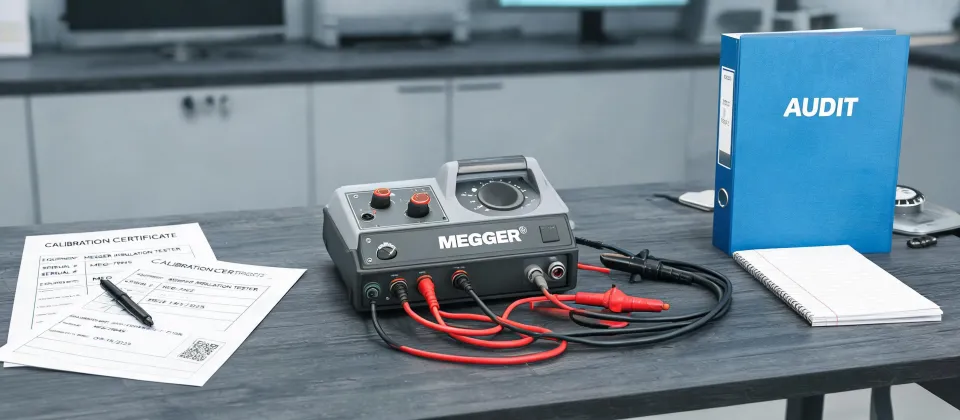
- Calibration and certification — often annual, often required for compliance, almost never included
- Software and firmware — licensed separately on some platforms, bundled on others
- Adaptors and accessories — the proprietary-connector problem I just described
- Downtime — the instrument that fails on a Friday afternoon and isn't back online until Wednesday
That last one is the hardest to quantify and usually the most expensive. We had a centrifuge go down for four days during a time-sensitive project. The repair itself was $680. The project delay cost us closer to $5,000 in overtime and rescheduling. Nobody puts that in a quote comparison.
The instrument itself is maybe 60% of what you'll actually spend over five years. The other 40% is where vendors hide their margins—and where buyers get surprised.
The Thermal Camera Question Nobody Asks Upfront
Here's a perfect example of how marketing shapes expectations and leads to expensive mistakes. One of the most common searches we see around thermal imaging is some variation of "can thermal cameras see through walls." The short answer is: no, not in the way most people imagine. Thermal cameras detect surface temperature differences. They can reveal studs, leaks, and insulation gaps because those create temperature patterns on the wall surface. They don't actually see through the wall.
I mention this because a colleague once bought a thermal camera based on a demo video that made it look like the thing had X-ray vision. When it didn't perform that way in the field, he spent another $2,800 on a higher-resolution model, thinking the entry-level unit was just "too cheap." The problem wasn't the camera. It was the expectation.
This happens constantly with spectrum analyzers and other precision instruments too. Your team reads the spec sheet, assumes a capability, and then you end up buying twice. The vendor didn't lie—but they didn't correct the assumption either.
Now when I evaluate any instrument, I insist on a hands-on demo with our samples and our use case. If the vendor won't do that, I move on. I don't care how good the brochure looks.
What This Actually Costs You (Beyond the Money)
The financial hit is obvious. But the bigger cost—the one I underestimated for years—is the credibility hit inside your own organization.
After that first thermal camera mistake, my manager started double-checking every instrument request I submitted. For about a year, every purchase needed a second signature and a justification memo. That's not a huge deal on its own, but it adds friction to everything. It signals to the team that you don't fully trust your own procurement decisions.
I went back and forth between two multimeter brands for a calibration project in 2022. One had better specs on paper. The other had a better support reputation and came with a free calibration certificate. I chose the better-spec'd one because I thought the specs would matter more. They didn't. We never used half the features, and the annual calibration fee was $340 versus $0 for the other vendor's bundled plan.
Even after I made that call, I kept second-guessing it. What if the support issues became a real problem? What if the calibration costs kept climbing? It took about eight months of uneventful use before I stopped thinking about it—but by then the decision had already cost us more than the cheaper alternative would have.
How I Evaluate Instrument Vendors Now
I built a TCO spreadsheet that I use for every instrument purchase over $2,000. It's not fancy—just a spreadsheet with five columns: quoted price, first-year service costs, three-year consumables estimate, calibration costs, and a rough downtime exposure estimate. I fill it in for every vendor quote. The lowest number almost never matches the lowest quote.
For most standard lab instrumentation—microscopes, pipettes, centrifuges, basic thermal imagers—I've found that the mid-range option with bundled service usually wins on three-year TCO. That's not a universal truth. It's just what our data shows across the roughly 40 instrument purchases we've made since 2019.
Where it gets tricky is with specialized equipment like HPLC systems or high-end spectrum analyzers. The service contracts alone can run 15-20% of the purchase price annually. If you're not using the instrument daily, that math changes. Sometimes renting or leasing makes more sense than buying, especially if the technology is evolving quickly.
I'd recommend checking a vendor's support documentation before you even request a quote. The EVIDENT website, for example, publishes a lot of application notes and technical guides for their microscopes and NDT equipment. That tells you something about how they support users after the sale. If a vendor's website is just product photos and a contact form, that's a signal—maybe a small one, but a signal.
I'm not saying EVIDENT is right for every lab. If you're doing ultra-high-resolution confocal work and need custom optics, you might be looking at a completely different tier of vendor. If your budget is under $1,000 for a basic inspection scope, you probably should look elsewhere—the premium brands aren't competing in that space, and that's fine.
The One Thing I'd Tell a First-Time Instrument Buyer
Assume the quote is incomplete. Not because anyone's lying to you, but because instrument pricing is genuinely complex and vendors rarely volunteer the full picture unless you ask. Ask about calibration intervals and costs. Ask what's not included. Ask what happens if the instrument fails in month 7. Ask if the software is licensed annually or perpetually.
The answers will tell you more about the real cost than the quote ever will. And you won't have to learn it the way I did—one burned invoice at a time.

Mateo Velasquez
Mateo Velasquez is an industrial sensing and connectivity analyst covering proximity sensors, photoelectric sensors, inductive and capacitive sensors, encoders, displacement sensors, signal converters, and IO-Link devices. He uses IEC 60947-5-2 and IEC 61131-9 requirements to examine switching distance, repeatability, cycle time, diagnostic data, electromagnetic compatibility, and ingress protection. He helps automation engineers and OEM buyers specify sensors that integrate reliably with machine controls and tolerate the intended target, mounting, and environment.