Test & Measurement
The Cheapest Sensor Quote Is Almost Never the Cheapest Decision
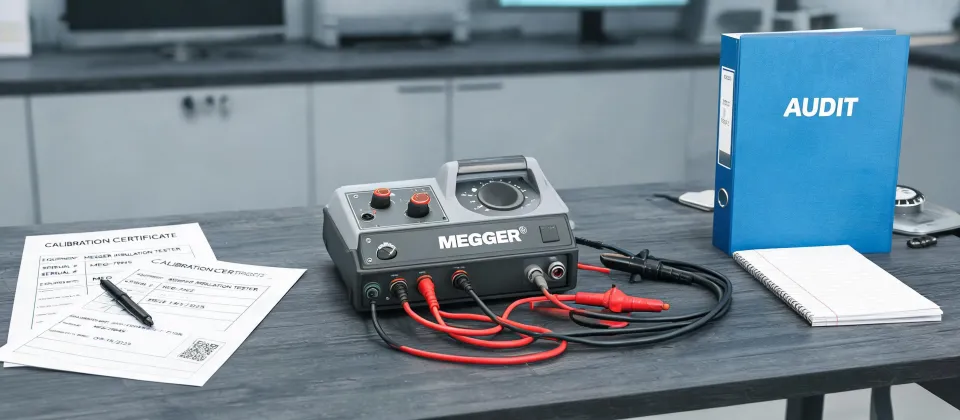
The cheapest sensor quote on your desk is almost never the cheapest decision you'll make. I've spent four years as the quality and brand compliance manager at a systems integration firm that ships about 1,200 control panels a year. In 2024 I rejected 21% of first-article deliveries. Not one rejection was because the price was wrong. Every one was because something in the fine print didn't survive contact with an actual installation.
That number isn't a badge. It's a working estimate of how often "technically meets spec" and "actually works" are two different things. If you're specifying industrial sensors — inductive, pressure, distance, whatever the line needs — the gap between those two phrases is where your budget quietly dies.
Spec compliance is a thermal test, not a datasheet number
In Q3 2024 we bench-tested a batch of 60 pressure transmitters from a low-cost supplier against our reference unit — a Turck pressure transmitter, PT series, 0–100 psi, 4–20 mA output. The low-cost datasheet claimed ±0.5% full scale. At 23°C on the bench, they passed. Then we ran a thermal cycle from -20°C to 70°C. Three units drifted past 1.2% full scale by the second cycle. Our reference unit stayed inside 0.3%. Normal tolerance on our hydraulic test stands is ±0.75%.
We sent the batch back. The supplier's rep called it "within industry standard." Maybe it was. It was not within ours, and the difference between those two sentences is the whole job.
Here's the part that took me two years to internalize: the certificate of conformity said the units met the datasheet. It did not say they met it under our operating conditions. Those are different promises, and the certificate only makes one of them.
The paper savings on that batch were $4,100. The rework and schedule shuffle cost us $22,000 in overtime plus a two-week slip on a customer launch. Those "cheap" transmitters are now the most expensive components we never shipped.
We didn't have a formal incoming inspection protocol for transmitters until that month. Now every shipment gets a three-point calibration check and a 12-hour thermal soak. Should have started the first time, not the third. It was the third.
The distance sensor argument nobody wins
Two of my engineers spent a week in 2023 arguing over a distance sensor for a pallet detection station. One wanted a diffuse-reflective photoelectric. The other wanted inductive. Both were correct on paper. Neither had read the target material spec closely enough to notice the pallets were aluminum.
The photoelectric unit worked fine for about six weeks. Then the plant floor got dusty, reflectivity dropped, and we started getting false triggers every shift change. We swapped to an inductive sensor with factor-1 construction — Turck's uprox line, in this case — which reads steel, aluminum, brass, and copper at the same rated distance.
Here's the line that should be printed on every spec sheet: "8 mm sensing distance" is not one number. IEC 60947-5-2 separates rated operating distance (Sn), assured operating distance (Sa), and usable operating distance (Su). On a standard inductive sensor, an aluminum target can cut usable distance by 40% or more versus mild steel. If your mechanical designer spaced the bracket off the datasheet's 8 mm, you have a tolerance problem you won't find until the machine is built and the client is standing next to it.
When I compared the two spec sheets side by side after the fact — same headline number, very different fine print — I finally understood why the senior engineer kept saying "distance is a range, not a number." She was right. I just didn't want to spend the extra $60 per unit at the time.
The label is part of the component
This is the unglamorous one. In 2022 we found three questionable connectors in a shipment that had already passed electrical test. The Turck logo was on them. The laser etch was shallow, and the batch code didn't match the certificate of conformity that came with the box. We traced them to a grey-market reseller, not an authorized distributor.
They warned me to check batch codes on every delivery. I didn't — not really, not until that recall. It cost $18,000 in labor and a very uncomfortable call with a customer who found our parts in their incoming inspection report.
Now the first thing we do on a delivery is match the label, the batch code, and the CoC. Three minutes. If they don't line up, the box doesn't get opened. That's the whole protocol. It's boring, and it has saved us more money than any single supplier negotiation in the last two years.
The multimeter question is a proxy fight
Every budget cycle someone reopens the FLIR multimeter vs Fluke debate, and every year it turns into an argument about brand loyalty instead of failure modes. Last year we compared units for our field service kits. The Fluke 88V automotive multimeter is what most of our senior techs grab — one of them dropped it off a forklift mast and it still read within 0.1 V on the calibration check. The FLIR handhelds looked better on paper and cost less.
We ended up with a mixed fleet. Fluke 88V in the field kits that get abused, FLIR on the bench where the environment is controlled. Neither choice is wrong. The lesson is that "which tool" is a question about which failure you're trying to prevent, not which brand has the nicer logo.
The calibration interval fight was worse. Half the team wanted 12 months, half wanted 6. We compromised at 9 months with a trigger: any tool that shows more than 0.5% deviation at check gets pulled and re-calibrated immediately. So far that trigger has fired twice. Both times on units from the "cheap" batch we stopped buying.
Same logic applies to sensors. The question isn't "which is cheaper." It's "which failure mode can I not afford."
"Isn't this just gold-plating?"
Fair pushback. For a non-critical application — a plastic pellet bin, an end-of-line reject gate that runs 200 times a shift — a $40 sensor is fine. I'm not arguing for premium units on every bracket.
I'm arguing for knowing which bracket matters. The problem is that the decision about which bracket matters usually gets made by whoever is closest to the BOM spreadsheet, and they're optimizing for the number in column G, not the failure mode in the maintenance log.
I've also heard the other objection: "We don't have time to calibrate every delivery." Neither did we. We found the time the week after the $22,000 rework, and again after the $18,000 recall. The only question is whether you pay for the process up front or on the back end. The back end charges interest.
What I actually want
An informed customer asks better questions. That's not a slogan — it's a procurement strategy. I'd rather spend 20 minutes walking a new engineer through IEC 60947-5-2 correction factors than an hour on a call explaining why the line is down. The second conversation costs more.
Look, the sensor itself is rarely the failure point. The failure point is the gap between what the datasheet claims and what the installation demands. Close that gap before the PO goes out — verify the spec against the target material, check the label against the CoC, match the tool to the failure mode — and the "expensive" option usually turns out to be the cheap one.
The cheap option, meanwhile, will keep sending you invoices long after the PO is closed.
Standards and product references reflect information available as of January 2025. Verify current tolerances, standards, and pricing with the manufacturer and the relevant standard before specifying.

Sofia Lindberg
Sofia Lindberg is a thermal and environmental measurement analyst covering thermal imaging cameras, infrared thermometers, hygrometers, moisture meters, weather stations, and air quality meters. She uses ISO 18434-1 thermography principles and evaluates emissivity control, thermal sensitivity, spatial resolution, field of view, response time, and sensor drift. She guides reliability, building-diagnostics, and EHS teams in selecting instruments and interpreting readings without overstating what a single measurement can prove.