Test & Measurement
Turck Pressure Sensor Manuals and Specs: A Quality Inspector's FAQ
-
1. The manual doesn't match the sensor on my desk. What do I check first?
-
2. Is the Turck sensor catalog enough to specify a sensor?
-
3. How do I verify a Turck pressure sensor before installation?
-
4. Why does "how to calibrate pipette eppendorf" keep landing on sensor pages?
-
5. What's the most common ordering mistake with Turck sensors?
-
6. A supplier's spec claim looks too good. How should I handle it?
-
7. What's a practical pre-installation checklist?
I review sensor documentation and first deliveries for an industrial automation distributor—roughly 200 items a year. These are the questions I get most often from engineers, technicians, and buyers, answered the way I'd answer them at the receiving bench.
1. The manual doesn't match the sensor on my desk. What do I check first?
Start with the catalog number and the manual revision date—not the product photo. In Q1 2024 we received 120 pressure sensors where the manual on the vendor portal was one revision behind. The pressure range printed the same, but the wiring color code had changed. Two technicians wired them per the old manual (which, honestly, nobody flagged at receiving). We caught it at bench test, not on the line. The fix took a day. Match the revision date on the manual to the date code on the sensor label, then confirm three things against the purchase order: wiring diagram, output type (PNP/NPN), and pressure range. If any of those don't line up, stop and call the distributor before you strip a wire.
2. Is the Turck sensor catalog enough to specify a sensor?
No. The documentation failure in March 2023 changed how I think about spec sheets. The catalog gives you headline numbers—range, thread, output. The manual gives you the conditions: derating curves, recommended torque, IP rating caveats, cable bend radius. I rejected about 8% of first-delivery packets in 2024 because the spec sheet quoted a headline number without the operating condition attached. A 0–100 bar rating means little if the sensor is only rated to 80°C at that pressure. Use the catalog to shortlist, the manual to confirm, and the PO to lock it down. If the manual is missing from the shipment, that's a documentation nonconformance, not a minor inconvenience.
3. How do I verify a Turck pressure sensor before installation?
With a checklist. Mine has nine points (note to self: update it for the new M12 connector line): thread type and pitch, pressure range vs. actual process maximum, output signal and logic, connector pinout, IP rating at the installed orientation, temperature derating, torque spec, cable bend radius, and mounting clearance. For thread and mounting dimensions, a 6 inch digital caliper is enough—you're checking pitch diameter and hex flat, not building a spacecraft. I also photograph the sensor label and the manual revision side by side. Sounds fussy. But when a batch fails, that photo ends the argument in about 30 seconds.
4. Why does "how to calibrate pipette eppendorf" keep landing on sensor pages?
This one surprises people, but the logic isn't a typo—calibration discipline is the same across instruments. Reference standard, traceability, defined interval, documented as-found and as-left readings. A pipette manual and a pressure sensor manual are both telling you: here's the reference, here's the tolerance, here's how you prove you're inside it. An Eppendorf pipette is typically verified gravimetrically; a pressure sensor against a deadweight tester or certified reference gauge. Different hardware, same discipline. If you're searching a pipette manual and reading a sensor manual instead, you're not lost—you're looking at the same quality principle from a different angle.
5. What's the most common ordering mistake with Turck sensors?
In my first year, I made the classic specification error: I assumed "standard" meant the same thing to every vendor and every product line. Ordered normally-open inductive sensors when the machine logic needed normally-closed. Cost us a $600 redo and two days of schedule. Now every PO line spells out output logic, connector type, and cable length—no shorthand. The other repeat offender is confusing a pressure sensor's burst pressure with its operating range. They're not the same number, and the manual prints both for a reason. If I remember correctly, that mistake nearly cost us a batch of 40 units in 2022.
6. A supplier's spec claim looks too good. How should I handle it?
Ask for the test report, not the marketing line. The FTC's advertising guidance (ftc.gov) requires claims to be truthful, not misleading, and substantiated with evidence—and that standard applies to industrial spec sheets just as much as consumer ads. When a supplier claims an IP rating "in all installation conditions," I ask which orientation and which cable gland. If they can't name the test standard behind the number, the claim goes in the reject pile. We don't need perfect suppliers. We need suppliers whose claims survive a bench check.
7. What's a practical pre-installation checklist?
- Catalog number on the label matches the PO line
- Manual revision date is current for that date code
- Pressure range meets process maximum with derating applied
- Output type and logic (PNP/NPN, NO/NC) confirmed
- Connector pinout matches the cable drawing
- Thread and mounting dimensions checked with a caliper
- Torque spec and IP rating noted for the install orientation
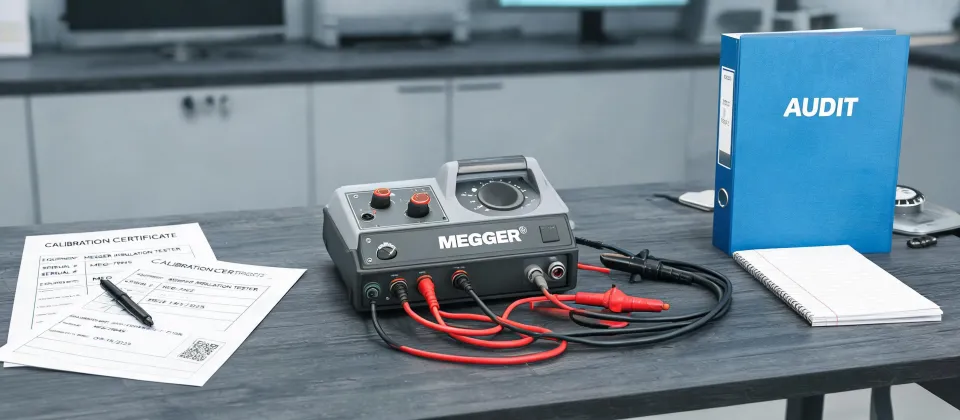
- Calibration certificate present, with traceability
That last line item has saved us more rework than any other. Five minutes of verification beats five days of correction—I've watched both happen, and the math isn't close.

Noura El-Sayed
Noura El-Sayed is an analytical and laboratory instrumentation analyst specializing in HPLC systems and columns, spectrophotometers, pH meters, pipettes, centrifuges, viscometers, and sample filters. She applies ISO 8655 liquid-handling methods and USP <621> chromatography principles while evaluating delivered volume, precision, flow accuracy, resolution, carryover, and detection limits. Her work helps laboratory managers and method developers select instruments, qualify workflows, and control sources of variability from sample preparation through analysis.