Test & Measurement
Buying a Megger at the Last Minute: Why the Real Problem Isn't the Test Equipment
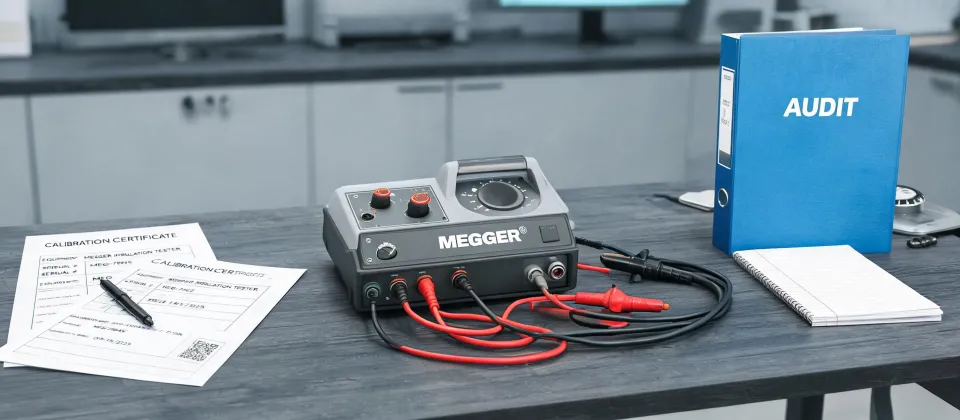
At 4:47 on a Friday, I took a call from a plant maintenance manager. He needed a Megger AVO 835 multimeter on site by Monday morning. The electrician who normally owns it was on a job 300 miles away. The normal lead time from our warehouse was four days. He said, 'Just tell me what you've got in stock.'
That story ended fine, but not because we happened to have the right box. It ended fine because we spent 15 minutes asking questions he didn't think he had time for. He was annoyed. I don't blame him. When the clock is ticking, a question like 'what exactly are you measuring?' feels like an obstacle. It's not. It's the shortcut.
In my role coordinating instrument sourcing for an instrumentation supply company, I've handled more rush orders than I can count—same-day turnarounds, overnight freight, Saturday deliveries. Based on our internal data from 200+ rush jobs, the thing that surprises me most is how often the order isn't the problem. The real problem is that we're using the wrong mental model for 'I need it fast.'
The Surface Problem: 'I Need a Megger, and I Need It Now'
Look, the deadline is real. Plant shutdowns don't move. Insurance inspections don't reschedule. A failed quality audit can cost more than the tester. So you search for megger, filter by what's available, and buy. That's rational.
But there's a reason the word megger is dangerous. It's both a brand and a generic term for insulation resistance testing. When someone asks for 'a megger,' they might need an old-school wee megger insulation tester—the small analog one that's become something of a legend among electricians—or they might need a 5 kV unit with digital readout and data logging. Both are 'meggers.' They are not interchangeable.
The same thing happens with the Megger AVO 835 multimeter. It looks like a multimeter, but it's actually a multifunction tester. If you order one without checking which functions you need—insulation resistance, continuity, RCD testing—you might get a perfectly good instrument that doesn't do the job. And you'll learn that after the deadline, not before.
Thermal cameras are another version of the same story. Look up how much is a FLIR thermal camera and the search results are all over the place. From the quotes we've seen this past year, a new industrial model typically runs from about $2,000 to well over $10,000. The e76 advanced thermal imaging camera—better known as the FLIR E76—sits near the upper end. But 'how much' is the wrong question. The right question is 'what will the camera need to see, and can I prove my readings later?' The E76 is a workhorse. It's also a serious investment. Buying it because it's 'the one on the approved list' is fine—unless the job actually calls for a different detector resolution or lens.
Even a humble digital angle finder hides the same problem. It's a $30 tool in a hardware aisle, or a $300 precision instrument that measures to 0.01°. If you're hanging a handrail, the $30 one is fine. If you're setting up a CNC workholding fixture or aligning a radar mount, half a degree is a disaster. Same name. Different category.
What's Actually Going On: Three Reasons We Buy the Wrong Tool
The surface problem is 'which product do I buy?' The deeper problem is three things working together.
1. We compare features before we define the task
When someone sends me a product link and asks 'is this the one?', the first thing I ask is 'what are you going to measure?' Not 'what's the range?' Because a feature list is easy to read; a task is hard to describe. You can compare accuracy, IP ratings, CAT ratings, battery life. That's all useful. But none of it matters if you don't know what a successful measurement looks like.
For electrical work, one spec trumps almost everything for safety: the CAT rating, defined by the IEC 61010 standard. A CAT IV multimeter can handle the high-energy transients found near utility service entrances. A CAT III meter is fine for distribution panels but not for the incoming feed. If you buy a meter based on price and speed, you might not notice the CAT rating until your safety supervisor stops the job. That's the kind of mistake that costs more than any rush fee.
2. We buy the box, not the system
Test equipment doesn't work in isolation. It needs probes, leads, calibration certificates, maybe software. A thermal camera needs report-writing software. An insulation tester needs the right test leads for the voltage level. A multimeter needs spare fuses, because the one time you test a live current source with a voltage setting, the fuse is gone.
In my experience, a lot of emergency purchases fail because the instrument itself is correct but the accessories aren't compatible. The supplier might have the camera in stock, but the correct lens is special order. The meter is here, but the leads you need for a specific terminal block come in a kit that's backordered. That's not a product problem. That's a 'you bought a box instead of a system' problem.
3. We confuse 'available' with 'safe'
When you're under deadline, 'in stock' feels like the ultimate filter. It's not. It's just the first filter. The second filter is 'can I actually rely on this reading?' The third is 'can my customer or auditor verify it?' The fourth is 'what happens if this unit fails on day one?'
I don't have hard data on industry-wide return rates for rush orders, but based on our own invoices and exchange logs, I'd estimate that 15–20% of same-day orders get swapped or returned. I wish I had tracked that more carefully from day one. What I can say anecdotally is that the returns almost always trace back to a skipped question, not a bad product.
A wee megger insulation tester is a classic example. It's simple, rugged, and beloved. But 'simple' doesn't mean 'does what the job needs.' If you're checking cable insulation on a new motor circuit, you might need a 1,000 V test. If you're checking controls wiring with sensitive electronics, a 5,000 V test could fry something. The tool is the same. The application is not.
The Cost of Not Asking the Questions
Let me make this concrete. In March 2024, a contractor called at 5 PM, 36 hours before a scheduled substation maintenance window. His insulation tester had died. He needed a replacement by morning. We found a suitable megger from another supplier, paid $220 in overnight freight, and had it delivered by 6 AM. The alternative was canceling the crew and paying a penalty that was probably in the five figures.
That's a success story, but I remember it for another reason: the contractor almost ordered a different model he'd found online because it was in stock. When I asked what test voltage he needed, he didn't know. He'd never thought about it, because his old tester 'just worked.' We almost solved the urgent problem with the wrong tool.
Then there was the 2023 mistake. We paid $800 extra in rush fees on a guaranteed order for an optical inspection tool. It arrived on time, but it wasn't the version with the correct calibration report. The client couldn't use it. We had to re-order, pay another round of freight, and cover a labor crew that was standing around. Total waste: close to $4,000. The manufacturer made the part fine. We just bought the option as an afterthought.
The cost isn't only money. It's confidence. When a technician doesn't trust a reading, they second-guess the next measurement. When a quality manager gets burned by an incomplete calibration certificate, they become the reviewer who slows down every future purchase. That hidden cost is worse than any rush fee. And it comes from the same root cause: we want the answer before we understand the problem.
The Short Answer: What to Do Before You Click Buy
Okay, so what actually works? If you have any control over the timeline, spend 15 minutes writing down four things before you search for a product:
- What exactly are you measuring? (Insulation resistance? Temperature difference? A physical angle?)
- What's the environment? (Indoors, outdoors, rain, high voltage, explosive atmosphere, handheld or mounted?)
- What will you do with the measurement? (Pass/fail tolerance, field adjustment, formal report, regulatory submission?)
- What's the backup if the tool arrives damaged or wrong?
Then call someone who can challenge your answer. If you're talking to a supplier or distributor, let them ask the annoying questions. In my experience, the best customers are the ones who say 'I don't know' early in the conversation. That's not a bad sign. That's the moment a rushed order becomes a smart order.
I'd rather spend 15 minutes explaining options than deal with mismatched expectations later. Because we represent multiple brands, I don't have a reason to push you toward one name. I have a reason to make sure the one you pick actually fits.
This approach worked for us because we're a mid-size supplier with direct relationships with calibration labs and multiple manufacturers. If you're buying a single tool from an online marketplace, the calculus is different. In that case, do your own homework, narrow the category precisely, and look for a vendor who can answer at least two of the four questions above. If they can't, find another vendor.
There's something satisfying about a rush order that goes right. After all the stress, the late-night phone calls, and the freight tracking refreshes, seeing a technician open a box and say 'that's exactly what we needed' is the payoff. But it doesn't happen because we're lucky. It happens because we slow down before we speed up.
So the next time someone asks 'which megger is best?' or 'how much is a FLIR thermal camera?' I'll give them the same answer: the right tool is the one that maps to your task, your environment, and your proof of work. Price matters. Availability matters. But the first question—the one that saves the most hours—is the one you're probably tempted to skip.

Jane Smith
I’m Jane Smith, a senior content writer with over 15 years of experience in the packaging and printing industry. I specialize in writing about the latest trends, technologies, and best practices in packaging design, sustainability, and printing techniques. My goal is to help businesses understand complex printing processes and design solutions that enhance both product packaging and brand visibility.