Test & Measurement
A Megger MIT410/2 Insulation Tester TCO Lesson: Why I Stopped Sorting by Price
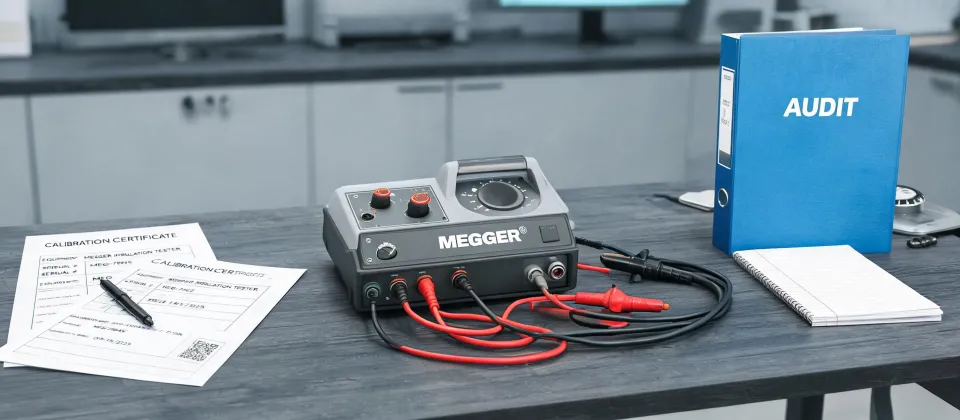
I manage procurement for a 40-person environmental testing company. My job is not to find the cheapest instrument. It is to make sure the order I approve is still the best decision after we add calibration, freight, lead time, and the cost of explaining why we bought the wrong thing. Over the past six years, I have tracked about 180 equipment orders in our system. That is not a huge number for a global purchasing department, but it is large enough to show me a pattern.
The pattern is simple. When I sort quotes by price alone, I miss the real cost. The cheapest line-item price is not always the cheapest delivered solution. It took one Megger MIT410/2 insulation tester to make that lesson stick.
Last spring a technician wrote megger insulation tester 50V in the capital request. No model number, no accessories, no test voltage list. I searched the phrase and quickly found a 50V unit at a low price. I also found a Megger MIT410/2 insulation tester for roughly twice as much. My first thought was that the second seller was out of line. My second thought, after a 15-minute conversation with the technician, was that my search had been wrong.
The 50V unit would do one narrow job. The MIT410/2 matched our maintenance standard and covered the test voltages we needed. If we had bought the cheaper unit, we would have solved an immediate compliance item and created a future one. The next higher-voltage test would require a rental, another PO, or a delay. None of that showed up in the search results.
The real issue: model numbers and quote blocks look alike
I don't want to oversell the difference. A megger insulation tester 50V is a legitimate tool. It is not a substitute for a Megger MIT410/2 insulation tester if the procedure calls for different test voltages. I knew that at some level before I searched. The search interface did not put it in front of me. It just put two prices in front of me.
When I later compared quotes for the same MIT410/2 model, the same thing happened with line items. One seller had a lower base price but higher freight and no calibration certificate. Another seller had a higher first number but included an ISO/IEC 17025 accredited calibration and could answer three technical questions before I ordered. That second benefit has a cost, even though it does not appear on the invoice.
I have mixed feelings about sellers who split out calibration costs. On one hand, the breakdown is honest. On the other hand, it makes a quote look cheaper than it is. For our quality system, an accredited calibration is not optional. If the buyer does not know the certificate is a requirement, the comparison is not really comparing the same instrument.
An analytical balance price can hide the same trap
A few weeks later I was comparing two quotes for a new laboratory balance. The analytical balance price from one seller was $90 lower than the other. On a $4,600 budget line, that is small enough to ignore. I almost ignored it.
Then I read the rest of the quote. The lower price did not include an ISO/IEC 17025 calibration certificate. When I called, the seller said it could add the certificate for $185 and seven days. Suddenly the $90 saving became a $95 loss and a week of delay.
The second quote did not just include the certificate. It also included the calibration weights our procedure requires. Neither seller was trying to trick me. The second seller asked the right question before giving a price. Total cost is not about blaming the cheaper seller. It is about making the first quote and the second quote describe the same deliverable.
Even a Centrifuge 5425 quote needs an accessory check
Weeks later, our lab asked for a Centrifuge 5425. The model number seemed specific enough until I asked each seller which rotor kit and adapters were included. One quote was lower because it assumed a different tube size. Our samples needed the other configuration. The adapter set added cost and another week of lead time.
Part of me wanted to blame the seller for hiding the rotor in the small print. Another part knew better. I should have asked the configuration question before I asked for the price. Now I make that routine. If you need a centrifuge, a balance, or any modular instrument, do not approve a quote that does not list the included parts by model number.
The authorized dealer question is a cost question
The same instinct applies to microscopes and other optical instruments. A colleague forwarded the question is Microscope World an authorized Zeiss dealer to me. My first reaction was that he was asking a question I could not answer from memory. My second reaction was that he had asked exactly the right kind of question.
Authorized dealer status affects warranty coverage, spare parts, and technical support. A quote from an unauthorized channel can look similar on paper. It can feel very different when a service issue appears. I told my colleague to check the manufacturer's dealer locator and then ask Zeiss directly. That ten-minute check is cheap insurance for an expensive instrument.
The TCO check I use before approving
I do not use a complicated model for every order. For any equipment order over $500, or any purchase tied to an accredited procedure, I run through six questions:
- Which exact model and configuration does the procedure require?
- Does the quote include freight, handling, import fees, and calibration?
- If the instrument needs service, who repairs it and where?
- What is the lead time, and what does a delay cost?
- Is this seller authorized by the manufacturer?
- Am I comparing this quote to the job spec or to another price?
I would rather spend fifteen minutes asking these questions than spend four months managing a purchase that does not fit. An informed buyer makes faster decisions when the real options are on the table. That is true for electrical testing, lab balances, centrifuges, and microscopes alike.
The Megger MIT410/2 insulation tester was not the lowest quote. It was the right quote. The megger insulation tester 50V might be perfect for another lab, just not for ours. Price is what you pay. Total cost is what you live with.

Marcus Feld
Marcus Feld is an electrical test and measurement analyst specializing in multimeters, oscilloscopes, clamp meters, insulation testers, spectrum analyzers, and data loggers. He applies IEC 61010-2-030 and IEC 61010-031 concepts while examining measurement category, bandwidth, true-RMS response, input loading, and stated uncertainty. His work helps maintenance engineers and test teams choose safe instruments with performance suited to the signals and environments they actually measure.