Test & Measurement
How I Learned to Stop Worrying and Love the Megger: A Procurement Manager’s Journey
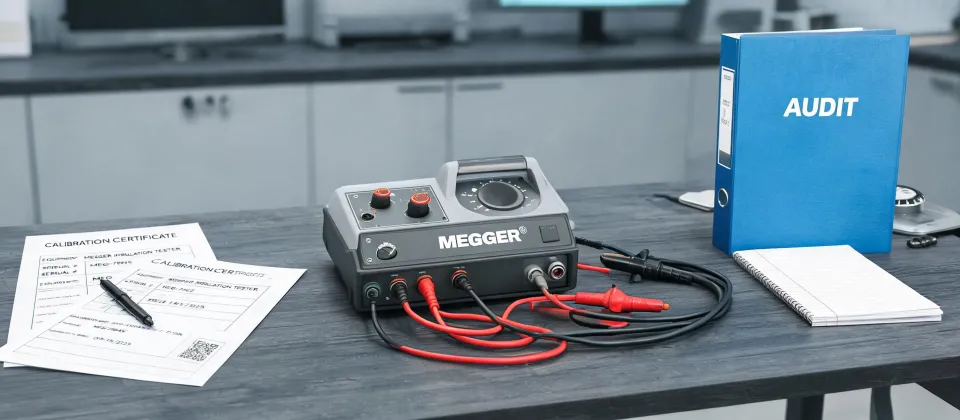
The Day the Old-Timer Retired
It was a Tuesday in Q1 2024. Our senior electrical tech—the guy who could diagnose a motor winding fault by ear—handed in his notice. Two weeks later, I was sitting in the purchasing office with a stack of requisition forms and a problem: I needed to order a megger insulation tester, a few voltage testers, and I had no idea what I was doing.
I’m a procurement manager at a mid-sized industrial service company. We manage a testing budget of about $180,000 annually. My job is to watch the numbers, not to argue about dielectric absorption ratios. But when the guy who knows everything leaves, someone has to ask: “What exactly is a megger insulation tester, and why does the replacement cost 3x more than the cheapest option on Amazon?”
The First Mistake: Buying on Price Alone
I did what any cost-conscious buyer would do. I pulled up three quotes. One from a distributor for a Megger MIT series (roughly $1,400). One for a no-name brand at $420. And one from an online supplier offering what they called a “megger insulation tester device” for $850 (brand unknown, but the description said “professional grade”).
The no-name was tempting. $420. Half-day shipping. I almost clicked buy.
But I paused. Something felt off. I picked up the phone and called our remaining senior tech—a guy named Dave who hates talking to purchasing almost as much as he hates paperwork. I asked him: “What do I need to know?”
His answer: “Dave,” he said (not helpful), “are you buying a multimeter or an insulation tester? Because they’re not the same thing.”
I didn’t know. And that’s when I realized the truth: I was buying a tool I didn’t understand. And that’s a dangerous place for a buyer.
The Hidden Costs No One Mentions
Here’s what my TCO spreadsheet (yes, I have a spreadsheet) revealed over the next week:
- The $420 option: No manual. No calibration certificate. No support. Dave told me calibration alone could cost $180 to $350 annually. Suddenly, “$420” became “$420 + $350 + risk.”
- The $850 mystery brand: They claimed it met industry standards, but when I asked for a spec sheet that matched IEEE 43-2000, they sent a generic datasheet. No model number. No traceability.
- The Megger MIT series: $1,400 out the door. But it came with a manual (a real one, not a photocopy), a free first-year calibration, and access to their technical support line. I called them to ask about the potential indicator feature. The engineer answered in 90 seconds.
In my experience, the surprise wasn’t the price difference. It was the hidden value. The Megger insulation tester device wasn’t just a box of parts. It was a documented, traceable instrument. The manual alone—over 100 pages with detailed test procedures—saved us from making a catastrophic mistake.
The Surprise: What I Learned About “What Is a Megger Insulation Tester?”
I’m not an electrical engineer. I can’t speak to the technical nuances of polarization index testing. But from a procurement perspective, I can tell you this: the “what is a megger insulation tester” question is actually two questions.
Question one: “What does it do?” It applies a high voltage to insulation and measures resistance. Simple enough.
Question two: “What does the buyer need to know?” That’s where it gets complicated. Because the cheap tester might pass a basic measurement, but if you’re testing critical assets—motors, transformers, cables—you need more than a number. You need a reliable, repeatable, auditable result. And that requires proper documentation.
The Megger manual includes a section titled “Potential Indicator—What It Means.” I know this because I read it (procurement reads everything before signing a PO). It explains that the potential indicator shows if voltage is present on the test circuit, which could damage the device or injure the operator. A no-name device might skip that. And that’s where the risk is.
The Rule I Now Live By
After comparing 8 vendors over 3 months (yes, this was a slow process), I developed a simple rule: when buying test equipment, trust the vendor who says “this isn’t my expertise.”
One distributor I called—a local supplier—actually said: “We carry generic testers, but for your application, you should really talk to a specialist. I’d recommend calling the manufacturer directly.”
That honesty earned my business for everything else. I bought the Megger from a different supplier, but I still use that local vendor for voltage testers and our Extech EX330 autoranging mini multimeter. In fact, I bought the EX330 on his recommendation. (That little multimeter, at $63, turned out to be one of our best buys for field troubleshooting. It’s not a Megger, but it doesn’t try to be.)
I get why people go with the cheapest option—budgets are real. But the hidden costs add up. A failed test due to an unreliable instrument? That’s a $1,200 redo when you have to pull a technician out for a second site visit. A calibration failure that creates a safety incident? That’s a regulatory nightmare.
So here’s my lesson: when you’re asking “what is a megger insulation tester,” don’t just look at the specs. Look at the total cost of ownership. Look at the manual. Look at the support. And if a supplier tells you something isn’t their strength—listen. That’s the most valuable advice you’ll get.
Final Checklist for the Buying Process
If you’re a fellow procurement person or a facility manager, here’s a quick cheat sheet I wish I’d had:
- Ask for the manual before you buy. A real one, not a one-page spec sheet. If it’s vague, walk away.
- Calculate your TCO: Price + calibration (annual) + training time + support costs. The cheap option often costs more over 3 years.
- Check the standards: For insulation testers, IEEE 43-2000 is the baseline. If the vendor can’t tell you which standard the device meets, that’s a red flag.
- Talk to the technician who will use it. I don’t know what a polarization index is. But Dave does. And Dave’s opinion is worth more than any marketing material.
That’s my story. It’s probably not your story—your needs, your budget, your risks are different. But I hope this gives you a framework for your own buying decision. And if you’re looking at a voltage tester or a multimeter, the same principles apply: the cheapest option is rarely the cheapest in the long run.

Marcus Feld
Marcus Feld is an electrical test and measurement analyst specializing in multimeters, oscilloscopes, clamp meters, insulation testers, spectrum analyzers, and data loggers. He applies IEC 61010-2-030 and IEC 61010-031 concepts while examining measurement category, bandwidth, true-RMS response, input loading, and stated uncertainty. His work helps maintenance engineers and test teams choose safe instruments with performance suited to the signals and environments they actually measure.