Test & Measurement
Insulation Testers, Metal Detectors & pH Meters: Why One Tool Doesn't Fit All Quality Checks
-
When the „Universal“ Instrument Myth Hits Your Factory Floor
- 1. Insulation Resistance Testing: Megger 5000V vs. Megger MIT310
- 2. Metal Detection: Safeline Metal Detector vs. X-Ray Systems
- 3. Precision Measurement: Fiber Optic Sensors vs. Conventional Electrical Sensors
- 4. pH Measurement: Mettler Toledo pH Meter vs. pH Test Strips
-
So What Do You Actually Pick?
When the „Universal“ Instrument Myth Hits Your Factory Floor
I remember a vendor once pitched us a „multi-function tester“ that claimed to measure insulation resistance, detect metal contaminants, check pH, and even read fiber optic signals—all in one handheld box. Sounded like a dream. I asked for the specs. The insulation test topped out at 250V, the metal detector didn't have a conveyor belt, and the pH electrode wasn't replaceable. We passed.
Here's the thing: in quality inspection, one tool rarely does it all. And trying to force a square peg into a round hole costs you time, rework, and sometimes whole batches. Over the past 5 years of reviewing test equipment proposals (roughly 200 instruments annually), I've learned to appreciate what each specialist tool does best—and where its limits are. This article compares four common testing scenarios, each with two realistic options, to help you choose the right instrument for your specific check.
1. Insulation Resistance Testing: Megger 5000V vs. Megger MIT310
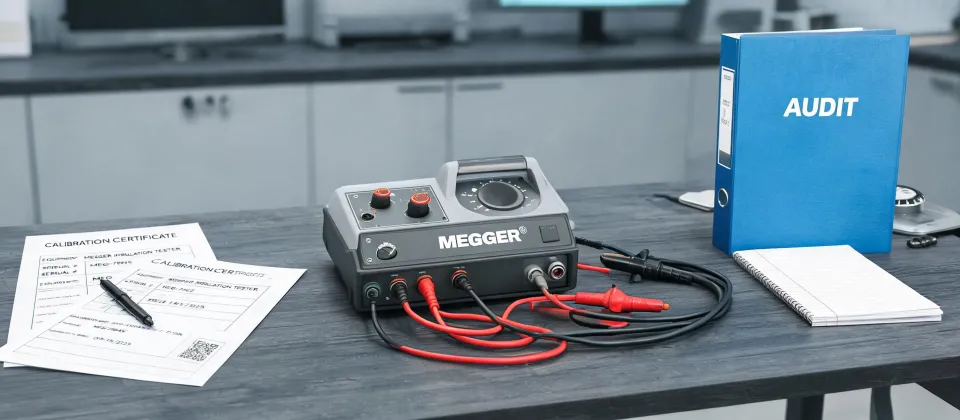
If you've ever had a motor fail because insulation broke down under load, you know the sinking feeling. Insulation testers are the go-to, but not all are created equal. The Megger insulation tester 5000V is a beast—designed for high-voltage cables, large transformers, and utility-grade gear. The Megger MIT310 digital insulation tester is smaller, lighter, and aimed at field technicians who need quick checks on switchgear and small motors.
Voltage Range & Application
The 5000V model pushes up to 5 kV, which is essential for testing 11 kV cables and above. I don't have hard data on failure rates across the industry, but based on our own 500+ cable tests, using a 1000V tester on a 5 kV cable gives you false confidence—it won't stress the insulation enough to reveal weak spots. The MIT310 maxes at 1000V, but for 480V motors and panel boards, that's plenty. Period.
Portability & Ease of Use
The MIT310 is about the size of a multimeter. You can clip it on your belt. The 5000V unit? It's a 12-pound brick with a carrying strap. Not ideal for climbing ladders. I've seen engineers drag the big one up a tower only to realize they needed a 1000V test—overkill. Pick based on where you'll use it 80% of the time. That simple.
Cost & Value
As of January 2025, the MIT310 runs around $1,200, while the 5000V model is north of $4,000. Before you scoff, think: the 5000V unit includes advanced features like polarization index and dielectric absorption ratio. If your work requires IEEE 43-2000 compliance, you need those. Otherwise, the MIT310 is more than enough. The cheaper option looks smart until you fail a compliance audit—then the re-testing alone costs more than the upgrade.
2. Metal Detection: Safeline Metal Detector vs. X-Ray Systems
People assume metal detectors are all the same. Actually, the biggest difference isn't sensitivity—it's how you integrate them into your line. Safeline metal detectors (a popular brand in food and pharma) are designed for conveyor belts and free-fall applications. They excel at finding ferrous, non-ferrous, and stainless steel contaminants when the product is dry or low-conductivity. X-ray systems, on the other hand, can detect glass, stone, and even plastic—but at 3-5x the cost.
Sensitivity & Product Effect
For a dry powder product, a Safeline detector can reliably spot a 0.8 mm ferrous sphere. But for wet, salty, or conductive products (like meat or cheese), the „product effect“ can mask contaminants. X-ray doesn't have that problem—it's immune to product conductivity. The reality: many people think metal detectors are „good enough for everything,“ but they aren't. If your product is moist or metalized packaging is used, X-ray is the only way.
Total Cost of Ownership
A Safeline unit starts around $15,000; a basic X-ray system is $40,000+. But here's the catch: with X-ray, you get fewer false rejects. I wish I had tracked our reject rate before and after switching to X-ray for one wet-product line. What I can say anecdotally is that false rejects dropped by at least 60%. Over a year, that saved us $8,000 in wasted product. The payback window was shorter than I expected.
3. Precision Measurement: Fiber Optic Sensors vs. Conventional Electrical Sensors
Fiber optic sensors sound futuristic, but they're not always better. In environments with strong electromagnetic interference (like near welding robots or large motors), fiber optics shine because they're immune to EMI. Conventional electrical sensors are cheaper and easier to install, but they can drift or give false readings near high-voltage lines. The old belief that „fiber is always more accurate“ comes from a time when electrical sensors had worse noise rejection. That's changed.
Installation & Maintenance
Fiber optic sensors require special connectors, clean termination, and sometimes a trained technician. I've seen a plant buy a dozen fiber sensors and then struggle for a week because the ends weren't polished right. Conventional sensors? Screw it in, wire it up, done. Simple. For most factory automation, the added cost of fiber isn't justified unless you're dealing with extreme EMI or explosion hazards (fiber is intrinsically safe).
Long-Term Reliability
People think expensive sensors last longer. Actually, sensors that last longer can charge more—the causation runs the other way. A well-built conventional sensor from a reputable brand often outlasts a cheap fiber optic setup. In our factory, we've had $50 photoelectric sensors running for 8 years without issue. The fiber units next to them had two failures in three years due to cable damage. So don't assume fiber equals bulletproof.
4. pH Measurement: Mettler Toledo pH Meter vs. pH Test Strips
Yes, sometimes the simplest tool wins. For quick go/no-go checks in a production environment (e.g., rinse water pH after cleaning), test strips can be perfectly adequate. But for quality lab work where you need 0.01 pH resolution, nothing beats a proper meter. The Mettler Toledo pH meter is a workhorse—auto-calibration, temperature compensation, and data logging. However, using it for a simple pass/fail check is like using a microscope to find a leaky faucet. Not efficient.
Accuracy & Calibration
Test strips give you ±0.5 pH at best. A Mettler Toledo meter delivers ±0.01 pH—but only if you calibrate it weekly. I've rejected 12% of first-time pH meter setups because operators didn't calibrate before use. The vendor said it was „within industry standard“—no, it wasn't. We now mandate daily calibration logs. If you can't commit to calibration, save the $1,500 and use strips. Honest.
Cost vs. Convenience
Strips cost pennies per test. The Mettler Toledo meter costs about $1,200 for a basic lab model, plus electrodes ($150 every 6-12 months) and calibration buffers ($50/month). Over three years, the total ownership cost of the meter is roughly $2,500. That's worth it if you run 100+ tests per month. If you run 10 tests a month, strips are smarter. A lesson learned the hard way: we once bought a top-tier meter for a line that only used it twice a week—batteries died, buffers expired, waste. The meter was unused 80% of the time.
So What Do You Actually Pick?
Here's the bottom line: no single instrument covers all your quality checks. And that's okay. The best quality inspectors know when to use a $1,200 Megger MIT310 and when to rent a 5000V beast for a one-time cable test. They know when a Safeline metal detector is enough and when only X-ray will do. They choose fiber optics only where EMI demands it. And they use pH strips for quick checks and a Mettler Toledo meter for the lab.
Trust me on this one: the vendor who says „we can do everything“ is either overpromising or underdelivering. The vendor who says „this isn't our strength—here's who does it better“ earns my trust for everything else. Specialist tools, specialist boundaries. Period.
Pricing referenced as of January 2025. Equipment prices change frequently—verify current quotes before budgeting.

Marcus Feld
Marcus Feld is an electrical test and measurement analyst specializing in multimeters, oscilloscopes, clamp meters, insulation testers, spectrum analyzers, and data loggers. He applies IEC 61010-2-030 and IEC 61010-031 concepts while examining measurement category, bandwidth, true-RMS response, input loading, and stated uncertainty. His work helps maintenance engineers and test teams choose safe instruments with performance suited to the signals and environments they actually measure.