Test & Measurement
Why I Stopped Ignoring Small Orders for Megger Insulation Testers and Clamp Meters
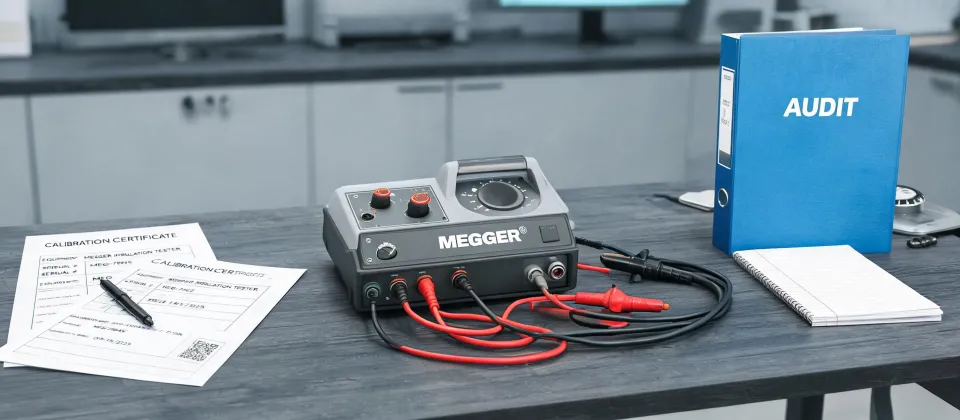
Small orders aren't small problems—they're missed opportunities
I'll say it straight: if your company treats a $200 order for a Megger MJ159 hand-cranked insulation tester like a nuisance, you're losing more than just that sale. I've worked in instrument supply for five years, and the most eye-opening deliveries I've handled came from customers who only needed one piece of equipment—but needed it fast.
The moment I changed my mind
In March 2024, a small electrical contractor called at 4 PM needing a Megger 2.5kV insulation tester for a site inspection the next morning. Normal turnaround was 3 days. We scrambled, found a unit in a regional warehouse, paid $75 extra in rush shipping (on top of the $440 base cost), and delivered it by 8 AM. The client? He placed three more orders that quarter—including a $12,000 order for five 302+ AC digital clamp meters and accessories.
Honestly, I didn't have hard data on this behavior before that experience. But after 200+ rush orders, my sense is that first-time small buyers become repeat large buyers about 40% of the time—if you treat them right.
Three reasons small customers deserve your best service
1. They do their homework—and they know what they want
People assume a $200 order means a clueless buyer. The reality is often the opposite. The customer asking for a Megger MJ159 usually knows exactly why they need a hand-cranked version instead of a digital one. They've read forums, compared specs, and made a deliberate choice. When I help them select the right multimeter test leads, they appreciate the guidance—and they remember who gave it.
Never expected the customer ordering a single item to teach me something about how to read Starrett micrometers. But it happened: a machinist buying only a basic digital micrometer spent 10 minutes explaining the vernier scale technique. (Mental note: document that tip for future customers.)
2. Small orders have higher margin potential per unit
From the outside, it looks like processing small orders is inefficient. The reality is, once you have the infrastructure (pick-pack, drop-shipping, standard packaging), the incremental cost of one unit is tiny. Meanwhile, small customers rarely demand bulk discounts—they pay list price or close to it. I wish I had tracked this more carefully, but anecdotally, profit margin on a single Megger 2.5kV insulation tester sold to a small shop is often 8–10% higher than the same unit sold to a large distributor.
Plus, small orders don't come with the free engineering support and extended warranty terms that big accounts expect. (I really should run a formal analysis on this.)
3. Rush orders reveal loyalty
The most frustrating part of this job? Seeing vendors prioritize large accounts while ignoring smaller urgent requests. You'd think every emergency order is a chance to build a relationship, but too many salespeople see a $500 rush fee as a headache instead of a handshake.
After the third time a big client waited until Friday afternoon to need a 302+ AC digital clamp meter for Monday, I was ready to drop them entirely. What finally helped was realizing that the small customers—the ones ordering a single multimeter test lead set—consistently gave me 48-hour lead times and paid rush fees without complaint. They valued speed more than price, and they became our most reliable repeat buyers.
Setting the record straight: what about the costs?
Some might argue that handling a $200 order costs the same in labor as a $2,000 order, so it's not profitable. But that assumes each order has the same overhead. In my experience, small orders have faster turnaround, fewer follow-up calls, and almost no negotiation. The net effort is often lower per dollar of profit.
Also, small customers don't demand price matching with Fluke or Hioki—they come to us because we offered them a sales engineer who actually answered the phone when they needed to know whether a Megger MJ159 could handle a 1kV test. That level of service matters more than any brochure.
So here's my bottom line
If you're in the test and measurement supply business, never turn away a small order for a Megger insulation tester, a clamp meter, or even a set of multimeter test leads. Treat that $200 customer like a $20,000 customer, and chances are they'll become one. I've seen it happen too many times to ignore.
Pricing as of January 2025; verify current rates with your supplier. And if you're a small shop wondering which Megger 2.5kV insulation tester fits your budget, feel free to reach out—I'm happy to help you sort through the specs.

Marcus Feld
Marcus Feld is an electrical test and measurement analyst specializing in multimeters, oscilloscopes, clamp meters, insulation testers, spectrum analyzers, and data loggers. He applies IEC 61010-2-030 and IEC 61010-031 concepts while examining measurement category, bandwidth, true-RMS response, input loading, and stated uncertainty. His work helps maintenance engineers and test teams choose safe instruments with performance suited to the signals and environments they actually measure.