Test & Measurement
A Practical Checklist for Buying Test & Measurement Instruments (Megger, Fluke, Mitutoyo, and More)
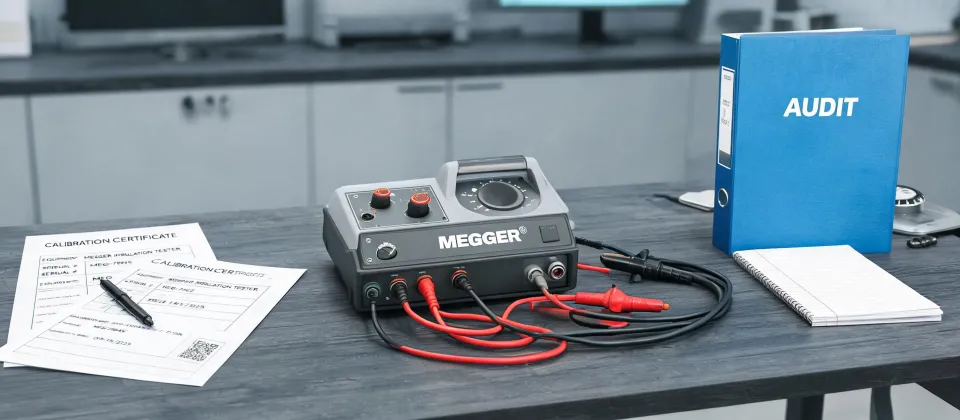
-
Why I Built This Checklist
-
Step 1: Define the Exact Measurement Requirement
-
Step 2: Verify Specifications Against the Datasheet (Not Just the Name)
-
Step 3: Check Accessory Compatibility—The Hidden Gotcha
-
Step 4: Compare Total Cost of Ownership, Not Just Price
-
Step 5: Validate Delivery Terms and Calibration Before Accepting
-
Notes and Common Mistakes
Why I Built This Checklist
I'm a procurement specialist handling test equipment orders for seven years. Somewhere around my third year (2020) I had a $3,200 order for five megger insulation resistance testers come back wrong—wrong voltage rating, wrong accessories. That mistake cost $890 in restocking fees and a two-week project delay. Since then, I've maintained a personal checklist to prevent repeating those errors. Here's the version I share with our team.
This checklist works when you're buying any of these:
- A megger for insulation resistance testing (e.g., the Megger MIT series)
- A specific multimeter like the 177 (Fluke 177) or similar
- Inductive ring sensors for position or proximity detection
- Precision tools like Mitutoyo calipers (yes, figuring out where to buy genuine Mitutoyo calipers is part of the challenge)
Step 1: Define the Exact Measurement Requirement
Sounds obvious, but I've seen people order a general-purpose insulation tester when they needed a high-voltage model for cable testing. Write down:
- What are you measuring? Insulation resistance? Voltage? Distance? Temperature?
- Range and accuracy needed. For a megger insulation resistance tester, do you need up to 1000V or 5000V? For a multimeter, is True RMS required? For calipers, what resolution (0.01 mm vs 0.001 in)?
- Environment. Indoor lab or outdoors? Dusty, wet, or explosive area?
For inductive ring sensors, ask: target material (metal/non-metal), sensing distance, and output type (NPN/PNP, normally open/closed). My mistake in 2022: ordered an inductive sensor with wrong detection range for a packaging line—had to re-order, losing three days of production.
Step 2: Verify Specifications Against the Datasheet (Not Just the Name)
Do not rely on product titles alone. Example: many listings say "Megger Insulation Tester" but the model may differ. Check:
- Measurement voltage range
- Insulation resistance range (up to how many GΩ?)
- Safety rating (CAT III vs CAT IV for multimeters)
- Battery type and run time
- For calipers, confirm it's a genuine Mitutoyo—counterfeit Mitutoyo calipers are common. Look for seller authorization or factory-sealed packaging.
A trick: pull the official spec sheet (PDF) and compare line by line. I once caught a listing that said "Fluke 177" but the accuracy was ±1.5% instead of the standard ±0.09%—closer inspection revealed it was a different revision (not the current 177).
Step 3: Check Accessory Compatibility—The Hidden Gotcha
This step is often overlooked. Many instruments require specific leads, probes, or adapters that are sold separately or incompatible with older models.
- Megger insulation testers often come with test leads rated for certain voltage. Do your existing leads match? If you need extra-long leads, verify they are available.
- Multimeter probes – Fluke 177 uses standard 4 mm shrouded banana plugs, but some third-party probes may not fit well. Not ideal, but workable? Actually, loose connections cause erratic readings. Better to buy genuine accessories.
- Inductive ring sensors – check connector type (M12, M8, etc.) and cable length. I've ordered sensors with pigtail leads when I needed a quick-disconnect—had to add an adapter, which increased cost by 15%.
- Mitutoyo calipers – the data output port (if you need SPC connection) requires a specific cable. Not all aftermarket cables work.
Real example: in September 2023 I ordered 12 inductive ring sensors for a conveyor system. They arrived with the wrong connector—M12 vs M8. That mistake affected a $600 order and a 1-week delay. Now I always ask for the connector type before ordering.
Step 4: Compare Total Cost of Ownership, Not Just Price
The cheapest quote rarely means lowest total cost. Consider:
- Warranty and support. Megger offers a 3-year warranty on many testers; some third-party sellers offer only 1 year. Fluke has a limited lifetime warranty on some models.
- Calibration certificates. Need NIST-traceable calibration? That adds $30–$100 per instrument. Verify if it's included or an extra.
- Lead time and stock. A lower price from a less-stocked distributor might mean longer wait. For a critical project, paying a bit more for guaranteed delivery is worth it.
- Shipping and restocking fees. Returns can eat margin. I once ordered a megger insulation resistance tester from a vendor that charged 25% restocking—never again.
Where to buy Mitutoyo calipers? Official distributors (like MSC, Grainger, or authorized dealers) are safer than Amazon marketplace, where counterfeit risk is real. As of January 2025, the list of authorized Mitutoyo distributors is published on mitutoyo.com.
Step 5: Validate Delivery Terms and Calibration Before Accepting
Don't just unbox and put on the shelf. Upon receiving:
- Inspect for shipping damage. I've received a Fluke 177 with a cracked LCD because it was poorly packaged.
- Check calibration date. Many instruments come with a calibration certificate valid for 1 year. If it's already 11 months old, you'll need to recalibrate soon—add that to your schedule.
- Test the instrument. For a megger insulation resistance tester, perform a basic open/short check. For inductive sensors, test with a target before installing.
- Store original packaging until you're sure it's correct. Return is easier.
Notes and Common Mistakes
- Ignoring environmental rating. A CAT III multimeter is not safe for high-energy circuits. A standard caliper might not be coolant-resistant in a machine shop. Specify IP rating if needed.
- Assuming all inductive sensors are the same. There are shielded and unshielded, normally open vs normally closed, PNP vs NPN. Get it wrong and your control system won't work.
- Falling for too-cheap-to-be-true deals. Counterfeit Fluke, Megger, and Mitutoyo instruments are common. Verify the seller's authorization. I don't have hard data on industry-wide counterfeit rates, but based on our five years of orders, my sense is about 5% of third-party listings on auction sites are suspect.
- Neglecting accessory costs. That $100 multimeter may need $50 worth of replacement probes within a year. Factor that in.
Honestly, I'm not sure why some buyers still skip these steps. My best guess is they're in a hurry. But the 15 minutes you spend checking this list can save you days of frustration and hundreds (or thousands) of dollars. Exactly what we needed—a repeatable process.

Marcus Feld
Marcus Feld is an electrical test and measurement analyst specializing in multimeters, oscilloscopes, clamp meters, insulation testers, spectrum analyzers, and data loggers. He applies IEC 61010-2-030 and IEC 61010-031 concepts while examining measurement category, bandwidth, true-RMS response, input loading, and stated uncertainty. His work helps maintenance engineers and test teams choose safe instruments with performance suited to the signals and environments they actually measure.