Test & Measurement
How to Choose the Right Test Instruments for Your Team – A Buyer’s Guide
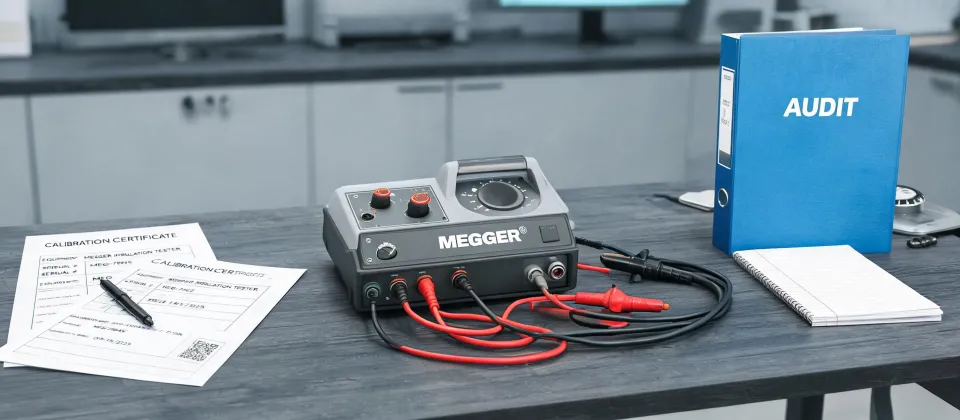
There’s no one-size-fits-all answer when you’re buying test instruments for a team. I learned that the hard way. When I took over purchasing in 2022, I ordered three of the same handheld megger insulation tester for all our electricians. Big mistake. Two of them barely used it—the 1000 V version was overkill for their low-voltage work, and the third guy complained the case was too bulky for confined spaces.
So let me save you the headache. I'll walk through three common buying scenarios I've managed over the past few years, each with different instrument needs. Your job is to figure out which one fits your crew.
Scenario A: Field maintenance crew – durability & safety first
These are the people crawling under panels, climbing ladders, working in rain or dust. They need instruments that survive drops and dirt. If you're equipping a team of electricians or HVAC techs, here's what to prioritize:
- Insulation testers: A megger insulation tester handheld model that can handle 500 V and 1000 V ranges is ideal. The megger insulation tester 1000 V is a workhorse for motor and cable testing. Don't pay for 5 kV if you don't need it.
- Multimeters: They‘ll ask “which Fluke multimeter should I buy?” I tell them: for field use, pick a model with at least CAT III 600 V rating, a backlight, and a holster. The Fluke 117 or 179 are solid, but check your team’s typical voltage range first.
- Ruggedness: Look for IP54 or higher. Trust me, replacing a damaged unit every six months eats into your budget.
In 2024, I consolidated orders for 45 technicians across 3 locations. We standardized on the megger MIT300 series for insulation testing and a single Fluke model for general troubleshooting. The vendor consolidation saved us ~12% on unit cost, and we cut training time because everyone used the same interface.
“5 minutes of verification beats 5 days of correction.” That‘s my mantra. We created a pre-purchase checklist: check voltage range, IP rating, battery type, and calibration cycle. It’s saved us an estimated $4,000 in rework over the past year.
Scenario B: R&D or lab – precision & accuracy over ruggedness
Your lab team cares about data quality, not drop tests. They need sensors that produce repeatable, traceable measurements. Two keywords pop up often in my requests: CO₂ sensor and optical distance sensor.
- CO₂ sensors: For environmental monitoring or ventilation research, look for NDIR (non-dispersive infrared) technology. Accuracy of ±30 ppm is standard; ±10 ppm if your application is critical. I’m not a calibration expert, so I always ask our lab manager to verify the sensor’s NIST traceability certificate before I order.
- Optical distance sensors: These are used in automation or quality control. Key specs: measurement range (e.g., 0–100 mm), resolution (0.01 mm vs 0.001 mm), and output type (analog vs digital). I once bought a batch that had the wrong output protocol—set us back a week. Now I always confirm the PLC compatibility upfront.
- Calibration budget: Factor in annual recalibration. A $1,200 sensor might cost $200/year to calibrate. If you skip it, your R&D results won‘t be publishable.
One more thing: Don’t assume lab instruments are “better” just because they’re expensive. I nearly ordered a high-end CO₂ sensor for a field trial—good thing I double-checked. It would have failed within two months in the dusty environment. Prevention over cure.
Scenario C: Multi-purpose technicians – versatility that doesn't break the bank
These are the jack-of-all-trades staff who fix a motor, check a temperature sensor, and measure a distance—all in one shift. They need instruments that cover multiple jobs without carrying a toolbox full of gear.
- For electrical work: A good Fluke multimeter is the obvious choice, but which model? The Fluke 87V is legendary, but it costs $500+. If your guys rarely deal with variable-frequency drives, the Fluke 115 or 117 covers 90% of tasks at half the price. I’ve saved my department about $150 per tech by going with the 115 series for non-specialist roles.
- For insulation testing: A compact megger insulation tester handheld like the MIT200 series can do both 250 V and 500 V tests—good for routine checks. You don’t need the 1000 V version unless you’re testing heavy cables.
- For distance and environment: An optical distance sensor that's battery-powered and handheld (like a laser distance meter) plus a portable CO₂ sensor if indoor air quality is part of their job. We found a combined CO₂ + temperature + humidity meter for $150 that works for our office walkthroughs.
Looking back, I should have standardized on a smaller set of models earlier. In 2023, I had 8 different instrument types across 6 vendors—a nightmare for calibration tracking. When we consolidated to 4 primary vendors, our admin workload dropped by 3 hours per month.
How to decide which scenario you‘re in
Ask yourself these three questions:
- What’s the primary environment? Field (dirty, drops, weather) → go with Scenario A. Lab (clean, controlled) → Scenario B. Mixed indoor/light industrial → Scenario C.
- Who is the user? Dedicated electricians? Lab scientists? General maintenance staff? The skill level and specialization will drive the instrument complexity.
- What‘s your budget for errors? If re-calibration or replacement costs hurt your bottom line, spend more upfront on rugged or accurate gear. That’s the prevention over cure principle: the best purchase is the one you don't need to redo.
If you‘re still unsure, start by mapping your team’s most common tasks to the instruments they’ll use 80% of the time. The other 20% can be rented or borrowed. That’s how we cut our inventory by 30% last year without reducing capability.
One final thought: Don't be afraid to admit you‘re not the technical expert. I’m not an electrical engineer, so I always loop in our senior tech when comparing specs. It‘s saved me from ordering the wrong optical distance sensor more than once. And when a vendor claims their megger insulation tester is “best in class,” I ask for third-party test reports. Real data beats marketing every time.
Prices as of January 2025; verify current rates with your suppliers.

Marcus Feld
Marcus Feld is an electrical test and measurement analyst specializing in multimeters, oscilloscopes, clamp meters, insulation testers, spectrum analyzers, and data loggers. He applies IEC 61010-2-030 and IEC 61010-031 concepts while examining measurement category, bandwidth, true-RMS response, input loading, and stated uncertainty. His work helps maintenance engineers and test teams choose safe instruments with performance suited to the signals and environments they actually measure.