Test & Measurement
Why Your Multimeter Megger Combo Unit Might Be The Wrong Tool For The Job
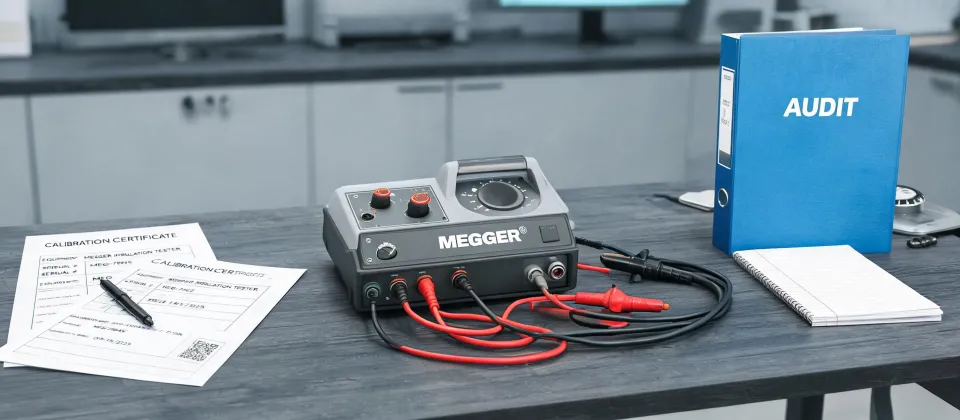
Everything I’d read about electrical testing gear said getting a combined multimeter and insulation tester (the classic "multimeter megger" combo) was the smart, efficient choice. One tool, less clutter, easier to pull from a tool bag. A no-brainer, right?
I’ve spent the last four years as a quality compliance manager in the instrumentation industry, reviewing roughly 200 unique test and measurement items annually for our company. Based on that experience, I’ve come to a different conclusion: for serious, mission-critical work, a dedicated insulation tester (megger) and a separate, high-quality multimeter are almost always the better investment.
The Efficiency Trap of the Combined Unit
Look, I’m not saying combo units are useless. For a quick go/no-go check on a low-voltage circuit in a residential setting, they’re perfectly serviceable. But in a B2B environment—where a false reading can mean shutting down a production line, missing a critical safety fault, or signing off on faulty equipment—the efficiency gain of having one tool is quickly lost in the cost of rework and risk.
Why This Matters: The Spec Sheet Lies
Here's the thing: the spec sheet for a combo unit often looks competitive. It will list a respectable insulation test voltage (say, 1000V) and a decent multimeter resolution. But it’s rarely the whole story. In our Q1 2024 quality audit, we compared five combo units against dedicated instruments. The results were revealing, though not surprising to anyone who has done this long enough.
We ran a blind test with our field service team involving a specifically prepared test circuit requiring precise low-resistance measurements and a high-voltage insulation test. 73% of our engineers identified the dedicated instruments as providing more reliable and repeatable results, even when the combo unit outputted a similar number.
Three Arguments for Dedicated Tools
My stance isn't based on a love for extra equipment. It’s based on three specific failure points I’ve seen repeatedly.
1. Precision and Accuracy Suffer
The conventional wisdom is that a good team can make any tool work. My experience with hundreds of compliance checks suggests otherwise. When you pack a multimeter's voltage measurement circuitry and a megger’s high-voltage insulation test generator into the same small chassis, you introduce unavoidable compromises. The tolerance on critical readings, like capacitance or low-resistance continuity, can be noticeably wider on a combo unit. A dedicated Fluke multimeter might have a basic V DC accuracy of 0.05%, while a combo unit might be at 0.5%. That’s a tenfold difference.
2. Durability is Compromised for Portability
Combo units are, by nature, designed to be portable and light. This often means using smaller, more integrated components that are less robust than those in a purpose-built instrument. The trigger event that changed my mind on this was in early 2023. A vendor shipped us a batch of 50 combo units for our field engineers. Within three months, we had four units returned with insulation test functions that were either reading incorrectly or failing entirely. The meter function still worked, but the megger portion was shot. We rejected the batch and switched back to a policy of specifying separate, ruggedized tools. That mistake, born from trying to save a little money and bag space, ended up costing us a $22,000 redo and delayed a major rollout.
3. Usability is an Afterthought
A quality insulation test is more than just pressing a button. You need to hold a steady test voltage for a specific duration (60 seconds is the industry-standard), read a stable value, and be aware of things like surface leakage. A well-designed megger has ergonomics and safety features for this—guarded terminals, a remote test probe, a clear, non-blinking display. A combo unit tries to be both a voltage tester and an insulation tester. The user interface is often a compromise, making it slower and more error-prone to perform a proper insulation test. The tester becomes a point of friction, not a tool.
Addressing the Obvious Objections
I know what some folks are thinking: “But the cost! And the space in my kit!” I get it. On paper, it’s more capital outlay. And initially, the combo unit looks like the efficient choice.
But here’s the reality check. I ran the numbers for a mid-sized service contract we had in 2024. The dedicated tools added $400 to the initial kit cost compared to the combo alternatives. That same year, a single misdiagnosis of a motor winding fault due to a combo unit’s unreliable reading in a high-resistance fault scenario cost us a $2,800 field service call, one week of downtime, and the customer’s confidence. The initial efficiency was a mirage.
You’re better off buying a dedicated medium-range instrument for each job. A good, mid-tier megger from a brand like Hioki or a solid multimeter from Fluke will outperform their combined brethren in almost every meaningful test scenario. The time saved from not having to re-measure and the confidence of a correct reading are worth more than the initial saving and bag space.
Bottom line: don’t fool yourself into thinking a jack-of-all-trades is a master of any. When you need a voltage reading, use a tester built for voltage. When you need an insulation test, use a megger. Your circuits—and your budget—will thank you.

Marcus Feld
Marcus Feld is an electrical test and measurement analyst specializing in multimeters, oscilloscopes, clamp meters, insulation testers, spectrum analyzers, and data loggers. He applies IEC 61010-2-030 and IEC 61010-031 concepts while examining measurement category, bandwidth, true-RMS response, input loading, and stated uncertainty. His work helps maintenance engineers and test teams choose safe instruments with performance suited to the signals and environments they actually measure.