Test & Measurement
Insulation Tester vs Megger & 3 Other Instrument Comparisons: What an Equipment Buyer Learned
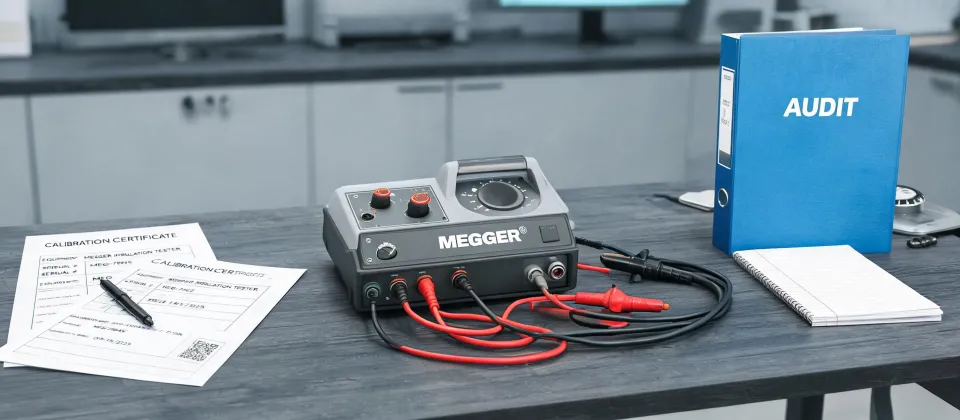
- 1. Insulation Tester vs Megger: The Brand That Became a Category
- 2. Laser Micrometer vs Contact Micrometer: The "Fancy" Option Isn't Always Right
- 3. Digital Clamp Meter vs Multimeter: You Probably Need Both
- 4. Zeiss vs Global Dental Microscope: The $30,000 Lesson in Fit
-
The Bottom Line: What I'd Tell a Fellow Buyer
I'm the office administrator for a 180-person industrial services company. My business card doesn't say "equipment buyer," but that's what I do. Every year, roughly $250,000 in test and measurement instruments, maintenance tools, and lab gear flows through my desk—across about 8 vendors and 40-something internal orders. I report to both operations and finance, so I feel the pressure from both sides.
Four instrument purchase decisions, in particular, taught me how to compare things properly. Each one ended with a different conclusion, and at least one caught me completely off-guard:
- Insulation tester vs megger—a brand-vs-category case where the terminology is honestly deceiving
- Laser micrometer vs contact micrometer—where "advanced" wasn't automatically better
- Digital clamp meter—the one I kept accidentally comparing to the wrong tool
- Zeiss vs Global dental microscope—the most expensive lesson in "best specs ≠ best fit"
Here's the framework I now use: what each option really is, what it costs, what it handles, and what it demands from you afterward (calibration, support, training). Prices as of Q1 2025—verify them before budgeting.
1. Insulation Tester vs Megger: The Brand That Became a Category
Let's clear up the biggest confusion first: Megger is a brand name. It's also the generic word people use for insulation resistance testers, kind of like Kleenex or Xerox. So "insulation tester vs megger" isn't really A vs B. It's "Megger brand vs any other insulation tester." That's the comparison that actually matters.
Looking for a megger 5kv insulation tester price was my first real test. And I learned a few things the hard way.
Price
A generic 5kV unit from a recognizable but non-premium brand runs roughly $900–$2,500, based on quotes I gathered in early 2025. The Megger MIT525—their standard 5kV model—came in at $3,500–$4,500 new from distributors. That's a real premium, and it deserves scrutiny.
Calibration & documentation
Here's where the two paths split. Megger instruments ship with factory calibration certificates, and the service network answers a calibration question in one sentence. The budget unit we tried? The listing said "NIST traceable." When we asked for the actual certificate, the vendor sent a scanned piece of paper with no lab stamp and no traceability chain. Per FTC advertising guidelines (ftc.gov), claims must be substantiated. Funnily enough, the FTC won't be policing every marketplace listing—so you, the buyer, are the enforcement mechanism.
Real-world output
And here's where I ate my own mistake. I assumed spec sheets meant what they said. Didn't verify. When our technician put the budget tester under a real load, the 5kV output sagged to about 4.2kV. The "5kV rated" claim was technically true under no-load conditions, I guess. Worthless in practice. We saved $2,800 buying that unit, then spent roughly $4,100 on third-party recalibration attempts, a replacement unit, and the quiet shame of explaining the audit hole to our QC engineer. Net loss: $1,300, and a lesson.
So is the Megger premium real?
Yes, for us it was. But here's the part that surprised me: for some buyers, the generic is completely fine. If you're a sole contractor testing motors occasionally with no external audits, a $900 insulation tester might do everything you need. Don't let the brand-name premium terrorize you into overspending. Do let the documentation requirements drive the decision. The framework that works: what do you have to prove, and to whom?
2. Laser Micrometer vs Contact Micrometer: The "Fancy" Option Isn't Always Right
Our quality department needed to verify diameters on soft rubber gaskets. The request came to me as "we need a laser micrometer." I started pricing LSM-style units (think Keyence or Mitutoyo) and quickly realized I was falling into the "new technology = better technology" trap.
How they differ
A contact micrometer touches the part. A laser micrometer projects a beam and measures the shadow, without touching anything. If your part is soft, hot, vibrating, or moving on a production line, the laser is the only real option. If your parts are rigid and sitting on a bench, a calibrated contact micrometer is accurate to microns and costs $100–$500. A decent industrial laser micrometer starts around $3,000 and goes well past $10,000.
The hidden cost I didn't see coming
Recalibration and verification. The contact unit checks out against a gauge block in two minutes. The laser unit needs alignment verification, fixture checks, and a more careful calibration process. When we sent ours out in 2024, the invoice was $600 plus a week of downtime. Shipping was the cheap part—a USPS Priority Mail flat-rate box. (And no, the $0.73 First-Class letter rate that took effect in January 2025 won't get a micrometer anywhere. It won't even get a letter across town anymore, apparently.)
What I'd decide again
Buy the laser if the material or process demands non-contact measurement. Buy the contact micrometer if you're checking rigid parts and you want value. And budget the calibration cost up front on either one, because it will come due at the worst possible time.
3. Digital Clamp Meter vs Multimeter: You Probably Need Both
Digital clamp meters don't get enough respect. They get compared to multimeters and then dismissed as less-precise versions of them. In some ways, that's fair. But in the one way that matters most for troubleshooting—measuring current without breaking a circuit—a clamp meter does something a multimeter can't safely do.
The core difference
A clamp meter measures current by clamping around a single conductor. You don't disconnect anything. A multimeter has to be wired in series, which means opening the circuit. For a maintenance electrician who can't shut down a production line to diagnose a breaker trip, that's not a small advantage. It's the whole ballgame.
Where each one wins
Multimeters still win for voltage accuracy, low-level signal measurement, and diagnostic features like data logging. A good handheld multimeter runs $150–$500. A genuinely capable digital clamp meter—the Fluke 323 class, for example—is around $150–$250. If you're buying a first meter for a new shop, get a clamp meter that also reads voltage. It covers 80% of what a typical workspace needs. If you're equipping a full electrical team, have both on the truck (and, no, they're not interchangeable—I learned that by watching our lead electrician laugh at a purchase order).
The spec that's non-negotiable
CAT rating. Per IEC 61010, CAT III and CAT IV ratings indicate a meter is safe for distribution panels and main service entrances. A $40 clamp meter with no CAT rating is honestly fine for hobby bench work and not much else. We bought Fluke-rated units for the field crew and cheap units for the office workbench, where the scariest thing they measure is a 12V power supply. Safety spec drives the purchase, even when the budget screams otherwise.
4. Zeiss vs Global Dental Microscope: The $30,000 Lesson in Fit
If you ever get to choose between a Zeiss OPMI and a Global Surgical G8 dental microscope, you'll see why "just pick the better one" isn't advice. Both are excellent. Both cost more than a used car. And the right choice has surprisingly little to do with optics.
Optics: Zeiss earns its reputation
Everyone who looked through both scopes said the same thing: the Zeiss image is crisper, brighter, with better depth perception. It's the difference between high-end and highest-end. Global is no slouch, but Zeiss's optical engineering is the benchmark for a reason.
Ergonomics: Global wins the daily grind
The Global G8 was designed specifically for dentistry. The eyepiece angles, the weight balance, the way it stays put during a two-hour procedure—everything about it feels like someone sat in a dentist's chair while designing it. I spent 15 minutes with each setup, and even I could feel the difference. The Zeiss felt like a surgical scope that happens to accommodate dental work. The Global felt like a dental instrument that happens to have phenomenal optics.
Service: the tiebreaker
Our Global quote came back in 4 days. The Zeiss took 3 weeks. Zeiss is a massive organization with more processes, and that's fair—but when you're a mid-size customer, you notice the difference. Global Surgical's service network is dental-focused in the U.S.; Zeiss's dental support felt like one division of a conglomerate. Both would probably come through eventually. One felt more eager to have our business.
Price: not the deciding factor
Fully configured, quotes landed around $25,000–$40,000 depending on options. Global was slightly more aggressive on the final number, but at that price point, a few thousand isn't what tips the decision. The decision was: which scope makes a dentist want to work in it all day?
We bought the Global for the main treatment room and the Zeiss for the surgical suite. Keeping the "better" optics for the more demanding procedures and the "better fit" for the daily grind turned out to be the right call.
The Bottom Line: What I'd Tell a Fellow Buyer
Plain-language version, if you're standing where I was:
- Insulation tester vs megger: Decide what documentation you have to prove, then buy accordingly. Audited environment? Get the Megger—or any brand with genuinely traceable calibration certs—and stop second-guessing the premium. No audits? Save the money and get a reputable generic.
- Laser micrometer vs contact micrometer: Let the material decide. Soft, hot, or moving parts mean laser. Rigid shop-floor parts mean contact, and you keep the extra $5,000 for something useful.
- Digital clamp meter: Put CAT III/IV-rated units in any hand that touches a live panel. Equip the electrical team with both a clamp meter and a multimeter—they're complementary. If you can only afford one, buy the clamp meter.
- Zeiss vs Global: Demo both in the actual workspace and weigh ergonomics as heavily as optics. The better image isn't better if the clinician is fighting the instrument at hour four.
And one thing that doesn't get enough airtime. I've placed small orders with vendors of every size, and I know what it feels like to be treated like a nuisance because the quote was only $200. The vendors who took those small orders seriously—who sent specs, answered follow-up questions, and acted like my business mattered—are the ones who got the bigger orders later. Small doesn't mean unimportant. It means potential. I notice who understands that.
This worked for our context: a mid-size industrial company with steady, predictable purchasing patterns. If you're a startup buying your first toolkit, or a hospital lab with stricter compliance requirements, your mileage may vary. But the framework holds—ask what you're really comparing before you write the PO.
Prices and specifications above were accurate as of Q1 2025. The instrument market changes fast, so verify current pricing, models, and availability with your supplier before making a purchase.

Marcus Feld
Marcus Feld is an electrical test and measurement analyst specializing in multimeters, oscilloscopes, clamp meters, insulation testers, spectrum analyzers, and data loggers. He applies IEC 61010-2-030 and IEC 61010-031 concepts while examining measurement category, bandwidth, true-RMS response, input loading, and stated uncertainty. His work helps maintenance engineers and test teams choose safe instruments with performance suited to the signals and environments they actually measure.