Test & Measurement
Megger 1kV Insulation Tester, Balluff vs Patriot Sensors, Refrigerated Centrifuge Price: A Field Guide
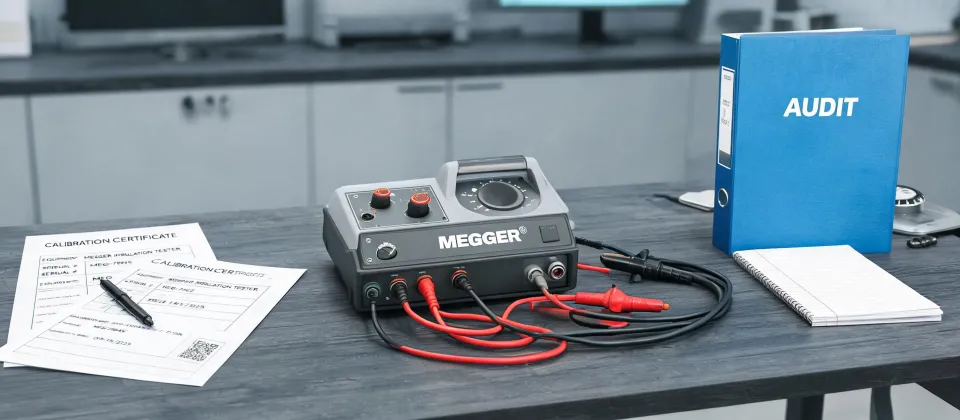
There is no single best answer to the question I hear most often: 'I need a Megger, or a sensor, or a centrifuge — which one should I buy?' The honest answer is 'it depends.' But that phrase is useless unless I show you what it depends on.
I coordinate rush orders for a technical test & measurement distributor. Over the last five years, I have helped source more than 200 urgent equipment orders, from $400 handheld meters to an $18,000 refrigerated centrifuge that had to land before a lab audit. My job is to separate the 'must be perfect' details from the 'good enough' details before the shipping clock starts.
When I first started doing this, I assumed that speed was everything. If the customer needed it fast, I found the fastest shipping option and pressed order. That worked until March 2024, when a packaging line stopped because the replacement sensor arrived with the wrong connector. We saved two days on the quote and lost five days on rework. The lesson was uncomfortable: the cheapest mistake is the one you make by skipping the spec review.
This article is not a single recommendation. It is a decision map for three common rapid-order situations: insulation testers, industrial sensors, and refrigerated centrifuges.
Megger and Insulation Tester — Are You Buying a Brand or a Tool Type?
This is the first thing to untangle. 'Megger' is both a brand name and, in many workplaces, a generic term for an insulation resistance tester. Asking for a 'megger' is a bit like asking for a 'kleenex' — everyone knows what you mean, but it does not tell you which format or voltage class you need.
A Megger 1kV insulation tester is a handheld instrument that applies 1,000 V DC to a conductor or winding and measures how well the insulation resists leakage current. It gives you a resistance value in megohms. An insulation tester from any brand can do this, but the instrument must have the right voltage range, test leads, and calibration certificate for your work.
If the job is routine motor or cable testing at 1 kV, a mid-range insulation tester from Megger, Fluke, or Hioki will all do the job well. Brand preference is often based on menu layout, data logging, and the service support you already have. What matters more is that the unit is calibrated and rated for the environment where it will be used. On a live plant floor, a CAT III rated instrument matters more than the logo on the case.
My rule for insulation testers: if you only need one voltage and a pass/fail number, buy a well-known brand with traceable calibration. If you are testing motors, transformers, or long cables, do not save money by dropping the 5 kV range.
Price is another variable. Basic 1 kV insulation testers run roughly $350–$900, and a Megger-brand 1kV unit with data storage can land between $800 and $1,500 depending on the model and accessories (vendor quotes, January 2025). I was quoted $1,175 for one Megger unit this winter — no, actually it was $1,040 with a basic case, but I would need to check the exact quote before repeating it.
If the order is urgent, ask three questions before submitting it:
- Do the test leads match the instrument and the ratings you need?
- Does the supplier include a current calibration certificate or a link to download it?
- Is the voltage range exactly what your procedure specifies, or are you buying extra range you do not need?
Is Balluff a Good Brand for Sensors? Yes — But Choose by Environment, Not Hype
For industrial automation, Balluff is a solid, reputable brand. Their inductive proximity sensors, photoelectric sensors, and IO-Link products are common in automotive and packaging lines for good reason: they are consistent, well-documented, and backed by strong technical support. If you ask 'is Balluff a good brand for sensors?,' my short answer is yes for networked industrial automation.
But there are situations where another brand is the better choice. Patriot Sensors, for example, has a different strength: rugged linear position sensing for hydraulic cylinders, offshore equipment, and heavy machinery. A Balluff photoelectric sensor is not a replacement for a Patriot magnetostrictive linear position sensor. They solve different problems.
The keyword I always repeat to purchasing teams is 'existing installed base.' If your machine already runs on Balluff IO-Link, another Balluff sensor is usually the easiest and lowest-risk choice. If your hydraulic system already uses Patriot Sensors, changing to a different brand may add new setup programming and spare-parts complexity.
I once handled a rush order for a client whose OEM spec listed a Patriot sensor. They asked me to find a cheaper alternative. The alternative was $180 less, but it needed a different mounting bracket and cable assembly. By the time we added the parts and expedited shipping, the 'cheap' option was $260 more than the original. It was a good reminder that compatibility is part of quality.
When quality perception explains buying behavior, I usually share one example: in Q3 2024, a food packaging plant replaced twenty generic sensors with Balluff IO-Link sensors because they wanted better diagnostics. Their line manager told me the downtime alerts alone paid for the change in four months. The old sensors were not bad; they were simply blind. The new sensors gave maintenance a voice.
How to decide fast:
- If the sensor needs to talk to a PLC or an industrial network — look at the brand already used in the panel.
- If the sensor is in a harsh, high-vibration or hydraulic environment — look at Patriot Sensors or similar heavy-duty linear position specialists.
- If you are not sure — measure first. Mounting, cable length, connector type, and output signal cannot be guessed from a screenshot.
Avoid the trap of making the final decision based only on price-per-sensor. A $50 difference is nothing compared with a 40-minute machine stoppage, and the sensor that looks cheap on paper is expensive on a busy production day.
Refrigerated Centrifuge Price: What Are You Actually Buying?
A refrigerated centrifuge is not a commodity. It is a precision instrument that has to keep samples at a controlled temperature while spinning at high speed. The price question cannot be answered honestly until you define the rotor, the maximum relative centrifugal force, the tube capacity, and the temperature control accuracy your lab needs.
As a rough guide, based on quotes I collected in January 2025:
- Benchtop refrigerated centrifuge, basic model: $2,500–$8,000
- Mid-range unit with multiple rotors and higher RCF: $8,000–$15,000
- High-capacity floor model for production or research: $15,000–$40,000+
Prices change quickly, so verify current quotes before putting them in a budget. If you are shopping on price alone, you will almost always end up with a machine that either does not fit your tube types or cannot reach the speed your protocol requires.
Here is where I try to be careful. I do not think expensive is always better. But I have learned that a centrifuge is one of those instruments where quality is directly tied to your lab's credibility. A unit that vibrates, makes noise, or lets the temperature drift will give you inconsistent results. The technician who tests the sample will blame the test, but the client will remember the lab that looked careless.
Refurbished units can be a reasonable option if the budget is tight. I have seen good refurbished centrifuges save labs $3,000–$6,000. I have also seen a $2,000 savings disappear when the compressor failed three months later and the lab had no warranty coverage. If a refurbished unit is on the table, ask for temperature qualification records and a service contract, not just a clean exterior.
For an urgent order, add this to your checklist:
- Are the rotors and adapters included or extra?
- Does it have a temperature validation certificate?
- Can the supplier guarantee delivery before your scheduled test or audit?
- Is a backup rotor available from the same source if yours gets dropped during installation?
The price of a refrigerated centrifuge includes more than the machine. It includes the trust your lab puts in every result it produces. That is why my advice is to buy the most reliable machine the lab can justify, not the one that appears cheapest on the first quote.
How to Tell Which Scenario You Are In
If you are still wondering 'which one do I actually need?', answer these four questions in order:
- What are you measuring or processing? Electricity, position, or biological samples?
- What happens if it fails? An unsafe test, a stopped line, or a lost sample?
- What is already installed? If your facility already uses a brand, that is a strong signal.
- When do you need it? A 'nice to have' order can tolerate a slower option; a deadline-critical order needs guaranteed delivery, not estimated delivery.
My experience is based on roughly 200 urgent orders in industrial automation, electrical maintenance, and applied labs. If you are working in a very different field — like clinical diagnostics with strict regulatory certification — your requirements will be deeper than what I have described here. That is not an excuse to overcomplicate the choice; it is a reason to check the exact standard that applies to your work.
In short: a Megger 1kV insulation tester is the right tool when the question is insulation resistance. Balluff is a good sensor brand for many industrial networks, and Patriot Sensors deserves a look for heavy-duty linear position applications. For a refrigerated centrifuge, the right price depends on the rotor, the temperature range, and how much your lab reputation is worth.
The value of guaranteed turnaround is not just the speed — it is the certainty. When I get a rush order now, I do not chase the clock first. I check the spec, the calibration certificate, the connectors, and the total cost. That is what turns a fast order into a good order.

Marcus Feld
Marcus Feld is an electrical test and measurement analyst specializing in multimeters, oscilloscopes, clamp meters, insulation testers, spectrum analyzers, and data loggers. He applies IEC 61010-2-030 and IEC 61010-031 concepts while examining measurement category, bandwidth, true-RMS response, input loading, and stated uncertainty. His work helps maintenance engineers and test teams choose safe instruments with performance suited to the signals and environments they actually measure.