Test & Measurement
Megger Insulation Tester FAQ: A Procurement Manager's View on Cost, Choices, and Deadlines
-
What is a megger insulation tester?
-
Megger insulation tester 1000V vs 5kV: which one do you actually need?
-
Why are some megger insulation testers so expensive?
-
Is rush shipping on a megger insulation tester ever worth it?
-
What should I do with a legacy instrument like an 1100 HPLC quaternary pump?
-
Are cheap radar sensors actually cheaper?
-
How should I budget for test equipment across different instruments?
Over the past six years of managing procurement for a mid-sized electrical contracting company, I've answered a lot of questions about test equipment. These are the ones that come up most often, along with the cost-focused answers I've landed on. If you're trying to decide what to buy (and what to skip), this is for you.
What is a megger insulation tester?
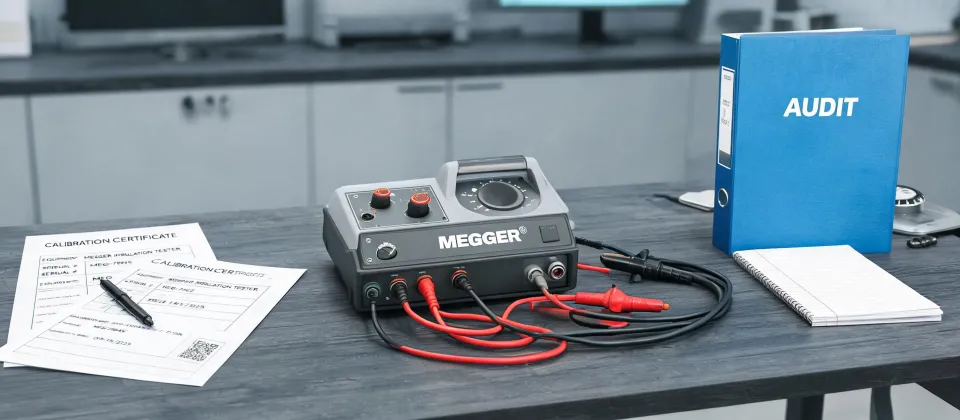
A megger insulation tester (often just called a "megger") measures insulation resistance by applying a high DC voltage—typically 500V, 1000V, or more—and measuring the leakage current. It tells you whether motor windings, cables, or transformers are about to fail before they actually do. From my procurement desk, the key point is that this is a predictive maintenance tool, not a box to check. We bought our first 1000V unit after a motor failure shut down a production line for six hours. The tester cost less than that downtime. (Note to self: I still owe marketing that ROI breakdown for the case study.)
Also, don't confuse a megger with a regular multimeter. A multimeter's resistance range uses a low voltage, which won't stress insulation the way a megger does. So if someone on your team is "saving money" by using a multimeter for insulation checks, the readings are not reliable.
Megger insulation tester 1000V vs 5kV: which one do you actually need?
This is the question I get most often, and the answer is almost always 1000V. If your team works on low-voltage wiring, control circuits, and standard industrial motors, a 1000V megger will cover nearly everything. The 5kV units are for high-voltage cable testing, switchgear, and large rotating machinery. I don't have hard data on how many contractors genuinely need 5kV, but based on six years of orders, I'd estimate it's under 20 percent. Don't let a salesperson upsell you on a 5kV "just in case." A 1000V tester plus a solid calibration contract is the smart spend for most teams.
Also, consider calibration costs. The annual calibration on a 5kV unit can be 40–60 percent higher than on a 1000V unit. If you're not working on high-voltage feeders every month, that recurring expense just eats into your budget. You can always rent a 5kV unit for a large cable project instead of owning one.
Why are some megger insulation testers so expensive?
When I compared quotes for a $4,200 annual contract, I broke down why prices range from $200 to $5,000. It comes down to accuracy, durability, and the calibration trail. A no-name tester might give you a number, but if it's off by 10 percent, you might clear a bad cable or condemn a good one. The total cost of ownership (i.e., purchase price + calibration + repairs + downtime) is what actually matters. In my opinion, the mid-range units (roughly $1,000–$3,000) offer the best balance for a general contractor. And a certificate of calibration from your supplier is worth real money during an audit.
We bought a $200 "bargain" unit once (mental note: never again). It failed calibration after six months, and the manufacturer didn't have a local service center. The total cost ended up near the price of a mid-range Megger, minus the reliability. That experience taught me to include after-sales support in the initial comparison.
Is rush shipping on a megger insulation tester ever worth it?
Yes, and I learned this the hard way. In March 2024, we paid $400 extra for rush delivery on a 1000V megger because the alternative was postponing a $15,000 testing contract. That $400 bought certainty, not just speed. I still kick myself for the earlier project where I chose a "cheaper" supplier that promised two-day delivery and showed up in six days. We lost the client's confidence and had to issue a $1,200 credit. Now our policy requires a guaranteed delivery date for any test equipment tied to a project deadline. The "probably on time" quote is the most expensive option you can choose.
If you're planning a shutdown and the tester hasn't arrived, the cost of waiting is obvious. But the cost of rushing from a different supplier is less obvious. When I called around, the "in stock" price from one distributor was $200 less than our usual supplier, but they couldn't commit to a delivery date. I paid a bit more and got a confirmed arrival. That's how you run a cost-controlled department.
What should I do with a legacy instrument like an 1100 HPLC quaternary pump?
If you're keeping an Agilent 1100 HPLC quaternary pump running, the question isn't whether it still works—it's whether the repairs make sense. One company I know spent $1,500 on parts and labor for a pump that was only worth $800. The manual (even a good PDF copy) won't change that math. My rule of thumb: if the repair cost exceeds 30 percent of a replacement, replace it. And if you're searching for an "1100 HPLC quaternary pump manual" because the same leak keeps coming back, that's your hint to calculate the full cost of keeping it alive.
Also, check whether the manufacturer still supplies consumables like seals, valves, and pump heads. If the supply chain is dry, a cheap manual won't help you find parts. In our case, the vendor quoted a lead time of eight weeks for a rebuild kit, which defeated the purpose of a quick repair.
Are cheap radar sensors actually cheaper?
No, and this is a classic case of hidden costs. A radar sensor might look like a bargain on the invoice, but installation, configuration, and false readings eat into that savings quickly. We compared a $90 radar sensor with a $240 one for a tank-level application. The cheap unit needed two extra site visits to calibrate and still gave erratic readings in fog. We spent around $500 in labor before replacing it. If you ask me, the "cheap" option cost us triple. That's the same logic I apply to all test equipment: reliability is part of the price.
Another hidden cost: training. The cheap sensor came with a 6-page manual written in broken English. Our technicians spent half a day figuring out the software. By the time you add labor, a second site visit, and a service call, the "budget" sensor was the least economical choice.
How should I budget for test equipment across different instruments?
I don't have a perfect formula, but here's what worked over the past six years: track every order, including repairs, calibration, and shipping. Once you have a year of data, you'll likely see that most budget overruns come from rushed orders and repeat repairs. We now set aside 10 percent of our annual instrument budget for "certainty costs"—expedited shipping, extended warranties, and guaranteed delivery dates. That's not waste; it's insurance. When a project deadline depends on a calibrated megger, you'll be glad you planned for it.
We also review every back-ordered item at the end of each quarter. If a piece of equipment has been on backorder for more than six weeks, we look for an alternative supplier or a substitute product before the next project starts. That habit came from a radar sensor order that took four months to arrive.

Marcus Feld
Marcus Feld is an electrical test and measurement analyst specializing in multimeters, oscilloscopes, clamp meters, insulation testers, spectrum analyzers, and data loggers. He applies IEC 61010-2-030 and IEC 61010-031 concepts while examining measurement category, bandwidth, true-RMS response, input loading, and stated uncertainty. His work helps maintenance engineers and test teams choose safe instruments with performance suited to the signals and environments they actually measure.