Test & Measurement
Megger Insulation Tester vs Multimeter with Megger: Lessons from 200+ Emergency Orders
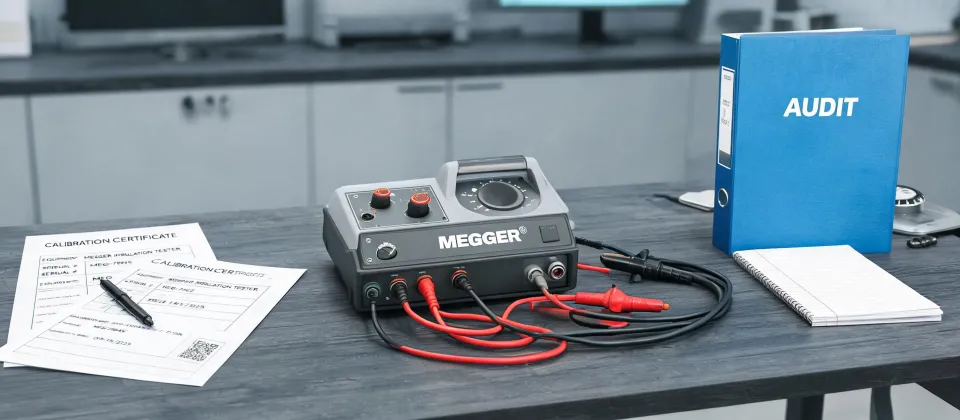
In my role coordinating emergency deliveries at an industrial test and measurement instrument supplier, I've handled more than 200 rush orders in six years—including same-day turnarounds for plants losing thousands of dollars per hour of downtime. Along the way, I've developed some strong opinions about test equipment.
One call I won't forget: 2:47 PM on a Thursday. A packaging plant's VFD kept tripping on ground fault, and their line was down. The electrician on site had tested the motor feed with a multimeter that had a megger function. His verdict: "the cable's fine."
It wasn't fine. Insulation had broken down inside a conduit, and the fault only revealed itself when properly stressed. With a dedicated megger insulation tester, the diagnosis would have taken about 20 minutes. Instead, they lost the afternoon.
That experience is why I'm writing this. If you're trying to decide between a dedicated megger insulation tester and a multimeter with megger capability, I'll compare them across four dimensions—measurement capability, diagnostic speed, flexibility, and total cost—based on what I've watched play out in real plants.
Dimension 1: Measurement Capability—the Dedicated Tester Wins Outright
The gap in measurement range here isn't subtle. A dedicated megger insulation tester performs insulation resistance tests at multiple voltage steps: 250V, 500V, 1kV, and on higher-end models, 5kV or 10kV. The Megger MIT400 series, for example, offers 250V to 1000V test voltages in a handheld unit (Source: Megger product documentation, January 2025).
That voltage range matters because insulation defects are often invisible at lower test voltages. A cable with moisture ingress can read perfectly at 250V but show a dramatic resistance drop at 1kV. If your tool's ceiling is too low, you simply miss the fault.
Most multimeters with megger mode cap out at 1kV, and many are limited to 250V or 500V. For low-voltage circuit troubleshooting (600V class and below), that's frequently enough. But for motor windings, transformer windings, and medium-voltage cable systems, the limited test voltage can give you a dangerously false sense of security.
There's a second difference that spec sheets don't highlight: diagnostic depth. A dedicated insulation tester runs timed tests—typically 1-minute and 10-minute sequences—and calculates polarization index (PI) and dielectric absorption ratio (DAR). These values reveal moisture, contamination, and insulation aging. A multimeter's megger mode typically gives you a resistance snapshot only. No timed sequence. No PI. No DAR.
I saw what that missing depth cost in March 2024. A food-processing plant called 36 hours before a health inspection because a motor on their cold-storage line was tripping intermittently. The maintenance tech had tested it with his multimeter's megger mode. The meter displayed ">20 MΩ," which the user manual classified as acceptable. But I asked what the actual reading was. He couldn't say—the display just showed the upper limit.
We ran a 10-minute PI test with a dedicated tester. The polarization index came back at 1.2. For a healthy motor, you typically see 2.0 or higher. Moisture had contaminated the winding. They replaced the motor for $3,800. With proper test equipment and trending, that motor could have been swapped during planned downtime months earlier. The difference wasn't just money—it was a 36-hour panic they didn't need.
Dimension 2: Diagnostic Speed—the Counterintuitive Part
Now for the twist.
In the first minutes of an emergency, a multimeter with megger function is often the faster tool—because it's already in the technician's hands. A dedicated tester sitting on a shelf in the maintenance office has to be fetched, inspected, and carried to the panel. I've seen teams waste twenty minutes on that walk. In a downtime scenario, that's real money.
So I won't tell you the dedicated tester is always faster. It isn't. For a quick pass/fail screen on a single low-voltage circuit, the multimeter is the practical first move.
But for anything beyond that, the dedicated tester catches up fast. It discharges capacitive loads automatically, so you can disconnect immediately without waiting for a manual discharge. It has a guard terminal that cancels surface leakage current, giving you a clean reading on the first attempt. And it automates the timed tests—you press a button and it calculates PI and DAR for you. On a multimeter, you'd need to track the 1-minute and 10-minute marks manually, record the readings, and do the division yourself. That's not realistic when you're triaging multiple cables under pressure.
So on raw first-response speed, the multimeter takes the opening round. On overall time-to-diagnosis, the dedicated tester wins the match.
Here's a classic penny-wise, pound-foolish example. In August 2024, a facility in Ohio had a 480V feeder tripping intermittently. Years earlier, the facilities manager had saved about $300 by purchasing a multimeter with megger mode instead of a dedicated insulation tester. When this fault appeared, the multimeter couldn't pinpoint it. An electrical contractor spent four hours on site—$600 in labor—plus the plant lost roughly $2,100 in production during the extended diagnosis window.
A $300 relative saving turned into more than $2,700 of avoidable expense. And that doesn't include the contractor's premium rates for emergency response.
This is the prevention-over-cure lesson in its most concrete form. Five minutes of verification during scheduled maintenance beats five days of correction after an emergency. A few hundred dollars of tool price is cheap insurance compared to what one hidden insulation failure can cost.
Dimension 3: Flexibility—the Multimeter Has Its Claim
To be fair, the multimeter's versatility is real and valuable.
A multimeter with megger function is still a full-featured multimeter. It measures voltage, current, resistance, continuity, frequency, capacitance, and often temperature. For a general maintenance tech, it's the tool that gets used dozens of times a day. A dedicated high-voltage insulation tester, frankly, sits in its case most days.
This is the strongest argument for the hybrid option—and I take it seriously. If you're a generalist who does some electrical, some instrumentation, and occasional insulation checks, a multimeter with megger mode might genuinely be the rational choice.
But here's the "right tool for the right job" principle. It's the same reasoning that says you don't use a 6-inch caliper when your parts run 12 inches long—you get a 12-inch caliper because measuring with a tool stretched beyond its comfortable envelope produces unreliable data. And for complex dimensional verification, you don't expect handheld instruments to match the accuracy of a CMM machine; you use CMM machines when the tolerance demands it.
Insulation testing is no different. When the task calls for high test voltage and timed diagnostics, a multimeter's megger function is a compromise. A good compromise, sometimes. But a compromise nonetheless. The bottom line: if you own one tool and your work demands the full diagnostic picture, the dedicated tester is the one you'd rather have in your hands.
Dimension 4: What the Numbers Look Like
Let's talk dollars. Typical distributor prices as of January 2025:
- Entry-level insulation tester (analog or basic digital, 250V/500V/1kV): $150–$400
- Dedicated insulation tester with PI/DAR capability (Megger MIT400 class): $500–$1,200
- Multimeter with megger function (Fluke, Hioki, Extech and similar): $150–$500
(Based on distributor quotes accessed January 2025; verify current rates before ordering.)
At face value, the multimeter's price looks sensible. And in some situations, it's the right spend. But total cost of ownership depends more on what the tool finds—or fails to find—than on the invoice line.
Consider the scenario I described earlier: a plant with twenty motors, one of which develops winding contamination every couple of years. The cost difference between an emergency failure and a scheduled replacement easily reaches $2,000–$5,000 when you include lost production and contractor premiums. One early diagnosis covers the price gap between a $400 multimeter and a $1,000 dedicated tester.
People ask me the same kind of question in a different form: "FLIR multimeter vs Fluke—which one should I buy?" Both are excellent brands with slightly different strengths, and the right answer depends on your specific applications and existing accessory ecosystem. It's the same principle: buy for your actual use case, not for brand loyalty or a bargain price.
I'll admit to my own post-decision doubt here. Even after we added a dedicated insulation tester to our emergency rental inventory, I second-guessed the purchase for months. It sat unused for weeks. Then a single week in July 2024 produced three rush rental requests for a high-voltage insulation tester. That one week covered more than half the instrument's cost. The tool paid for itself, and my doubt disappeared.
So Which One Should You Choose?
Here's my practical guidance, based on what I've seen work in the field.
Get the dedicated megger insulation tester if:
- You're testing motors, transformers, generators, or medium-voltage cables at least monthly.
- You need PI/DAR values for condition monitoring or predictive maintenance programs.
- You're an electrical contractor for whom insulation testing is a billable service.
- You already have a general-purpose multimeter (which most techs do).
Choose the multimeter with megger function if:
- You're a general facilities professional who does insulation testing only a few times per year.
- All your circuits are low-voltage (below 600V) and pass/fail screening is sufficient.
- Your budget is genuinely limited, and this one tool will serve as your daily driver too.
If you're in the middle of an emergency right now: get any calibrated insulation tester in front of the problem as fast as possible. Borrow it, rent it, or buy what your local distributor can deliver today. But once the line is running again, take the time to purchase the right permanent tool. That's the prevention mindset.
I've been asked more times than I can count whether a multimeter with megger is "good enough." Usually, the question comes from someone holding a purchase order and hoping the cheaper option will work. I understand that. Budgets are real.
But the honest answer is that good enough today can become expensive tomorrow. The megger insulation tester is a purpose-built diagnostic instrument. The multimeter with megger function is a versatile screening tool. They're not interchangeable—they're complementary. The best choice is the one that covers the consequences of missing the fault you're most likely to face.
Five minutes of verification beats five days of correction. That's what I tell every client who calls for an emergency delivery. I'd rather help you buy the right tester before the breakdown than rush one to you after it.

Marcus Feld
Marcus Feld is an electrical test and measurement analyst specializing in multimeters, oscilloscopes, clamp meters, insulation testers, spectrum analyzers, and data loggers. He applies IEC 61010-2-030 and IEC 61010-031 concepts while examining measurement category, bandwidth, true-RMS response, input loading, and stated uncertainty. His work helps maintenance engineers and test teams choose safe instruments with performance suited to the signals and environments they actually measure.