Test & Measurement
Why Your Megger Insulation Tester Device Isn't the Real Problem
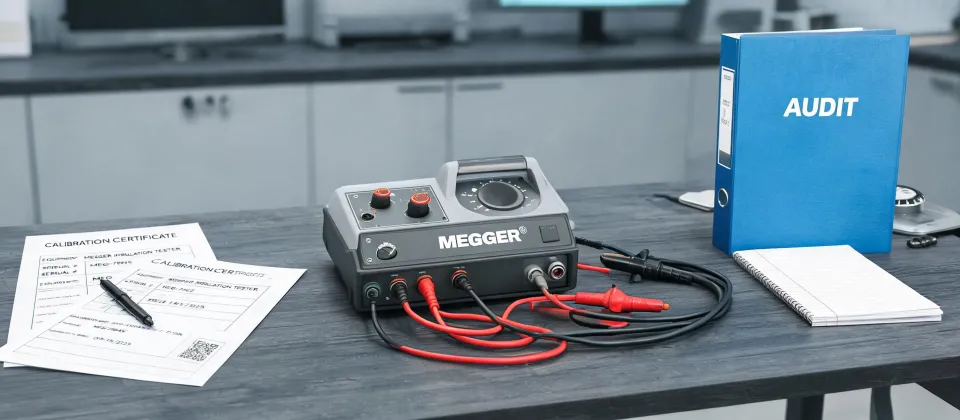
In March 2023, I watched a 400-meter drum of cable pass a megger 5kv insulation test with numbers that made me feel good. Two weeks later, the same cable failed in the field. Not a marginal failure. A catastrophic one. That one job cost us $9,700 in rework, a 3-day delay, and a very uncomfortable call with the client.
The conventional wisdom said I had a bad tester. I sent it back for calibration. The report came back: within spec. The instrument was fine. I wasn't.
That's the thing about the megger insulation tester device category. It's basically a victim of its own reputation. We assume that because the brand is trusted and the device is expensive, it's the one giving honest answers. In practice, I've found the opposite. Most bad readings aren't the instrument's fault. They're the process around it.
The test leads were the problem (not the megger)
The failure didn't come from a hidden mechanical crack. It came from the leads. I used a set of test leads that looked fine on the outside. Inside, the copper strands at the connector had broken from years of being coiled too tightly. The reading I got—well over 500MΩ—was a combination of the cable's actual insulation and a dry contact inside the lead that wouldn't survive any real stress. A megger 5kv insulation tester is only as honest as the path from the probe tip to the cable conductor. A weak connection can make a bad cable look perfect. That's not the tester's fault. It's mine.
In hindsight, I knew I should have inspected those leads before trusting the test. But the clamp looked okay, and I thought, what are the odds? The odds caught up with me in March 2023.
The same pattern shows up everywhere
Or take thermocouples. A maintenance team once reported a batch reading 25°C high. Honestly, the data logger was the first suspect. It wasn't the logger. It was the thermocouple type: the vendor sent type K when the application specified type J. The sensor didn't fail. The selection did. I'm not an instrumentation engineer, so I don't pretend to know every thermocouple tolerance table by heart. What I know from procurement and field support is: type, insulation, and termination matter more than the chip in the receiver.
Another example: a customer asked for a replacement recommendation for an optical distance sensor. Their sensor showed a different gap every morning. It wasn't drift. Someone had bumped the mounting bracket. The sensor was fine, but the geometry kept changing. Replacing it would have cost money and changed nothing. We realigned the bracket instead. Same pattern: gear first, process second. Ugh.
Mitutoyo vs Starrett calipers: the wrong question
One of the most common questions I get is 'Mitutoyo vs Starrett calipers—which is better?' A few years ago, I would have confidently answered with a brand. Now my honest answer: neither. Not because the brands are the same—they're not—but because the operator and the measurement method introduce way more error than the difference between those two companies' calipers at the same price point.
I've used both in our inspection area. Mitutoyo has a slightly different feel in the thumb wheel; Starrett has a different beam profile. Both hold accuracy well within their stated specification (ISO 3611). The repeatable difference between a $130 Mitutoyo and a $120 Starrett is not in the tenths of a millimeter. The repeatable difference is in whether the operator checks zero, wipes the jaws, and measures at the same spot on the part. That's not a brand thing. That's a discipline thing.
I'm not a metrologist. I don't need to be, to know the biggest measurement error in most shops sits between the caliper and the operator.
What a Megger 5kv insulation tester can't tell you
The 'megger' name has become so generic that people forget the device has limits. A megger 5kv insulation tester is excellent at one thing: pushing a controlled voltage through insulation and reading the resulting resistance. It is not a crystal ball. It cannot detect a damaged conductor if the insulation is intact. It cannot correct for humidity so high that surface leakage makes a good cable read low. It cannot tell you that you're using the wrong test voltage for the cable's rating.
Insulation resistance testing standards like IEC 61557 describe what the instrument should do under defined conditions. They don't cover a frayed lead or a damp test surface.
One of the biggest mistakes I documented in 2024 was using a 5kv tester on cable that only needed a 1kv test. The high voltage stressed aging insulation and created a breakdown that didn't exist before my test. The instrument did exactly what I asked, and I asked the wrong question. The device isn't 'too good.' The spec was wrong.
The price of measuring wrong
Let me put some numbers on this. I've personally made—and documented—eleven significant measurement mistakes since 2020. Total wasted budget: roughly $32,000. That includes:
- $9,700 cable rework after a false-pass insulation test
- $4,100 calibration fee on a tester that was in spec (the real issue was the leads)
- $2,850 in shipped parts rejected because a caliper was out of zero by 0.02mm
- $1,400 for rush replacement of a thermocouple that never needed replacing
Those are the ones I can quantify. The embarrassment and lost trust are harder to count.
A short checklist that would have saved me $32,000
I can't fix your test leads from here. But here's what I do now, before I trust any reading from a megger, a thermocouple, an optical distance sensor, or a caliper:
- Verify the leads and connections first. Replace damaged leads. Clean the contact points.
- Check the environment. Temperature, humidity, light, and bracket stability all change readings.
- Confirm the instrument and range match the application. A 5kv insulation tester is not automatically better than a 1kv one.
- Re-zero before every critical measurement. Especially calipers.
- Use a known reference. Test on a sample you're confident about before trusting the unknown.
That's it. Five steps, none expensive, all boring. I started following this after the March 2023 failure, and I've caught at least 14 potential errors with it since. The tester was never my real problem.
An honest boundary about brands
Let me be clear about the boundary: this isn't an argument that all measurement tools are interchangeable. A premium insulation tester is better than a cheap one. There are times when the brand matters. But the best instrument in a confused process still gives confused answers.
Some suppliers promise 'total measurement solutions' as if one vendor can solve every instrument problem. I don't buy that. I'd rather tell you where we can help—tools, selection, and comparison—and where you should talk to a calibration lab or a metrologist.
The next time your megger insulation tester device gives you a reading you don't trust, don't send it back first. Check the leads. Check the setup. Check the operator. The instrument is usually the last thing to give in—not the first.

Marcus Feld
Marcus Feld is an electrical test and measurement analyst specializing in multimeters, oscilloscopes, clamp meters, insulation testers, spectrum analyzers, and data loggers. He applies IEC 61010-2-030 and IEC 61010-031 concepts while examining measurement category, bandwidth, true-RMS response, input loading, and stated uncertainty. His work helps maintenance engineers and test teams choose safe instruments with performance suited to the signals and environments they actually measure.