Test & Measurement
Test Equipment Buyer's FAQ: Megger, Sensors, and FLIR Thermal Camera Costs
-
The Test Equipment Questions I Actually Get
-
1. Is “Megger” the same as an insulation tester?
-
2. Megger MIT515 5kV insulation tester or a Megger 1000V insulation tester — which should I buy?
-
3. What should I know before buying a vibration sensor?
-
4. When would I use an M30 capacitive sensor?
-
5. How much is a FLIR thermal camera, really?
-
6. What's the hidden cost nobody budgets for when buying test gear?
-
7. Should I trust a listed price or ask for a quote?
-
1. Is “Megger” the same as an insulation tester?
Full disclosure: I'm not an electrical engineer. I'm the admin buyer who handles test equipment orders for a field service team. That means I'm the one asked to “get us a megger” or “find out how much a FLIR thermal camera costs” — usually with a deadline that started yesterday.
Over the years, I've made a few buying mistakes with this stuff. I've also learned that the fastest way to avoid an expensive return is to ask better questions. Here are the questions our team actually asks me, answered the way I wish someone had answered them for me.
One note before the FAQ: prices and specs change. I'm writing this with January 2025 reference points, but verify current numbers before you buy.
The Test Equipment Questions I Actually Get
- Is “Megger” the same as an insulation tester?
- Megger MIT515 5kV or Megger 1000V — which should I buy?
- What should I know before buying a vibration sensor?
- When would I use an M30 capacitive sensor?
- How much is a FLIR thermal camera, really?
- What's the hidden cost nobody budgets for?
- Should I trust a listed price or ask for a quote?
1. Is “Megger” the same as an insulation tester?
Sort of. Megger is a brand name, but in the field people use it like a generic term. When one of our techs says “hand me the megger,” they almost always mean an insulation resistance tester.
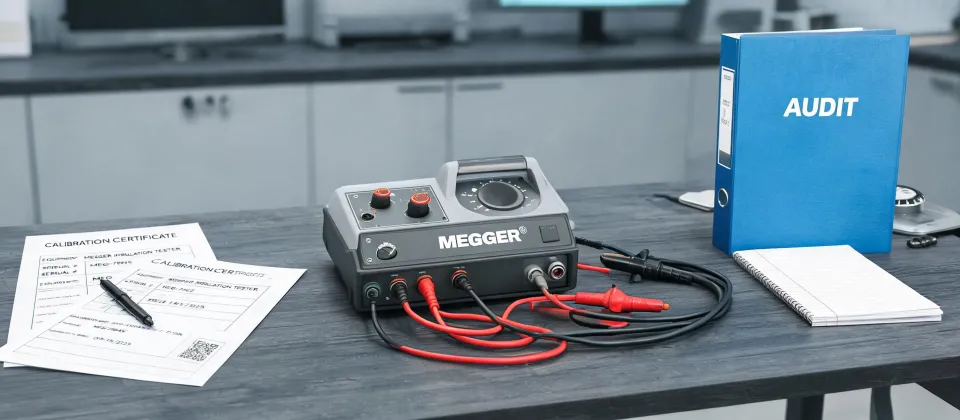
That distinction matters for buying, because not every “megger” can do the same job. A Megger MIT515 5kV insulation tester is a serious cable-testing tool. A Megger 1000V insulation tester is a different animal. Order the wrong one and you won't know until someone is standing at a panel with too little — or too much — test voltage.
I assumed when I started that a megger was just a fancy multimeter. It's not. A multimeter checks voltage, current, and resistance under normal operating conditions. An insulation tester applies a controlled test voltage to cables or motor windings and measures the resistance of the insulation. That test can catch breakdowns before they become failures.
The “just get a megger” shorthand probably comes from an era when the selection was simpler. That's changed. The Megger name now covers everything from compact 250V units to 5kV analyzer-style testers, so you have to match the tool to the test.
2. Megger MIT515 5kV insulation tester or a Megger 1000V insulation tester — which should I buy?
It depends on what your crew actually tests. If you're working on control wiring, panels, and low-voltage circuits, a 1000V insulation tester is usually enough. If your team tests medium-voltage cable, motor windings, or switchgear, a 5kV tester like the Megger MIT515 gives you the headroom you need for those applications.
It's tempting to think “more voltage is better.” It isn't always. Too much test voltage can stress components that aren't rated for it. That's why the product line includes both categories.
I learned this the hard way. I once ordered a 1000V unit for a contractor who needed to do 5kV cable testing. The order was approved, then returned. Now I ask for the test voltage range before I even look at a model number.
The MIT515 also comes with features that matter for maintenance work, like multiple test voltages and data logging. But those extras only help if your team will actually use them. A 1000V tester with the right features beats a 5kV tester with features nobody needs.
3. What should I know before buying a vibration sensor?
Vibration sensors are a rabbit hole. The term “vibration sensor” covers everything from a basic proximity probe to a wireless condition-monitoring node. I used to think one sensor would fit most machines. Not even close.
Here's what I ask before buying now:
- What output does the monitoring system need? 4-20 mA for PLC input, IEPE for analyzers, or digital/wireless for condition monitoring?
- What frequency range matters? A slow-speed pump needs different sensitivity than a high-speed motor.
- What's the mounting and connector style? Wrong connector choices have led to adapter bills that cost more than the sensor itself.
- Does it need external power? That caught us once. The sensor was fine; we didn't have the power supply it needed.
Don't let a datasheet with a single frequency response fool you. There's no universal “vibration sensor.” There's just the right one for the machine you're monitoring.
4. When would I use an M30 capacitive sensor?
M30 refers to the thread diameter — 30 millimeters. It's a standard mounting size, so it's easy to swap, but M30 alone doesn't tell you the sensing range or whether it's shielded or unshielded.
Capacitive sensors detect both metal and non-metal materials. That makes them useful for level detection through plastic tank walls, sensing boxes on a conveyor, or checking whether a bottle is full. If you only need metal detection, an inductive sensor is usually simpler and more repeatable.
I used to think a bigger housing meant a longer sensing range. It doesn't work that way. The range depends on the internal sensing element and the target material. You have to read the datasheet.
For a capacitive sensor M30, the practical questions are: PNP or NPN output? Normally open or normally closed? Shielded or unshielded? I always ask these before suggesting a part number.
5. How much is a FLIR thermal camera, really?
This one shows up in my search history a lot, and I get it. The honest answer: it depends on what you're inspecting.
As of January 2025, based on distributor listings I checked, a basic FLIR phone attachment runs roughly $199 to $299. A handheld entry-level thermal camera is more like $599 to $1,500. Industrial models with higher resolution and wider temperature ranges can run $3,000 to $10,000 or more. (Source: distributor listings, Jan 2025; verify current rates.)
Verify current pricing before you quote it to finance. Thermal camera prices move, and authorized distributor pricing varies.
Don't buy the cheapest one just because it's cheap. Low-resolution cameras struggle with small targets, and the software, battery, lens options, and calibration all affect the final cost. That's where the “what's not included” conversation starts.
6. What's the hidden cost nobody budgets for when buying test gear?
Calibration. And accessories. And the time it takes to confirm that the equipment matches what was promised.
In 2021, I forgot to budget calibration for a new insulation tester. The quote covered the tester but not the certified calibration we needed. That extra cost showed up later, and it made the purchase look sloppy to finance.
Now I ask three questions before any test equipment order:
- Does the price include a calibration certificate?
- What leads, probes, adapters, and power supplies are included?
- What's the lead time for replacement parts or service?
I've learned to ask “What's NOT included?” before “What's the price?” That one question has saved us more money than any discount code I've found.
7. Should I trust a listed price or ask for a quote?
Both. But I trust a vendor more when the listed price is close to the final invoice.
According to FTC advertising guidance (ftc.gov/business-guidance/advertising-marketing), claims have to be truthful and not misleading. I am not talking about filing a complaint. I'm talking about basic purchasing trust: if a vendor shows a low price and then adds freight, handling, calibration, and processing fees later, they're not saving you time. They're creating work.
That's why I now favor suppliers who list the full price up front. It might not look like the cheapest option at first. But a transparent quote, where the number you see is the number you pay, makes life easier for both sides. That's the kind of supplier I keep on our list.

Marcus Feld
Marcus Feld is an electrical test and measurement analyst specializing in multimeters, oscilloscopes, clamp meters, insulation testers, spectrum analyzers, and data loggers. He applies IEC 61010-2-030 and IEC 61010-031 concepts while examining measurement category, bandwidth, true-RMS response, input loading, and stated uncertainty. His work helps maintenance engineers and test teams choose safe instruments with performance suited to the signals and environments they actually measure.