Test & Measurement
The $2,700 Megger Insulation Tester MIT320-EN Lesson: Stop Buying Test Instruments on Price Alone
-
What I mean by total cost
-
Mistake one: Megger insulation tester MIT320-EN with a broken paper trail
-
Mistake two: The T5-600 split jaw clamp meter that was the right tool for the wrong question
-
The same logic almost bit me with a surface roughness tester
-
How to calibrate pH meter Mettler Toledo before it costs you a batch
-
Where cheap is not stupid
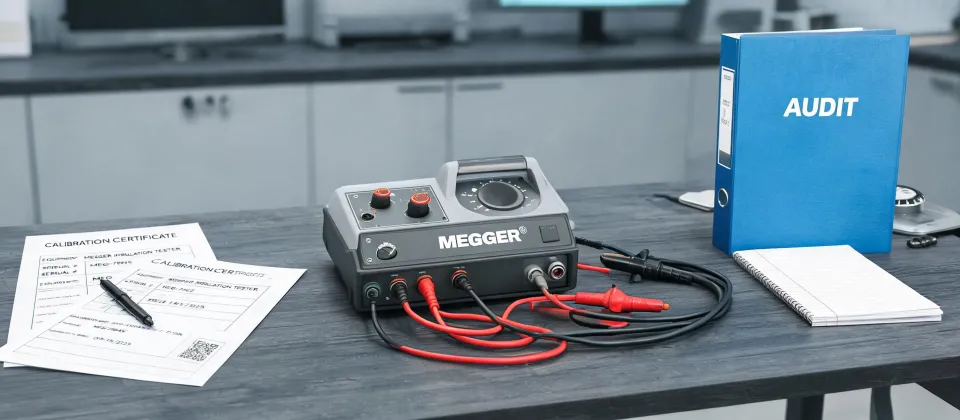
Buying a test instrument on sticker price is how I turned a $140 saving into a $2,700 correction cost. The instrument was a Megger insulation tester MIT320-EN, and the failure was not the tester. The failure was a quotation that said “calibration certificate included” when the certificate could not be traced. That made the instrument unusable in a quality-controlled environment. It cost us a re-calibration, a rental meter, a contractor remobilization, and a lot of embarrassment.
I know that sounds like one unlucky case. To me, it is just the most visible case in a pattern. I coordinate instrument purchases and calibrations for a mid-sized plant. I’ve bought electrical testers, clamp meters, surface roughness testers, and lab pH meters. Since 2018, I’ve kept an error log of instrument decisions I made personally. It is not a pretty document. But it is why I do not trust a purchase order until I’ve calculated total cost.
What I mean by total cost
Total cost is not a fancy procurement term. I define it as: what this instrument costs from the moment I start shopping until the day it gives a trustworthy reading. Then add the cost if it does not give a trustworthy reading.
My list has five fields: purchase price, verified calibration and documentation, shipping and admin, consumables and accessories, and consequence cost. Most teams compare the first field only. That field is often the least useful one.
The biggest line in my formula is consequence cost. If a meter is used to prove insulation resistance on a motor, and the reading is wrong, the motor can fail or hurt someone. A $300 saving on the meter is stupid if it hides a damaged tester.
Mistake one: Megger insulation tester MIT320-EN with a broken paper trail
The MIT320-EN example started with our old insulation tester failing pre-calibration. I rushed the replacement. I found a supplier that listed “calibration certificate included” and whose price was $140 below the normal range. The unit arrived. The certificate looked official: lab name, date, signature. Then my quality engineer called the lab. The lab had no record of the serial number. The certificate was, at best, inaccurate.
Because quality would not release the instrument, we had to send it to another lab. When I added re-calibration, rental tester, contractor rework hours, and lost site time, the total was around $2,700. The original saving was $140.
To be fair to Megger, the instrument itself was probably fine after recalibration. It did its job for years. The expensive part was not the device. It was the absence of a trustworthy calibration chain.
After that, I created a Megger login. The login did not repair the certificate. It helped me stop treating a seller’s one-page PDF as the official record. With a Megger login, I could register the serial number, download the correct manual, get software updates, and have a stable place for instrument information. I now recommend that for anyone responsible for a Megger insulation tester MIT320-EN or similar tool. It takes five minutes and prevents the “who has the manual?” search that happens during an audit.
Mistake two: The T5-600 split jaw clamp meter that was the right tool for the wrong question
A T5-600 split jaw clamp meter is useful when you want a quick current reading without breaking the circuit. The mistake is buying one by category instead of by task.
I chose a T5-600 split jaw clamp meter for our troubleshooting bag because it came recommended. Later, we needed logged current data over 24 hours to prove an intermittent overload. We had not specified that. The meter did what I asked it to buy, but not what the plant actually needed it to do. The problem cost about $780 in diagnostic overtime while we tried to piece together the history from spot readings.
The lesson was not “never buy a T5-600 split jaw clamp meter.” The lesson was: write down the decision question before you write down the model number.
The same logic almost bit me with a surface roughness tester
We later needed a surface roughness tester for machined part acceptance. The quote was about 35% lower than other offers. It looked like the same measuring range and stylus type. Then I asked myself: how would I defend these measurements if a customer auditor asked for traceability?
That quote did not include a reference standard certificate. For a surface roughness tester used to release machined parts, missing calibration traceability is not a small paperwork gap. It means every part measured becomes questionable. We stopped that purchase. That was the first time the total cost question prevented a mistake instead of explaining one.
How to calibrate pH meter Mettler Toledo before it costs you a batch
The same hidden-cost problem appears in the lab. We run several Mettler Toledo pH meters in QC. If someone asks me how to calibrate pH meter Mettler Toledo, my answer is never “automatic calibration is enough.”
Use fresh buffers, use a buffer that brackets your expected sample range, rinse the electrode with deionized water between buffers, and write down the slope reading. For most Mettler Toledo pH meters, the practical sequence is: start with pH 7.00 buffer, then use pH 4.01 or pH 10.01 depending on your samples. If the slope is outside the electrode manual’s range, do not release the meter for critical work.
But knowing the sequence is not enough. One of my early calibration failures was not a failure of the Mettler Toledo pH meter. I trusted the “calibration accepted” prompt and skipped recording the slope. Two days later, we could not prove the electrode response was valid, so we recalibrated and repeated release testing. That cost more time than the calibration would have cost in the first place.
Where cheap is not stupid
I do not believe every instrument needs the most expensive treatment. If a $20 voltage tester is only used for a go/no-go check, and the cost of a wrong reading is low, buy the basic one. Just make that decision before the purchase, not after.
For safety checks, product release testing, or anything that affects a customer’s decision, the cheapest quote is only cheap when the documentation can prove the reading is trustworthy. If it cannot, the price quote is not the total cost. The total cost starts later, and it is rarely small.
I still keep my error log. Since we introduced this pre-purchase filter, we have caught 17 missing calibration certificates and three wrong accessory lists before payment. No new $2,700 surprises. That number is not a compliment to me. It is proof that the old approach was the real risk.

Marcus Feld
Marcus Feld is an electrical test and measurement analyst specializing in multimeters, oscilloscopes, clamp meters, insulation testers, spectrum analyzers, and data loggers. He applies IEC 61010-2-030 and IEC 61010-031 concepts while examining measurement category, bandwidth, true-RMS response, input loading, and stated uncertainty. His work helps maintenance engineers and test teams choose safe instruments with performance suited to the signals and environments they actually measure.