Test & Measurement
When 'Megger' Isn't a Megger: A Buyer's Notes on Test Equipment
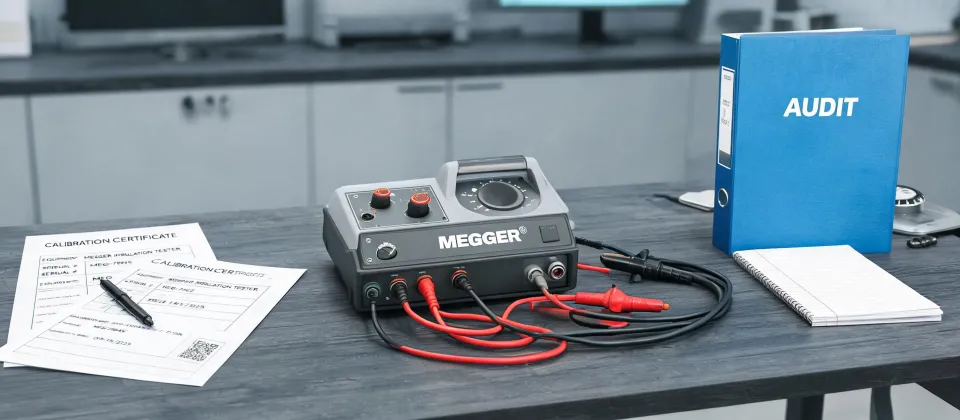
It started as a simple request. After I took over purchasing in 2020 for a 45-person engineering and maintenance company, one of our process engineers asked me to buy 'a megger insulation tester 50V, a 112 multimeter, and get an oscilloscope price quote.' I said, 'sure.' Then I asked, 'for what?' The reply was, 'you know, for testing.' That silence told me more than any datasheet.
I process 60-80 orders a year and manage 8 vendors. I report to both operations and finance, so I feel the squeeze from both sides. In my opinion, the questions before a product search matter more than the search itself. Here's the thing: 'megger insulation tester 50V' sounds precise. It's not.
The surface problem: model numbers look like specs
Search for 'megger insulation tester 50V' and you'll see what I mean. You get hand-cranked units, battery-powered units, analog displays, digital ones, different ranges, different test leads, different safety categories. The words '50V' only describe the test voltage. They don't describe what happens when the meter is connected to the wrong circuit.
The problem isn't that people are careless. It's that product categories evolved around brand names, specs, and price tiers. A model number is a label, not an engineering requirement.
The 112 multimeter is even worse. Search '112 multimeter' and half the results are not the same instrument. There is the genuine Fluke 112, and then there are look-alikes with similar names. If I don't include the brand, I'm buying a face, not a tool. The safety ratings can be different. The accuracy can be different. The calibration support? Different.
And 'oscilloscope price'? The range is ridiculous. Don't hold me to this, but on a recent RFQ for 100 MHz scopes, I saw quotes from $1,400 to $6,800. That was in a 2024 project, so verify current pricing. The spread isn't just a quality gap. It's a difference in bandwidth, memory depth, probes, software licenses, and after-sales support.
Why this keeps happening: deep cause #1
Brand names become categories
'Megger' is a brand name, and it's also a generic term for insulation testers, the way people say 'xerox' for a copy. When an engineer says 'we need a Megger,' do they mean the Megger brand specifically, or just any insulation tester? The answer changes the order completely.
I had an order once where the engineer typed 'megger insulation tester 50v.' I found a 50V unit from a solid manufacturer. When it arrived, he said, 'wrong one. I need the 500V model.' I said '50V.' The vendor heard 'Megger brand, 50V test voltage, complete package.' Result: delivered the wrong unit. Same words, two meanings. It cost us about $900 in restocking fees and wasted time. The most frustrating part: the same issue kept showing up in different forms. You'd think written specs would prevent this, but interpretation varies wildly.
That's why searching for 'megger electrical test equipment' without a clear test type can also go sideways. You might think you're looking at insulation testers. The catalog might show ground resistance testers, RCD testers, and micro-ohmmeters. All 'Megger' products. All different jobs.
Deep cause #2: price is the worst measurement tool
When finance asks about 'oscilloscope price,' they mean one number. But the real cost is never the number on the quote. It's the probes. It's the bandwidth. It's the software options. It's the time you lose when the device doesn't capture the signal you need.
I went back and forth between an $1,800 oscilloscope and a $4,200 one for two weeks. The cheaper one had decent bandwidth. The expensive one had better triggering and deeper memory. On paper, the $1,800 one made sense. But my gut said our maintenance team would need the extra capability within a year. Ultimately I chose the $4,200 one. Am I 100% sure it was worth it? Not entirely. But the real question wasn't the price. It was whether buying the cheaper one meant buying twice.
The same logic applies to a 112 multimeter. A safe multimeter with a proper CAT rating is non-negotiable in a plant environment. If you ask me, a suspiciously cheap 112 multimeter is a red flag. It might measure a resistor fine. It might also be a serious safety problem near a live panel. The upside was saving $50. The risk was way bigger.
Deep cause #3: brand comparisons need context
People ask me 'how ifm sensors compare with Omron and Keyence' and I usually ask them, 'for what application?' Because the real answer is: it depends.
In my experience, ifm sensors stand out for clear documentation and rugged housings. Omron has a huge range and good automation integration. Keyence is known for responsive support and a wide catalog. But a sensor from any of those brands will fail if you choose the wrong sensing range, output type, cable, or ambient temperature rating. The brand is not the spec.
Sensors look similar from the outside, but small differences matter: PNP vs NPN, light-on vs dark-on, cable length, response time, housing material. One vendor's sensor might be plug-and-play with your PLC. Another might need an adapter or a programming configurator. That's not about brand quality. It's about fit.
We use all three. I have mixed feelings about brand loyalty. Part of me wants to standardize on one sensor brand to make inventory simpler. Another part knows that having options saved us during a recent supply chain headache. I compromise with a short list, not a one-name rule.
What the wrong instrument really costs
The invoice for a wrong order is only the beginning. The real cost is a technician standing around while the work cell is down. It's an electrical inspection that has to be rescheduled. It's a compliance audit that gets a note about 'instrument not suitable for intended use.'
When a wrong item arrives, you don't just return it. You schedule another installation, another calibration, another safety review. The hidden cost is organizational attention. I switched from phone-order buying to a simple verification step in 2023. That small change cut our 'item returned or replaced' rate from about 12% to under 4%. Don't hold me to the exact numbers, but the direction was clear. A ton of that improvement came from asking one extra question: 'what are you actually going to measure?'
So what to do? It's shorter than you think
Don't narrow your search to a brand or a model number. List the actual job first: what voltage, what range, what environment, what certification. The phrase 'megger electrical test equipment' can be a starting point, but not the finish line.
- Ask the end user: 'What exactly will you measure?' The answer changes everything.
- Write down the key specs before comparing prices. Voltage, current, bandwidth, accuracy, safety rating, connector type.
- Compare quotes side-by-side. If one quote looks too cheap, ask why.
- Use a supplier who can explain the difference between a 50V and 500V insulation tester, between a genuine 112 multimeter and a no-name version, and why one sensor brand might fit better than another for your specific setup.
Look, I'm not saying every order needs a week of analysis. But when the order involves safety ratings, high voltage, or process control, the extra 10 minutes pays for itself. Efficiency isn't about moving faster. It's about not doing the same mistake twice.
The value of a quoted lead time isn't the speed. It's the certainty. Same goes for specs.
Bottom line: the best buy isn't the cheapest one. It's the one that works when the technician opens the box. Make sure. Verify. Then order.

Marcus Feld
Marcus Feld is an electrical test and measurement analyst specializing in multimeters, oscilloscopes, clamp meters, insulation testers, spectrum analyzers, and data loggers. He applies IEC 61010-2-030 and IEC 61010-031 concepts while examining measurement category, bandwidth, true-RMS response, input loading, and stated uncertainty. His work helps maintenance engineers and test teams choose safe instruments with performance suited to the signals and environments they actually measure.