Test & Measurement
Which Fluke Multimeter Should I Buy? A Procurement Pro's Take on Test Equipment & Total Cost
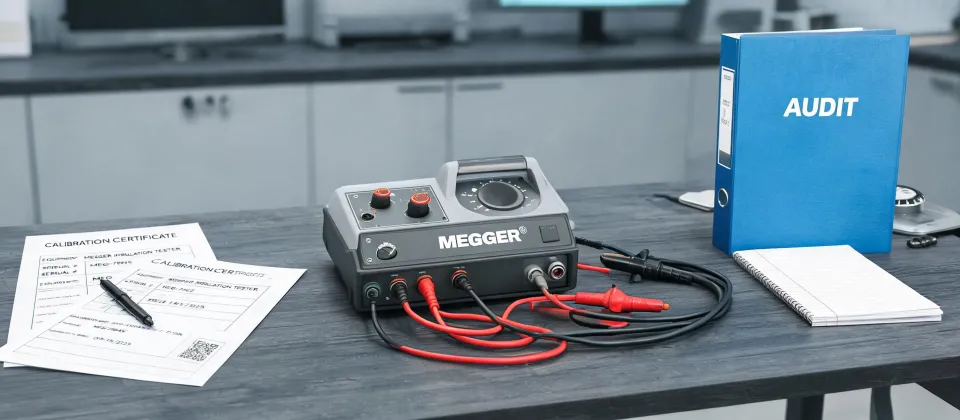
If you're buying electrical test equipment for a company, here's the short version: get a Fluke 117 for general work, add a Megger MIT220-EN handheld insulation tester for anything with motors or long cable runs, and skip the power quality analyzer unless you have a documented need. That combination has covered roughly 80% of our internal requests since 2022, and it costs a fraction of what "premium everything" would set you back.
The sticker price is the least reliable number on a test instrument's spec sheet. Calibration, training, and downtime when a tool doesn't fit the job—that's where the real cost lives. We learned this the expensive way, and I'd rather you didn't have to.
Quick credibility note: I'm the office administrator at a mid-sized service company, and I've handled test equipment purchasing since 2020—about 40 to 60 orders a year, ranging from $50 hand tools to $5,000 analyzers. I report to both operations and finance, so I deal with the cost equation from both sides. I'm not an engineer. I just buy the tools, process the invoices, and hear about it when a purchase goes sideways.
Which Fluke Multimeter Should I Buy?
This is the question I get asked most, and honestly, Fluke's lineup can feel overwhelming when you look at it cold. Here's what years of watching technicians actually use these things has taught me:
- Fluke 101 / 107 — Entry level. Fine for light troubleshooting by non-electrical staff, but the lack of a CAT IV safety rating is a deal-breaker for real electrical work.
- Fluke 115 — A solid middle option with LoZ mode for chasing phantom voltages. Good budget pick, though it lacks non-contact voltage detection.
- Fluke 117 — My default recommendation. It adds non-contact voltage detection, meaning techs can confirm a wire is live without touching it. That feature alone has saved us a ton of time.
- Fluke 87V — The beloved classic. CAT IV 600V, a low-pass filter for variable-frequency drives, and it survives drops that would kill lesser meters. But it costs more than double a 117, and annual calibration runs about $150 to $250 per unit (based on quotes from accredited calibration providers, Q4 2024; verify current rates).
So, which Fluke multimeter should you buy? For a typical maintenance team, the 117. For crews working around motor drives, the 87V's filter genuinely earns its keep. For light, occasional use? The 115 is honestly workable. Not ideal, but workable.
A lesson learned the hard way: in 2023, we bought five 87Vs because one senior engineer insisted. They're great meters. But nobody had budgeted for calibration. Five units turned into a four-figure recurring expense we hadn't planned for, and the tools sat in a cabinet for two months while we sorted out the approval chain. Process gap on my part—I should've caught it before the PO went out.
Fluke Multimeter and Megger: Teammates, Not Rivals
Something that surprised me when I started in this role is that "megger" is both a brand name and a verb. Electricians say "megger the cable" when they mean testing insulation resistance. The tool they usually mean is the Megger MIT220-EN handheld insulation tester.
A multimeter tells you what's happening in a circuit right now. An insulation tester tells you what's about to fail before it fails. They answer different questions, which is why "fluke multimeter and megger" has never been an either/or decision in our purchasing.
The MIT220-EN—which I know as well as I do only because our lead technician walked me through it—tests insulation at 250, 500, and 1000 volts, and reads resistance up to 2000 MΩ (Source: Megger product specifications, January 2025). It's a tool with one specific job, and it paid for itself within a year.
We had a pump motor fail in 2022. The maintenance guy later admitted he'd skipped insulation testing for months because our old tester was confusing. The motor replacement cost over $8,000 in parts, labor, and downtime. The Megger cost a small fraction of that. That was the moment I started thinking in terms of total cost rather than unit price. What I mean is that a mid-range tool your team actually uses is worth more than a flagship that sits in the cabinet because nobody remembers how to operate it—and that kind of nuance never shows up on a spec sheet.
One Pro Thermal Camera: Worth It Only if You'll Actually Use It
The FLIR One Pro thermal camera—the one that attaches to a smartphone—comes up often when our team does electrical panel inspections. Hot connections and overloaded breakers show up before they become failures. For our quarterly checks, it's exactly what we needed.
The TCO picture is a bit more nuanced, though. The One Pro runs roughly $400 to $500 (based on typical online pricing, January 2025), and you'll want a rugged, compatible phone case to make it a daily tool. If you're using it a few times a quarter, it's a no-brainer. If you're using it weekly, the phone attachment gets old fast, and a dedicated thermal camera starts to make more sense. Match the tool to how often it leaves the truck—that's the whole game.
Power Quality Analyzers: Rent Before You Buy
If there's one category where I've watched companies burn money, it's power quality analyzers. (Surprise, surprise.) These devices track voltage sags, harmonics, and transients—all the gremlins behind intermittent equipment failures. But a good one costs thousands, and interpreting the data properly requires training most in-house teams don't have.
For most companies, renting is the smarter call. In 2024, we rented one for two diagnostics, paid a fraction of the purchase price, and brought in a consultant to read the results. Total cost was under a tenth of ownership once you count calibration, training, and software updates. Unless you're dealing with known, ongoing power quality problems, buying one is tough to justify. And if you do reach that point, the rental costs will make the decision obvious.
When This Advice Falls Apart
Now the boundaries, because this advice isn't universal.
If you're a hobbyist working on your own projects, buy the cheap multimeter. Seriously—save your money. If you're in a compliance-heavy industry, mandatory CAT ratings and traceable calibration requirements can force a higher-tier purchase, and that's non-negotiable. And if your facility is full of motor drives, budget for the 87V and a quality insulation tester from the start—you'll need both.
Also, this pricing was accurate as of Q4 2024. Test equipment markets change, and manufacturers revise product lines constantly, so verify current specs and rates before you finalize anything.
One more confession: I've never fully understood the pricing premium on some flagship instruments. My best guess is brand trust and resale value, and for some teams that's perfectly rational. If someone has deeper insight, I'd genuinely like to hear it.
If I could go back to 2020 and give myself one piece of advice, it would be this: ask the technicians first. In 2024, I created a simple four-question survey before any major purchase—what do you use weekly, what do you avoid, what's broken, what would make your job easier—and it saved us roughly $3,000 in the first quarter by eliminating two unnecessary upgrades. A lesson learned the hard way, finally applied.
The bottom line: buy for the actual work, not for the logo—and always, always count calibration as part of the price.

Marcus Feld
Marcus Feld is an electrical test and measurement analyst specializing in multimeters, oscilloscopes, clamp meters, insulation testers, spectrum analyzers, and data loggers. He applies IEC 61010-2-030 and IEC 61010-031 concepts while examining measurement category, bandwidth, true-RMS response, input loading, and stated uncertainty. His work helps maintenance engineers and test teams choose safe instruments with performance suited to the signals and environments they actually measure.