Test & Measurement
Why Choosing a Megger, Fluke, or Klein Meter Is a Brand Decision—A Quality Inspector's View
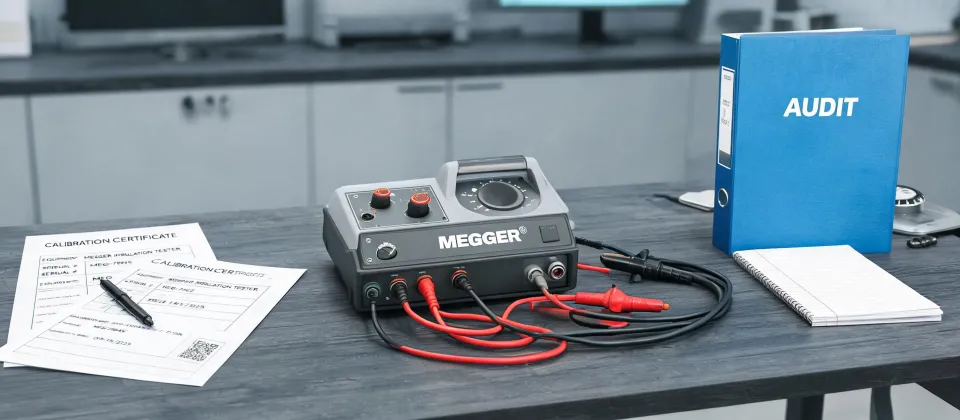
- The meter is part of your deliverable
-
What I look for in insulation testers, and why the Megger 1503 stays in my bag
-
The Fluke Megger insulation tester question I hear all the time
-
Fluke vs Klein multimeter: the wrong question
-
Why cheap tools are expensive for your reputation
-
The price objection, and why I'll push back
-
So here's my position
If there's one thing I've learned in quality control, it's this: the test instrument you use is not a minor purchasing decision. It's a brand decision. I say that as someone who reviews equipment before it goes out the door—roughly 200+ tools and meters a year, for a B2B supplier that carries multiple brands. In our Q1 2024 quality audit, I rejected about 6% of first deliveries for spec mismatches. Not because the boxes were damaged. Because the numbers didn't line up.
I'm not telling you to buy the most expensive meter in every category. But I am telling you that the quality of the reading is the quality of your promise. If a customer can't trust the measurement, they can't trust the electrician, the engineer, or the lab that reported it. That's not a metaphor. It's the whole game.
The meter is part of your deliverable
When does a customer evaluate your equipment? Usually when something goes wrong. A non contact voltage tester that misses a live circuit doesn't just fail an inspection—it fails the safety conversation. I don't have hard data on how many after-sales complaints trace back to an older or off-brand tester, but based on years of support calls, my sense is the number is higher than any vendor wants to admit.
Here's something vendors won't tell you: an accuracy spec is only valid under controlled conditions. Temperature, lead resistance, humidity, battery state—all of it matters. A meter that looks exact at the shop bench can drift badly in a damp industrial cabinet. No calibration certificate saves you if the tool wasn't treated properly afterward.
When I implemented our verification protocol in 2022, one of the first things we changed was checking calibration stickers before anything went into stock. It sounds obvious. But you'd be surprised how many so-called new meters arrive with an expired certificate or no certificate at all. Now every quote we send includes the calibration status. It costs us a little time and it saves us a lot of awkward phone calls.
Non contact voltage testers are the underrated risk
I'm not aware of a perfect non contact voltage tester, and I wish I had tracked false negatives more carefully over the years. What I can say anecdotally is that the gap between a cheap NCVT and a more serious one shows up less in the box and more in the field. The better one doesn't beep more. It beeps when it should. That's the difference that matters.
What I look for in insulation testers, and why the Megger 1503 stays in my bag
For insulation testing, I care about three things: repeatability, test voltage accuracy, and whether the leads are actually rated for the work. That's why a Megger 1503 insulation tester ends up in my reference kit so often. It's not the flashiest tool in the lineup. But when I need stable readings across multiple tests, it keeps the numbers consistent.
Same story with leakage current. The Megger DCM300E leakage clamp meter doesn't look exciting until you're trying to find a small leak in a building full of interference. It lets you isolate the circuit without breaking it. For the kind of audits we do, that's not a luxury. It's our work itself.
I'll also admit a bias: I prefer tools that make the process boring. An insulation test should be boring. You attach the leads, press the button, get the number, move on. When a meter is noisy or inconsistent, the job gets exciting in the worst way. The 1503 is boring in the best sense.
The Fluke Megger insulation tester question I hear all the time
In selection talks, people often ask for a Fluke Megger insulation tester as if the names were interchangeable. Honestly, that search phrase tells me they want someone else to do the comparison. I'd argue it's the wrong frame. Both Fluke and Megger make insulation testers that can handle serious field work. The real question is which model fits your voltage range, your logging needs, and your team's training. A good tester in the hands of someone who understands it will outperform a so-called premium tester that sits in the truck.
Fluke vs Klein multimeter: the wrong question
Another one that comes up constantly is Fluke vs Klein multimeter. I get why. Both names carry history. But the way I see it, the brand is the last variable you should pick on. First, look at the safety rating: CAT III vs CAT IV, resolution, and whether the leads are covered under warranty. Then think about the person using it. A multimeter that feels awkward in the hand is more likely to be used incorrectly. That's a quality issue too.
A few years ago, I ran a blind test with our technicians: same voltage reference, same leads, two multimeters from different brands. More than 70% of them described the same meter as more professional without knowing which brand it was. The cost difference between the two units was maybe 40 to 60 dollars. On a small fleet, that's a rounding error next to the cost of a bad field diagnosis.
So, Fluke vs Klein? Both are credible. The best multimeter is the one that gets calibrated on schedule, has the right safety rating, and actually fits how your team works. The one-brand-always-safest thinking comes from an era when cross-shopping specs was hard. That's changed.
Why cheap tools are expensive for your reputation
Now the part where I push back on the budget-friendly instinct. A few years ago, we did a small experiment with two multimeters in roughly the same class. One gave a reading that was 0.4% off from the reference standard after a short warm-up. Not terrible. But on a 10 V signal, that's enough to make a good technician second-guess a field reading. The cost difference between those two units was maybe 35 dollars. I wish I had tracked customer outcomes more carefully, because I can't give you a clean satisfaction number. But I can tell you this: I never saw a customer send back a report because the tool was too accurate.
According to FTC guidelines (ftc.gov), claims about product performance must be truthful and substantiated. That's a legal principle, sure. But to me, it's also the core of quality control. The instrument you use is the evidence behind your claim. If your equipment can't back up the report, your brand is carrying the risk.
The price objection, and why I'll push back
Somebody will say, not every company can afford a Fluke or a Megger for every tool. Fair enough. I can only speak to our kind of operation: mid-sized, B2B, repeat customers, regular compliance audits. If you're a solo technician doing basic residential checks, you don't need the full catalog. That's context, not a weakness.
But if your company's name is on the report, I'd rather see you spend a hundred dollars more on a meter with a calibration history than spend five hundred dollars on marketing to fix the impression after a bad reading. That's not an abstract point. It's how I decide what goes out the door.
So here's my position
I don't think premium instruments are about ego. I think they're insurance. The right insulation tester, leakage clamp meter, non contact voltage tester, or multimeter is the part of the job that the customer never sees until something goes wrong. When it matters, it either protects your brand or it exposes you.
Next time you're weighing Fluke vs Klein multimeter choices, or deciding whether to upgrade to a dedicated insulation tester, ask a different question. Not what's the cheapest option that will pass. Ask what this reading says about us. Because in the end, you're not buying a device. You're buying the credibility of the numbers it produces.

Marcus Feld
Marcus Feld is an electrical test and measurement analyst specializing in multimeters, oscilloscopes, clamp meters, insulation testers, spectrum analyzers, and data loggers. He applies IEC 61010-2-030 and IEC 61010-031 concepts while examining measurement category, bandwidth, true-RMS response, input loading, and stated uncertainty. His work helps maintenance engineers and test teams choose safe instruments with performance suited to the signals and environments they actually measure.