Test & Measurement
Why I’d Rather Verify a Megger Insulation Tester Than Trust the Brand Name Alone
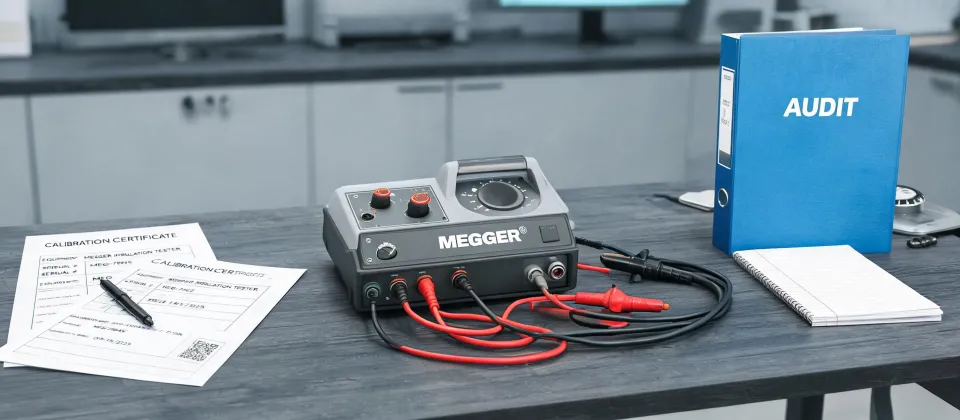
I don’t trust any brand—not even Megger—until I’ve checked the spec sheet against our actual need.
That might sound harsh. But after four years of reviewing deliverables for a B2B instrument supplier—roughly 200+ unique items annually—I’ve learned that a shiny nameplate tells you almost nothing about whether the device will perform in your specific application.
I’m not saying Megger makes bad gear. They don’t. I’m saying that if you buy a Megger MIT400 2 insulation tester without verifying the test voltage range, leakage current limits, and environmental rating against your job site conditions, you’re gambling. And I’ve seen that gamble cost people real money.
Everything I’d read about premium brands said you could trust the name. In practice, I found the opposite.
Here’s the thing—conventional wisdom in our industry is that buying a known brand like Megger, Fluke, or Hioki is a shortcut to quality. I believed that too, for my first year. Then a supplier delivered a batch of what we thought were identical insulation testers—same model number, same marketing brochure—and the specs were visibly off. The insulation resistance measurement on one unit drifted by 15% at high humidity against our internal standard. The vendor claimed it was “within industry tolerance.” We rejected the batch. They redid it at their cost. But that incident cost us a $22,000 project delay and taught me a lesson I won’t forget.
Now every contract I review includes explicit specification requirements—not just a brand name and model number. And that’s true whether we’re ordering a Megger power quality analyzer or a simple humidity sensor.
My argument: verification beats brand trust every time. Here’s why.
1. Spec drift is real—even within the same product line
You might assume that every Megger MIT400 2 insulation tester off the assembly line is identical. I used to assume that too. But manufacturers revise components, firmware, and calibration processes. Sometimes those changes are documented. Sometimes they’re not. If you’re specifying a tester for a critical insulation measurement—say, 1000V at 1 GΩ with ±5% accuracy—and the latest revision actually ships with ±10% accuracy (within the “general purpose” spec), you won’t know until you test it.
That’s why I insist on a pre-shipment verification protocol for every new batch. We measure the critical parameters against our spec. If they don’t match, we reject. It sounds simple, but you’d be amazed how many buyers skip this step.
2. The same logic applies to completely different equipment
I’m not just talking about insulation testers. When we source centrifuges for a lab client, I check the RPM accuracy, rotor balance, and temperature control. When we buy humidity sensors, I verify the response time and drift specs. And when someone asks me “how to get an Eppendorf pipette pen” as a freebie—yes, that’s a real search term—I remind them that a branded pen doesn’t replace a proper pipette calibration report.
The pattern is universal: don’t let the brand name distract you from the spec sheet. I’ve rejected shipments from premium vendors because the color calibration on a thermal imager was off by 2°C at a critical range. The vendor was surprised. The customer wasn’t. They’d rather wait two weeks for a correctly calibrated unit than accept a flawed one.
3. Transparent specification builds trust. Hidden variation destroys it.
Here’s where my opinion gets a little contrarian. I think the industry’s obsession with “lowest price” is a trap—but not for the reason most people think. The real trap is that cheap vendors often hide specification variations in their fine print. They’ll list a “±2% accuracy” but bury the note that it only applies at 23°C and 50% humidity. Meanwhile, a slightly more expensive vendor like Megger will publish their full spec range, including temperature coefficients and drift limits. That transparency is worth paying for.
But—and this is the key—even the transparent vendor needs to be verified. I’ve seen a batch of high-end power quality analyzers from a reputable brand that shipped with firmware that didn’t actually implement the advertised harmonic analysis correctly. We caught it because we tested. The vendor fixed it. But if we hadn’t tested, the customer would have had faulty data for months.
Let me address the obvious pushback.
Some people will say: “But Megger is a trusted brand. Fluke is a trusted brand. Do you really need to verify every shipment?”
Honestly, I’m not sure exactly where the line is. If I’m honest, I don’t verify every single unit we receive—we sample based on batch size and criticality. For a one-off order of a Megger MIT400 2 going to a routine maintenance job, I’ll do a quick functional check. For a batch of 50 units going to a utility substation project? I’ll test every one. The cost of failure is too high.
I’ve never fully understood why some vendors ship consistent gear while others don’t. My best guess is it comes down to their internal quality processes—or lack thereof. But I’d rather trust my own verification protocol than guess.
So here’s my final opinion: stop buying brand names. Start buying verified specifications.
If you’re in procurement for a B2B test instrument company, and someone asks you to source a Megger power quality analyzer, don’t just plug the model number into your system. Ask: “What exact parameters do we need? What’s the acceptable tolerance? How will we verify it?” And if you’re searching for “how to get an Eppendorf pipette pen,” I’m not going to judge—but I’ll gently suggest that the pen is the least important part of the equation. The pipette itself? That needs to be verified.
I’ve been doing this for years now. I still kick myself for not catching that first insulation tester drift earlier. But that mistake taught me something I use every day: verification, not brand trust, is what protects your project’s bottom line. Transparent pricing and transparent specs go hand in hand. Don’t settle for less.
>Pricing and specifications are for general reference only. Actual performance varies by batch, application, and environmental conditions. Always verify against your specific requirements before purchase.

Marcus Feld
Marcus Feld is an electrical test and measurement analyst specializing in multimeters, oscilloscopes, clamp meters, insulation testers, spectrum analyzers, and data loggers. He applies IEC 61010-2-030 and IEC 61010-031 concepts while examining measurement category, bandwidth, true-RMS response, input loading, and stated uncertainty. His work helps maintenance engineers and test teams choose safe instruments with performance suited to the signals and environments they actually measure.