Test & Measurement
Why I Stopped Chasing the Lowest Price on My Megger Insulation Tester and Saved My Budget Instead
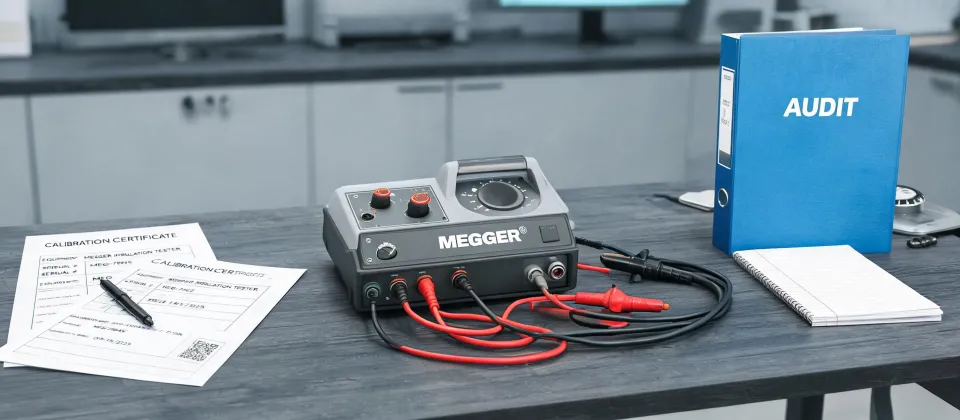
Stop shopping for the lowest price on a megger insulation tester. You're probably losing money.
After five years in purchasing for a mid-sized company—processing about 70 orders a year across eight different vendors—I've learned a hard lesson. The cheapest quote for a megger insulation tester 1000v price almost always costs you more in the long run. The real path to saving your budget is by consolidating your vendors and paying a fair, sustainable price to the ones who are actually good at what they do.
I know it sounds like a cliché from a salesperson, but hear me out. I used to be the guy chasing the lowest price on every single line item, from a Fluke multimeter to a CMM training session. It nearly got me fired.
My $2,400 Mistake and Why It Changed Everything
Everything I'd read about procurement said you should always get three quotes and go with the lowest bidder. In practice, I found the opposite to be true. My wake-up call came in 2022. I found a great price on a megger insulation tester 1000v from a new vendor online—it was $200 cheaper than our regular supplier. I ordered it along with a batch of sensors for a new production line. They couldn't provide a proper invoice, just a handwritten receipt. Finance rejected the expense. I ate $2,400 out of my department's budget because I was trying to save $200.
That same vendor also had a great price on caliper repair, but they took six weeks to return the tools, and the calibration was off by 0.01mm when they came back. The production manager was furious. I'd tried to be the hero who saved money and ended up looking like the guy who couldn't manage a simple order.
The Vendor Who Told Me 'No'
This is where the 'expertise boundary' thing comes in. I had a vendor who supplied most of our lab equipment—pH meters, pipettes, the works. When I asked if they could also handle something unrelated, like the installation for IFM inductive sensors, the account manager said, 'This isn't our strength. Here's who does it better.'
I was shocked. Any other vendor would have said 'sure, we can do that' and then figured it out later. Instead, he earned my trust for everything else. Now, when I order a megohmmeter or need training on a new CMM (coordinate measuring machine), I go to him first. He doesn't have the absolute lowest price, but the transaction cost of working with him is zero. The invoicing is perfect. The equipment arrives on time. I don't have to babysit the order.
This aligns perfectly with how I handle our Fluke multimeter and megger needs. Instead of buying the cheapest Fluke on the market, I work with the same specialist to understand which Fluke multimeter to buy for our electricians. He knows our team, he knows the specs, and he doesn't try to upsell us on a $1,200 meter when a $400 one will do the job.
How I Actually Cut Our Ordering Time by 6 Hours a Month
In 2024, my company underwent a consolidation project. I had to manage orders for 400 people across three locations. Here's what I did that actually worked:
- Stop penny-pinching on every 'megger insulation tester 1000v price' search. We identified our top three vendors for all test & measurement gear (meggers, calipers, multimeters, thermal imagers). I negotiate a fair annual rate with them, not a per-unit cheapest price.
- Create standard SKUs. Instead of letting engineers order any random brand of sensor, we standardized on three types of IFM sensors. Installation was easier because the maintenance team knew the wiring. We eliminated the 'how to install ifm inductive sensors step by step' confusion.
- Use the specialist for repairs. I stopped sending calipers out to the cheapest repair shop. Our primary supplier handles caliper repair and re-calibration. It's slightly more expensive per job, but the turnaround time is 3 days instead of 4 weeks, and the NIST-traceable certificate is included. That's a massive time saver for the quality team.
Switching to this model—fewer vendors, better relationships, and paying for competence—saved our accounting team about six hours of invoice-matching every month. That's real money.
"So glad I stopped chasing the absolute lowest price on a megger (meaning the insulation tester itself, not just the unit price). Almost went with a no-name supplier to save $300, which would have meant re-buying the whole kit when the warranty was void after 90 days."
Exceptions to the Rule (Where This Strategy Fails)
I'm not saying you should never look for a deal. There are a few places where this 'relationship over price' logic breaks down:
- Commodity items: For generic cables, batteries, or office supplies, the lowest price still wins. I'm talking specifically about precision test equipment and specialized tools.
- Single-point-of-failure risk: If you only have one good vendor and they go out of business, you're stuck. I always have a 'Plan B' vendor who is 10-15% more expensive, just in case. I don't negotiate with them; I just know they exist.
- One-time buys: If you need a thermal imager once and never again, you're probably better off renting or buying the absolute cheapest option that meets spec. The relationship doesn't matter if you never call them again.
This approach isn't perfect. I still get emails from finance asking why I didn't go with the absolute lowest bid on a recent order for CMM training. But after I explain the long-term cost of working with a 'cheaper' trainer who doesn't understand our specific coordinate measurement machines, they usually back off. Paying a premium for certainty is almost always cheaper than hoping for a bargain.

Marcus Feld
Marcus Feld is an electrical test and measurement analyst specializing in multimeters, oscilloscopes, clamp meters, insulation testers, spectrum analyzers, and data loggers. He applies IEC 61010-2-030 and IEC 61010-031 concepts while examining measurement category, bandwidth, true-RMS response, input loading, and stated uncertainty. His work helps maintenance engineers and test teams choose safe instruments with performance suited to the signals and environments they actually measure.