Test & Measurement
Why the Right Test Equipment Feels Impossible to Find When You Need It Fast
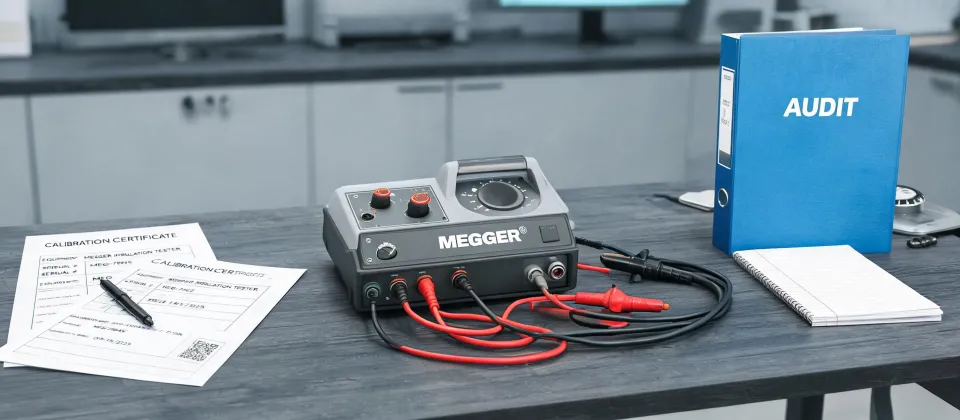
In my role coordinating rush orders for industrial test equipment, I get calls like this: 'We need a megger leakage clamp meter by Friday. Can you do it?' Sometimes it's a Megger socket tester for an electrical safety check. Sometimes it's an inductive proximity sensor m30 x 1.5 for a conveyor line that just stopped. And occasionally it's a caliper because a quality auditor is showing up and the current one reads wrong.
When I first started doing this, I assumed the challenge was logistics. Find the part, ship it fast, move on. A few expensive mistakes later, I realized logistics is the easy part. The hard part is that most buyers don't know what they actually need until the order is already urgent.
The 'I just need it fast' problem
The request usually arrives with a deadline and not much else. That's fine when the part number is clear. But with something like a megger leakage clamp meter, the part number isn't what you need to know. You need to know what leakage current level matters, on what kind of cable, and whether the result will be used as a safety check or just a quick screening. Same meter, different requirement, different answer.
What I mean is that two meters can look identical and still measure different ranges, tolerate different cable sizes, and carry different safety ratings. According to IEC 61010, measurement category matters for electrical safety. A tester built for CAT III is not the same tool as one built for CAT IV, even in the same color housing. If you compare prices only, you're choosing among boxes, not among capacity to do the job safely.
A commodity is a dangerous way to think
Here's the deeper issue. Test instruments and industrial sensors are often treated as commodities: compare price, compare delivery, buy the cheapest. That works for office paper. It breaks down in the real world.
Take an inductive proximity sensor m30 x 1.5. The M30 x 1.5 tells you the thread size. It doesn't tell you anything about sensing distance, output type (PNP or NPN), or whether the housing can handle shock and washdown. I've seen a $120 sensor fail in two weeks because it was chosen on price alone and the environment was wet. The replacement with a higher IP rating cost $60 more and lasted for years.
The caliper example
Calipers are the same story. A digital caliper that reads to 0.01 mm is fine for one job and wrong for another. If you're working close tolerances on a machined part, you need more than resolution. You need repeatability, a traceable calibration certificate, and sometimes a specific measuring force. That's not a luxury. That's the difference between a good shipment and a recall. When someone asks for 'a caliper' without specifying the needed range or tolerance, that's a red flag (note to self: always ask about calibration requirements before quoting).
In 2022, we ordered a set of calipers as backup for a cleanroom line. We saved roughly $150 by choosing a vendor with a longer calibration interval. When the calipers showed up, they read off by 0.02 mm. We didn't catch it until after a batch got reworked. The $150 'saving' ended up costing around $2,800 in rework and extra certification fees.
What about IFM photoelectric sensors vs others?
People ask me about the durability of IFM photoelectric sensors vs others all the time. My honest answer is that brand matters less than the match between sensor and environment. IFM publishes heavy-duty specs on some models, including IP69K ratings for washdown areas and vibration test data. But other brands also build rugged sensors. The right way to compare is to look at the datasheet's test conditions, not the logo.
Durability comes from things like IP rating (defined under IEC 60529), housing material, response time, and ambient temperature range. A sensor that survives in a dry indoor lab may not survive on a vibrating arm with hot water and chemicals hitting it every shift. That's why 'which brand is more durable' isn't the right question. The right question is 'which sensor has the specs my environment requires?'
The real cost of an emergency order
The painful part is that the emergency doesn't change the spec. It just makes the mistakes more expensive.
In March 2024, a customer called at 3 PM needing a replacement megger leakage clamp meter for a 6 AM startup the next day. We found one at a nearby distributor, paid $180 in rush delivery on top of the $900 meter, and got it there in time. That was annoying, but the alternative was a missed startup and a $12,000 contract penalty. When I look at the record from over 200 rush orders, the lowest-priced vendor has cost us more in about 60% of cases. That number is from our internal data, not a formal study, but it's held steady for years.
I remember one order where the spreadsheet said buy the budget inductive proximity sensor m30 x 1.5. The specs looked acceptable, the price was 30% lower, and delivery was quick. My gut said this was going to be a problem. The vendor was slow to answer questions, and the shipment arrived without paperwork. We put it in anyway. It failed after ten days. The sensor was cheap; the downtime wasn't.
The trigger for my current approach was that caliper situation. It changed how I think about total cost. The invoice price is the smallest part of the risk. Rework, retesting, failed audits, lost production, and overtime labor all show up after the fact. That's where the money goes.
How to stop this before the deadline
The fix isn't exotic. Build a short, pre-approved specification list for the equipment you order most. For a Megger socket tester, include the voltage range, CAT rating, and which tests it must pass. For a megger leakage clamp meter, include current range and accuracy. For an inductive proximity sensor m30 x 1.5, include sensing distance, output type, housing material, and IP rating. For calipers, include resolution, calibration requirement, and max error. For photoelectric sensors, include the environment, response time, and IP rating.
Three things: range, environment, and documentation. In that order. If you know those three for each critical instrument, an emergency order becomes a matter of executing a plan, not making a desperate guess.
My view is simple: value over price. Not because budgets don't matter. Because the cost of a wrong test instrument is never the invoice. It's what happens after you install it and discover it won't do the job. The next time somebody asks for the cheapest option, ask yourself: cheapest per unit, or least expensive in total? Those are two different questions, and the first one tends to answer the second in the worst possible way.
Last quarter we processed 47 rush orders and 95% showed up in time. The ones that failed were not shipping failures. They were specification failures. The product arrived, but it was wrong. So if you need a megger socket tester, a megger leakage clamp meter, an inductive proximity sensor m30 x 1.5, or a caliper on a tight deadline, get the specs straight first. Then worry about the overnight shipping.

Marcus Feld
Marcus Feld is an electrical test and measurement analyst specializing in multimeters, oscilloscopes, clamp meters, insulation testers, spectrum analyzers, and data loggers. He applies IEC 61010-2-030 and IEC 61010-031 concepts while examining measurement category, bandwidth, true-RMS response, input loading, and stated uncertainty. His work helps maintenance engineers and test teams choose safe instruments with performance suited to the signals and environments they actually measure.