Test & Measurement
Why Your 'Cheap' Insulation Tester Might Be Costing You More Than You Think
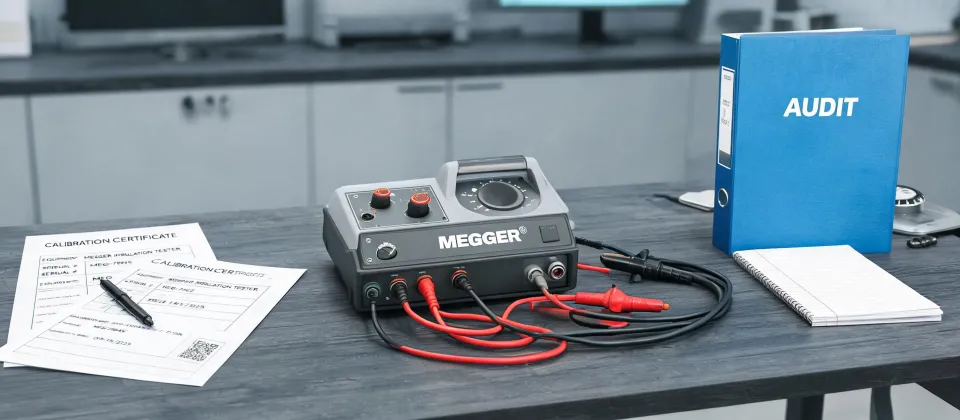
I thought I was being smart with our budget. Turned out I was just being cheap.
When I took over purchasing for our 150-person manufacturing facility back in 2020, my marching orders were clear: "Cut costs without cutting corners." Easy enough, right? So I started shopping around for megger insulation testers, surface roughness testers, and micrometers—the everyday tools our maintenance and QC teams rely on.
I found a deal on a no-name insulation tester. Saved $400 compared to the megger handheld insulation testers our old supplier used. Felt like a win. (Spoiler: it wasn't.)
The problem everyone focuses on—and the one they miss
Most buyers focus on the upfront price tag and completely miss the cost of false reliability. What do I mean by that? A cheap insulation tester might give you a reading. But is it a correct reading?
Three months after buying that budget tester, our QC team flagged a batch of motor windings as "failed" based on its readings. We spent two days re-testing with a borrowed megger insulation tester from a neighboring facility. Turns out, the cheap unit was giving inconsistent results above 500V. The windings were fine. We'd wasted 16 man-hours and almost scrapped $12,000 in materials.
"The question everyone asks is 'what's your best price?' The question they should ask is 'what's that price costing you?'"
(Should mention: I'd skipped the calibration check because it 'never mattered.' That was the one time it mattered. Ugh.)
The deeper issue: why cheap test instruments fail you
1. The accuracy gap you can't see
A micrometer from a no-name brand might read 10.00 mm when it's actually 10.05 mm. That 0.5% error doesn't seem like much—until you're assembling precision components across 400 parts. Suddenly, nothing fits.
We've got a surface roughness tester from a budget brand sitting in our lab. It's been 'out of spec' for six months. Nobody uses it. That $350 'savings' is now a $350 paperweight. (Oh, and we still had to buy a proper Mitutoyo unit.)
2. The support you won't get
I said 'I need a calibration certificate with my megger insulation tester.' The vendor heard 'I need a piece of paper.' Result: a generic, non-traceable document that our ISO auditor laughed at. Cost us $600 for a rush re-calibration from an accredited lab.
3. The downtime you can't afford
A surface roughness tester that fails mid-inspection halts production. A megger handheld insulation tester that reads 'PASS' on a failing cable creates a safety risk—or worse, a fire. We got lucky. Not everyone does.
What I learned after 5 years of buying test equipment
I went back and forth between budget brands and established names for maybe 18 months. On paper, the cheap options made sense—lower cost, faster delivery. But my gut said we were gambling. And I'm not a gambling man with our safety equipment.
Here's what I do now—and it's not complicated:
- Verify the source. A megger insulation tester from a known supply partner? Fine. A generic unit from an online marketplace with no support? Hard pass.
- Factor in calibration costs. A cheap micrometer that needs re-calibration every 3 months costs more than a quality one that holds spec for a year.
- Ask the hard questions. 'What's the accuracy spec at full range?' 'Is the calibration traceable to NIST?' 'What happens if it fails within a year?' If they can't answer, move on.
And yes—I still use budget vendors for some things. But for critical test instruments? I buy from suppliers who treat a $500 order like it matters. Because to our team, it does.
"Small orders don't mean small stakes. A $300 megger handheld insulation tester that saves a $15,000 motor from premature failure? That's not an expense. That's an investment."
If you're managing purchases for a small or mid-size company, don't let anyone make you feel like your budget isn't worth good equipment. Verify the specs. Trust the source. And never assume cheap is cheaper.

Marcus Feld
Marcus Feld is an electrical test and measurement analyst specializing in multimeters, oscilloscopes, clamp meters, insulation testers, spectrum analyzers, and data loggers. He applies IEC 61010-2-030 and IEC 61010-031 concepts while examining measurement category, bandwidth, true-RMS response, input loading, and stated uncertainty. His work helps maintenance engineers and test teams choose safe instruments with performance suited to the signals and environments they actually measure.