Test & Measurement
Megger 1000V Insulation Tester FAQs: Power Quality Analyzers, Moisture Meters & Sensor Selection
-
1. Is a "megger" a brand or a type of insulation tester?
-
2. How fast can I get a Megger 1000V insulation tester on short notice?
-
3. When do I actually need a 435 power quality analyzer?
-
4. What's the MO55 moisture meter for, and when do I need it urgently?
-
5. Omron or Keyence sensors: how do they really compare?
-
6. Should I rent or buy an insulation tester for a one-off job?
-
7. What's the one thing people forget about emergency test equipment?
Over the last eight years, I've coordinated emergency instrument deliveries for utilities, manufacturers, and contractors. When a deadline is looming, the questions people ask are surprisingly consistent. Here are the answers we give most often, covering meggers, power quality analyzers, moisture meters, and sensor selection.
1. Is a "megger" a brand or a type of insulation tester?
Both, honestly. The name goes back to the Megger Group, which invented insulation resistance testing over a century ago. So when a client calls saying "our megger died," half the time they mean the brand and half the time they just mean any insulation tester. The distinction matters less than the spec.
A Megger 1000V insulation tester isn't a special category—it's an insulation resistance tester that outputs 1000V DC for testing cables, motors, and switchgear. A search for "megger insulation tester 1000v" is really a search for a 1000V-rated insulation resistance tester from any reputable brand. What matters is the MΩ range, accuracy, guard terminal for surface leakage, and a safety rating that meets IEC 61010. (Seriously, we've seen cheap imports with misleading ratings. Not worth the risk on a live switchboard.)
2. How fast can I get a Megger 1000V insulation tester on short notice?
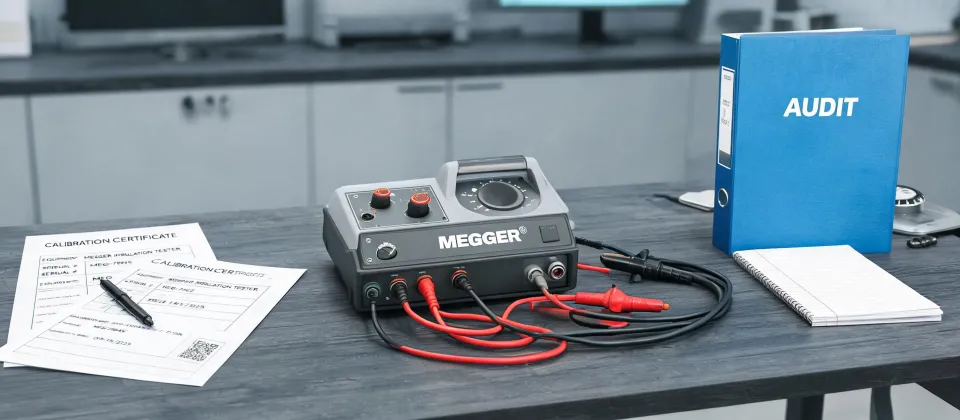
Faster than most people expect. We do same-day local pickups and overnight shipping for national orders. The catch is the calibration certificate.
In March 2024, a utility client called at 2 PM on Friday needing a 1000V insulation tester for a Saturday cable acceptance test. Normal turnaround is 3–5 days. We got one out with a current calibration cert and overnight shipping—about $180 in rush fees. Their alternative was delaying a $40,000 contract. (I still think about how close that was.)
This pricing was accurate as of Q1 2025. Freight and rush fees change fast, so verify current rates before budgeting. The bigger point: ask about calibration status first and speed second. A tester without a valid cert won't survive a compliance audit, no matter how fast it arrives.
3. When do I actually need a 435 power quality analyzer?
The 435 is a three-phase power quality analyzer. It captures voltage sags, swells, transients, harmonics, and power factor over time. You set it up, let it record for a day or two, and pull the data on the software side. You need it when the problem is intermittent—motors failing randomly, electronics resetting at odd hours, nuisance tripping that happens "occasionally." A multimeter can't catch a sag that lasts 200 milliseconds at 3 AM.
I have mixed feelings about recommending it, though. A lot of the time, a simpler logging meter answers the question in a single visit. Part of me wants to send every client the full analyzer. Another part knows half those three-phase functions go unused on a routine survey. My rule: if you can reproduce the issue while you're on site, start simple. If you genuinely can't predict when it happens, the 435 is super useful for that "set it and forget it" data collection.
4. What's the MO55 moisture meter for, and when do I need it urgently?
The MO55 moisture meter is a pin-type instrument for wood, drywall, and concrete. Emergency orders come in two flavors: insurance claims after water damage, and construction disputes over moisture levels in materials.
One of my bigger regrets happened in 2022. We tried to save on a rush order by sending an older meter instead of the MO55 the client had specified. The pins were dirty, the readings were inconsistent, and the insurance adjuster rejected the report. The claim got delayed by three weeks. We ended up paying $300 extra for overnight delivery of the right meter. The revised report passed without issue. That mistake created our policy: for insurance or legal work, always send the instrument with the best documented accuracy. The $300 was trivial compared to what the client lost in delay time.
5. Omron or Keyence sensors: how do they really compare?
If you've been researching how sensors compare between Omron and Keyence, the honest answer is that both are excellent. The choice comes down to your existing setup and support needs, not raw performance.
Omron has a broad industrial automation catalog. If you already run Omron PLCs, their sensors integrate cleanly, and their support network is strong in most regions. Keyence is known for pushing advanced sensing technology—higher resolution, smarter detection—with a direct sales model that gives you quick access to their engineers. Both are reliable.
Here's the efficiency angle: we tested six sensor configurations in Q3 2024 and found under 5% difference in detection accuracy across comparable models. The real differences were lead time and local support. Standardizing on one vendor cuts training time, spare parts inventory, and troubleshooting overhead. That's often worth more than the spec sheet difference.
6. Should I rent or buy an insulation tester for a one-off job?
Quick rule: if you need it for less than a week and won't use it again soon, rent. If it's a recurring need, buy. The break-even point is usually around 60–70% of the purchase price in rental fees.
Renting has a hidden advantage: calibration becomes the supplier's problem. When you buy, you own the calibration schedule and the cost that comes with it. A good rental supplier keeps a fleet of calibrated instruments ready precisely because rush orders are normal. We maintain about 40 units in our rental pool with current certs at any time. And same-day rental with certification is way more common than buyers assume.
I still kick myself for buying a cheap instrument years ago to save on a one-off job. The readings were unstable, and we spent two days chasing a fault that didn't exist. The rental would have cost $400 with a certified unit. The wasted time was worth at least $2,000. That's a lesson you only learn once.
7. What's the one thing people forget about emergency test equipment?
The paper trail: the calibration certificate. Not the sticker on the case—the actual PDF certificate traceable to a recognized standard.
Scenario: you rent a Megger 1000V insulation tester on Friday for a Saturday cable test. Readings look good. The client accepts the report on Monday. Then the auditor asks for the calibration cert, and the vendor admits the unit's cert expired last month. (Ugh.) This happened to us in 2023 with a third-party supplier we no longer use. The re-testing delay pushed the project back two weeks.
Any time your test data feeds a compliance report, ask for the calibration certificate BEFORE delivery. If the supplier can't produce it in ten minutes, find another supplier.
The lowest quote on a rental isn't the lowest total cost when it creates a two-week delay.

Marcus Feld
Marcus Feld is an electrical test and measurement analyst specializing in multimeters, oscilloscopes, clamp meters, insulation testers, spectrum analyzers, and data loggers. He applies IEC 61010-2-030 and IEC 61010-031 concepts while examining measurement category, bandwidth, true-RMS response, input loading, and stated uncertainty. His work helps maintenance engineers and test teams choose safe instruments with performance suited to the signals and environments they actually measure.