Test & Measurement
Megger, Fluke, and Test-Equipment Buying FAQ: Cost-Control Answers from a Procurement Manager
-
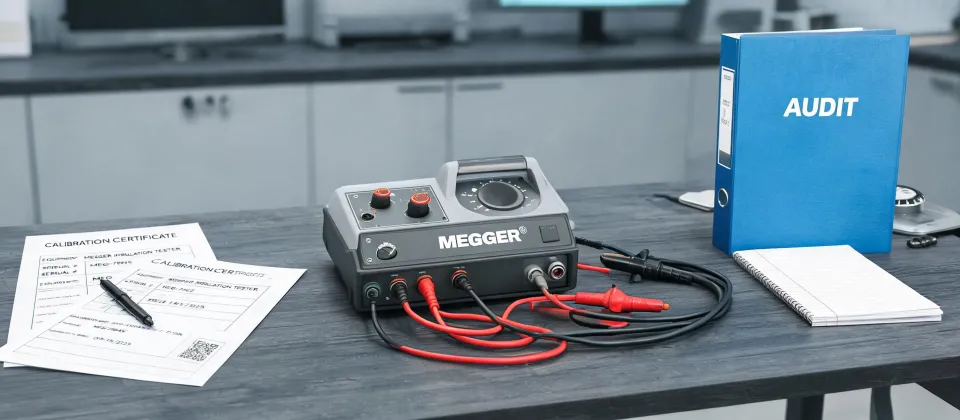
Do I need an analog megger insulation tester, or is a digital megger good enough?
-
Are Megger DCM305E earth leakage clamp meter reviews actually worth trusting?
-
How much should I budget for a surface roughness tester?
-
Which pipette set should a small lab choose?
-
Which Fluke multimeter should I buy?
-
Why would I buy test equipment from a multi-brand supplier instead of going direct?
I've been the person who signs off on test and measurement equipment at our facility for the past six years. That means I've sat through vendor demos, compared dozens of quotes, and made a few purchasing mistakes that still cost me sleep. These are the questions I hear from our technicians and from other small-shop buyers. They cover Megger insulation testers, the DCM305E leakage clamp meter, surface roughness testers, pipette sets, and Fluke multimeters. I'll skip the marketing language and tell you what I'd tell a colleague over coffee.
Do I need an analog megger insulation tester, or is a digital megger good enough?
Megger is both a specific brand and a generic name for insulation resistance testers. If someone asks for a megger, they usually want to check whether cable insulation or motor windings are breaking down under high voltage. That test is not optional if you're maintaining 480V motors or wet-area wiring.
The analog megger insulation tester style still has fans. The needle gives you a continuous view of the resistance as it changes, which can show you leaking insulation in a way that a simple digital number might hide. And analog units are often cheaper. But when I look at total cost, digital usually wins. A digital unit lets you store readings, compare them over time, and hand them to a customer or inspector without re-testing.
I still kick myself for an early purchase: I picked a lower-cost analog unit to save about $150. I then watched our technician spend extra time interpreting the dial and manually logging results. When I compared the test times side by side, the digital unit saved us enough labor to cover the price difference within two quarters. If you only need a quick go/no-go call, analog is fine. If you're tracking insulation health over time, go digital.
Are Megger DCM305E earth leakage clamp meter reviews actually worth trusting?
Most of the Megger DCM305E earth leakage clamp meter reviews I've read are positive, but the negative ones follow a pattern that surprised me. The surprise wasn't accuracy or build quality. It was how many users were trying to measure ordinary load current with a meter designed for leakage current.
The DCM305E is not a general-purpose clamp meter. It is made for measuring small leakage currents—often just a few milliamps—that flow through grounding conductors or insulation faults. If you clamp it around a cable carrying 10 amps, it will not give you a useful reading. That's not a defect; it's a design. In our maintenance work, the DCM305E has been reliable for chasing nuisance trips in motor circuits and finding current leaking to ground.
To be fair, the meter does require careful jaw positioning and a bit of patience. And you should plan for calibration. We bought ours alongside a calibration service so the readings would hold up in a regulated environment. That added maybe 15% to the upfront cost, but it saved us from having to send it out later.
How much should I budget for a surface roughness tester?
Prices for surface roughness testers vary more than almost any other instrument in our inventory. A basic portable unit that measures Ra and Rz can run from a few hundred to a couple thousand dollars, depending on probe quality, display resolution, data output, and calibration support. Based on distributor listings I checked in January 2025, entry-level no-name units sit in the $300 to $500 range, while recognized brands with traceable calibration often run $800 to $1,500. Don't hold me to those exact numbers—prices move.
The cost-control lesson I learned the hard way is to avoid the cheapest option. A $400 roughness tester gave us readings that drifted compared with our shop floor reference unit. We reworked a batch of parts before someone noticed. That was a $1,200 mistake hiding behind a $400 price tag.
When you compare quotes, include calibration certificates, probe replacement cost, and technical support. A roughness tester is only an investment if its readings are trustworthy. Also ask about turn-around time for calibration, because a tester that sits at a third-party lab for three weeks is a tester you can't use.
Which pipette set should a small lab choose?
Small labs get ignored by suppliers sometimes, and that bothers me. When we were operating on a modest quarterly lab budget, I encountered vendors who made it clear that our order was too small for their attention. Good suppliers don't do that.
For a small lab, I'd look for a single-channel adjustable pipette set covering 0.5-10 µL, 10-100 µL, and 100-1,000 µL. That range handles most routine work. But don't just compare the sticker price. Ask about calibration service, replacement parts, and tip compatibility. In Q2 2024, we bought a set that was $70 cheaper than the alternative, then discovered the calibration house charged extra because the pipette wasn't in their software system. The total cost ended up higher, and I learned to check the ecosystem around the tool, not just the tool itself.
If a supplier treats your small order like a nuisance, that's a warning sign. The vendor who sold us our first pipette set took the order seriously, answered questions, and sent calibration reminders. That's why they still get our business now that our orders are larger.
Which Fluke multimeter should I buy?
I get this question more than any other. People assume there is one correct answer. There isn't. The right Fluke multimeter depends on the electrical environment you work in and the features you actually need.
For general plant electrical work with 120V and 240V circuits, the Fluke 117 is a solid everyday meter. It has non-contact voltage detection, a decent display, and it's easy for technicians to carry. For industrial electronics, VFD troubleshooting, and higher-accuracy measurements, the Fluke 87V has been the standard for years because it offers more counts and a wider range. According to Fluke's published product specifications, the 87V offers 6000 counts and CAT III 1000V / CAT IV 600V ratings. The 117 is rated CAT III 600V. Both are safe for their intended settings, but you never want to buy lower safety ratings than your work demands.
From a budget perspective, however, in our own shop I've watched technicians buy the 87V because it's the industry standard, then rarely use the extra features. That's not a Fluke problem—it's a scoping problem. If your daily work doesn't involve high-energy systems or precision lab measurements, the 117 or the 115 will serve you well and leave money in your budget. I'd expect the 87V to cost roughly double the 117, based on typical distributor pricing as of early 2025. Verify current prices before you order.
Why would I buy test equipment from a multi-brand supplier instead of going direct?
For small and mid-size buyers, a good multi-brand supplier can save you real money even when their unit price isn't the lowest. I used to chase the cheapest price across five websites. Then I looked at the full cost: multiple shipping charges, longer wait times, more paperwork for calibration, and no one to call when the product didn't match the spec sheet.
A multi-brand supplier with broad coverage can consolidate your order, compare products across manufacturers, and answer the question, Do I need an analog megger or a digital one? Their selection guidance is part of the value. But not every large catalog is run by people who understand measurement instruments. Ask how they handle warranty claims and calibration returns before you commit.
And if you are a small buyer, do not apologize for your order size. When I started in this role, I had a tiny budget. The suppliers who took those early orders seriously earned my loyalty. Today they get bigger orders, even though I could switch to cheaper vendors. Small doesn't mean unimportant. It means potential.

Marcus Feld
Marcus Feld is an electrical test and measurement analyst specializing in multimeters, oscilloscopes, clamp meters, insulation testers, spectrum analyzers, and data loggers. He applies IEC 61010-2-030 and IEC 61010-031 concepts while examining measurement category, bandwidth, true-RMS response, input loading, and stated uncertainty. His work helps maintenance engineers and test teams choose safe instruments with performance suited to the signals and environments they actually measure.