Test & Measurement
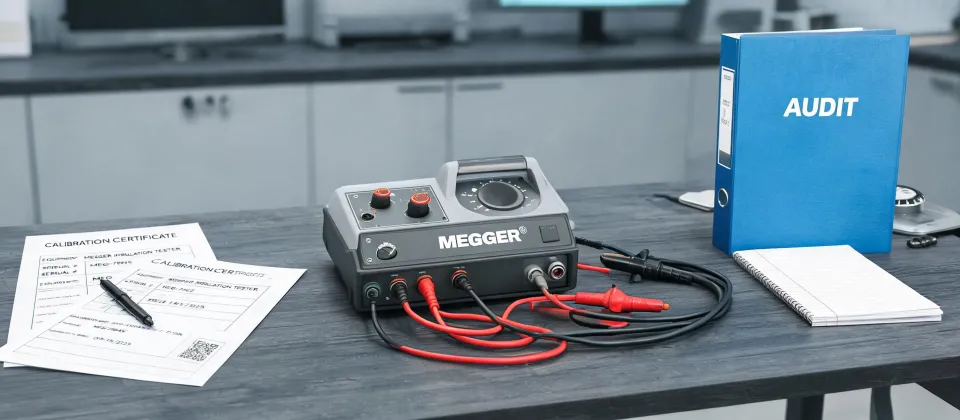
One Vendor or Many? Comparing Megger 10kV vs 15kV Insulation Testers, Multimeters, and More
-
The comparison frame
-
1. Product selection: 10kV vs 15kV insulation tester
-
2. Best multimeter for automotive? Or insulation tester?
-
3. Repeater pipette tips: compatibility matters more than price
-
4. Thermal cameras: can they see through walls?
-
5. Total cost: sticker price vs the full quote
-
So which approach should you choose?
Every time engineering asks for a Megger, or the lab says the repeater pipette tips are almost gone, the request lands on my desk. I am the office administrator who handles purchasing for a 90-person industrial services company—roughly $250,000 a year in electrical test equipment, lab supplies, and field tools. I report to operations and finance, so my job is to keep things moving without blowing the budget.
I am not an electrical engineer. I cannot talk about dielectric absorption ratios from memory. But I have bought a lot of test equipment, and the comparison that has saved me the most money is not Megger vs Fluke. It is one-stop multi-brand supplier vs separate OEM vendors. Here is how I compare them.
The comparison frame
Option A is a distributor that carries multiple brands—Megger, FLIR, Eppendorf, and the rest. Option B is calling each manufacturer's rep or dealer for the specific product you need.
Both can work. The difference is how much they help you avoid buying the wrong thing.
1. Product selection: 10kV vs 15kV insulation tester
The first time a project manager asked for a Megger 15kv insulation tester, I almost ordered it. A 15kV tester sounded like a better version of a 10kV one. That is the same trap I see in purchase requests: more voltage equals better.
Actually, the test voltage needs to match the cable or motor's insulation rating. Too high can stress insulation. A 10kV model covers a lot of medium-voltage work. A 15kV model is for higher-voltage cable and larger rotating machines. The right answer depends on what you test, not what sounds impressive.
According to Megger's application notes, insulation resistance testers apply a DC test voltage to measure insulation integrity—and the voltage level should be selected for the equipment being tested. Higher is not automatically better.
When I got quotes in January 2025, the Megger 10kv insulation tester price was roughly $7,000–$12,000 depending on accessories and calibration. The 15kV version adds a serious premium—often $4,000–$6,000 more than the 10kV unit. But here is what the spreadsheet did not tell me: the crew lead said they do proof tests on 15kV cable for a local utility. So we needed the 15kV after all.
The takeaway: A good multi-brand supplier asked what we were testing before quoting. A single-brand rep can quote a 15kV all day long, but might not challenge your assumption. That one question was worth about $5,000.
2. Best multimeter for automotive? Or insulation tester?
Not long after the Megger project, I got a request that mentioned the best multimeter for automotive work. The same supplier asked a few simple questions: Are the techs working on 12V or 24V? Do they need to measure current or just voltage? And does anyone actually need a high-voltage insulation tester for this job?
That last question was aimed at me, not the request. The rep pointed out that a 15kV insulation tester and an automotive multimeter are completely different tools. A 15kV Megger is for insulation testing. For a car, you want a CAT III rated multimeter with a decent low-current range, good continuity, and a clear display. You do not need a 15kV beast to check a sensor ground.
There is no single best multimeter for every automotive tech. There is the right meter for the circuits you touch. If you are measuring milliamps on a 12V system, you need something that can measure low current without blowing a fuse. If you are doing diagnostics on heavy trucks, you might want a clamp meter instead.
The takeaway: A supplier with a broad catalog can point you to the right category of tool. That is way more valuable than a rep who only wants to sell you another insulation tester.
3. Repeater pipette tips: compatibility matters more than price
Lab supplies are a different beast. A lab manager asked for repeater pipette tips. If I had ordered the cheapest generic tips on price alone, they probably would not have fit. Repeater pipettes use specific tip magazines or cartridges, and the model number matters.
The distributor asked which pipette we used, then sent the right tips. It saved us a day of lab time and a pointless expedited shipping fee. That was a good reminder: for lab consumables, compatibility is a spec too.
The takeaway: A broad supplier can source both OEM and compatible options and explain the trade-off. That is harder to get from a narrow one-brand catalog.
4. Thermal cameras: can they see through walls?
The number of times someone has asked me, can thermal cameras see through walls flir, is surprisingly high. Short answer: no. According to FLIR's educational material, thermal cameras detect infrared energy on surfaces. They cannot see through walls.
A FLIR camera can show a heat pattern on the wall surface—maybe a hot spot from a loose breaker or a cold patch from moisture. But it cannot show the pipe or wire inside the wall. If the actual goal is to see inside a wall, a borescope is the right tool. If the goal is to find a heat anomaly, a thermal camera is better.
This is where a multi-brand supplier is genuinely helpful. They carry both thermal cameras and borescopes, so they can ask what you are trying to see before they sell you anything. A single-line thermal camera vendor will probably sell you a camera.
The takeaway: The right tool depends on the question you are really trying to answer. Surface heat is one thing. Inside-the-wall visibility is another.
5. Total cost: sticker price vs the full quote
The biggest mistake I made as a new buyer was comparing quoted prices without comparing what was inside the quote. One quote for the Megger 10kv insulation tester did not include test leads. Another did not include calibration. A third had a much lower price but a six-week lead time.
Every spreadsheet analysis pointed to the cheapest option. My gut said ask why. The cheap quote was cheap because it was incomplete. That is a red flag.
To be fair, direct OEM reps can be extremely useful when you know exactly what you need. They know their product line inside out. But a multi-brand distributor can bundle a Megger with the right leads, a calibration certificate, and maybe a FLIR camera on the same purchase order. That reduces freight, paperwork, and your own admin time.
Based on quotes I received in January 2025, the Megger 10kv insulation tester price varied by roughly $1,500 for the same model depending on what was included. Verify current pricing before you commit.
The takeaway: Lowest sticker price is not the same as lowest total cost.
So which approach should you choose?
If you are a one-person operation buying one specific tool, direct OEM buying is probably fine. If you are ordering across categories—electrical, lab, thermal, measurement—a good multi-brand distributor is probably the no-brainer. But only if the rep actually asks questions.
The real test is simple: did the supplier ask what you are going to use this for? If not, that is a red flag.
I am not a technical specialist, so I always verify specs with someone who is. But from a procurement perspective, this is how I compare: not by brand, not by sticker price, but by fit for the job. That approach worked for us because we are a mid-size contractor with mixed field and lab needs. If you run a utility with one dedicated high-voltage crew, your answer might be different.
There is no single best Megger, no single best multimeter for automotive, and no thermal camera that can see through walls. There is only the right tool for the work you actually do. A supplier that helps you figure that out first is worth more than the lowest price on the quote.
Pricing from distributor quotes received January 2025; verify current rates before ordering.

Marcus Feld
Marcus Feld is an electrical test and measurement analyst specializing in multimeters, oscilloscopes, clamp meters, insulation testers, spectrum analyzers, and data loggers. He applies IEC 61010-2-030 and IEC 61010-031 concepts while examining measurement category, bandwidth, true-RMS response, input loading, and stated uncertainty. His work helps maintenance engineers and test teams choose safe instruments with performance suited to the signals and environments they actually measure.