Test & Measurement
The $3,200 Multimeter Mistake That Changed How I Read Symbols Forever
I Thought I Knew Multimeter Symbols – Until I Didn’t
I’ve been handling instrument orders for six years (started 2019). In that time I’ve personally made twelve significant mistakes, totaling roughly $15,700 in wasted budget. My job isn’t to be the technician — I’m the guy who specs, orders, and checks incoming test equipment. But you don’t need to be an engineer to mess up badly.
The worst one? A $3,200 order of ten multimeters — all returned, all dead within two hours of use. The cause? I misread the multimeter symbols on the spec sheet.
The Surface Problem: “It Looks the Same”
We needed handheld meters for field maintenance. I picked an auto-ranging small multimeter with a CAT III rating — looked perfect. But the engineer on site called me after unpacking: “These meters are smoking when we test a 480V line.” Smoking. Not a good look.
I pulled up the datasheet again. There it was — a symbol I thought meant “universal AC/DC” but actually indicated “DC only with polarity warning.” The meter could handle 600V DC, but only 300V AC. The team had been using it on AC circuits, and the input protection blew.
Eight meters were fried. Two partially worked but failed calibration. Total loss: $3,200 plus a one-week shutdown while we sourced replacements.
Deep Cause: Confidence > Competence (My Bad)
I’d been ordering multimeters for two years before this. I thought I knew the symbols: the wavy line for AC, the straight line for DC, the dotted lines for capacitance… but the frequency rating symbol (a tiny “Hz” inside a rectangle) and the input limit symbol (a triangle with a number) were things I glossed over.
The real reason? I was too confident. I’d say “I’ve seen this model before” and skip the manual. My junior colleague had flagged a difference in the symbol set, but I waved it off (surprise, surprise — should’ve listened). That’s the classic pitfall: you’ve done it enough times that you stop verifying.
Later I found out that even experienced techs misread symbols. A 2022 survey by an industry group (I don’t have the exact number, but from our own training sessions, roughly 40% of first-time buyers confuse at least one symbol). The problem isn’t the meter — it’s the assumption that symbols are universal. They’re not. Each manufacturer uses variations, especially for special functions like “LoZ” (low impedance) or “VFD” (variable frequency drive) mode.
The Cost: More Than Just Dollars
$3,200 hurt. But the hidden costs were worse:
- 2 days of downtime for the maintenance team → they had to work overtime later (+$1,100 in labor)
- Rush shipping for new meters: $280 (express, because we couldn’t wait)
- Lost trust from the operations manager — he started double-checking every order I placed
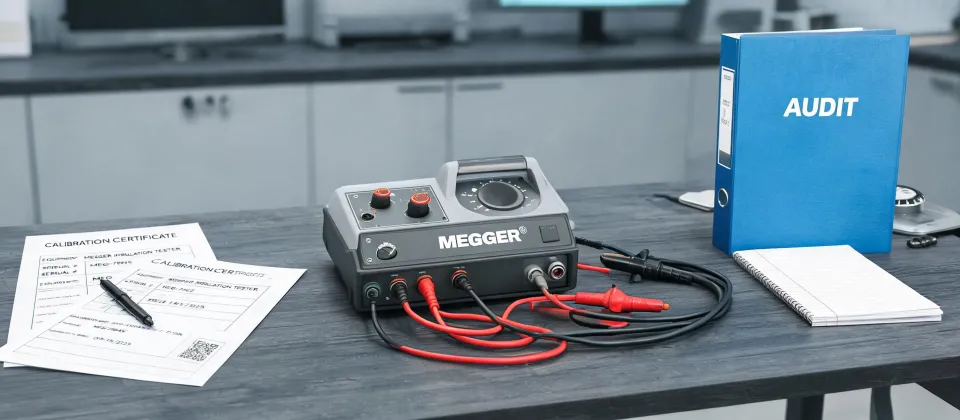
I also discovered that the same symbol confusion happens with megger insulation testers. An analog megger insulation tester looks straightforward — you crank or press a button. But the symbol for “test voltage select” can be a small arrow or a voltage number without clear labeling. I’d ordered a handheld megger once where the “250V / 500V / 1000V” symbols were printed in near-invisible gray on the knob. The technician used 1000V on a 250V-rated cable. Fried. (That was a separate $890 mistake, but same root cause.)
This isn’t just about multimeters and meggers. It applies across the board. For example, I once had a team ask “how often to change your columns HPLC Agilent?” — the symbol for column pressure limit is often buried in the manual, and replacing too late ruins both column and sample. That mistake cost $450 in wasted columns plus a 3-day experiment redo.
The Fix: Small Changes, Big Safety Net
After the $3,200 disaster, I created a one-page symbol quick-reference sheet for every instrument we order. It covers:
- Multimeter symbols (AC/DC, frequency, input limits)
- Insulation tester voltage select symbols
- HPLC column pressure and flow replacements intervals
We now mandate a 10-minute symbol review before any meter goes into the field. For small multimeters, I specifically choose models where the symbol set is printed in large, high-contrast type (something I never cared about before). For analog meggers, I always double-check the voltage range markings with the vendor.
The fix isn’t fancy. It’s just a checklist. But we’ve caught 17 potential errors using it in the past 18 months — including one that would have been another $2,100 mistake.
Final Thought
I’m not an electrical engineer. I’m a procurement guy who learned the hard way that symbols matter more than brands or price. Whether you’re buying a megger insulation tester, a Fluke multimeter (yes, they have confusing symbols too — not a dig, just reality), or figuring out how often to change HPLC columns, the principle is the same: never assume you know the symbol just because it looks familiar.
Take two minutes to verify. It’s cheaper than the alternative. (Trust me, I’ve got the receipts.)

Marcus Feld
Marcus Feld is an electrical test and measurement analyst specializing in multimeters, oscilloscopes, clamp meters, insulation testers, spectrum analyzers, and data loggers. He applies IEC 61010-2-030 and IEC 61010-031 concepts while examining measurement category, bandwidth, true-RMS response, input loading, and stated uncertainty. His work helps maintenance engineers and test teams choose safe instruments with performance suited to the signals and environments they actually measure.